
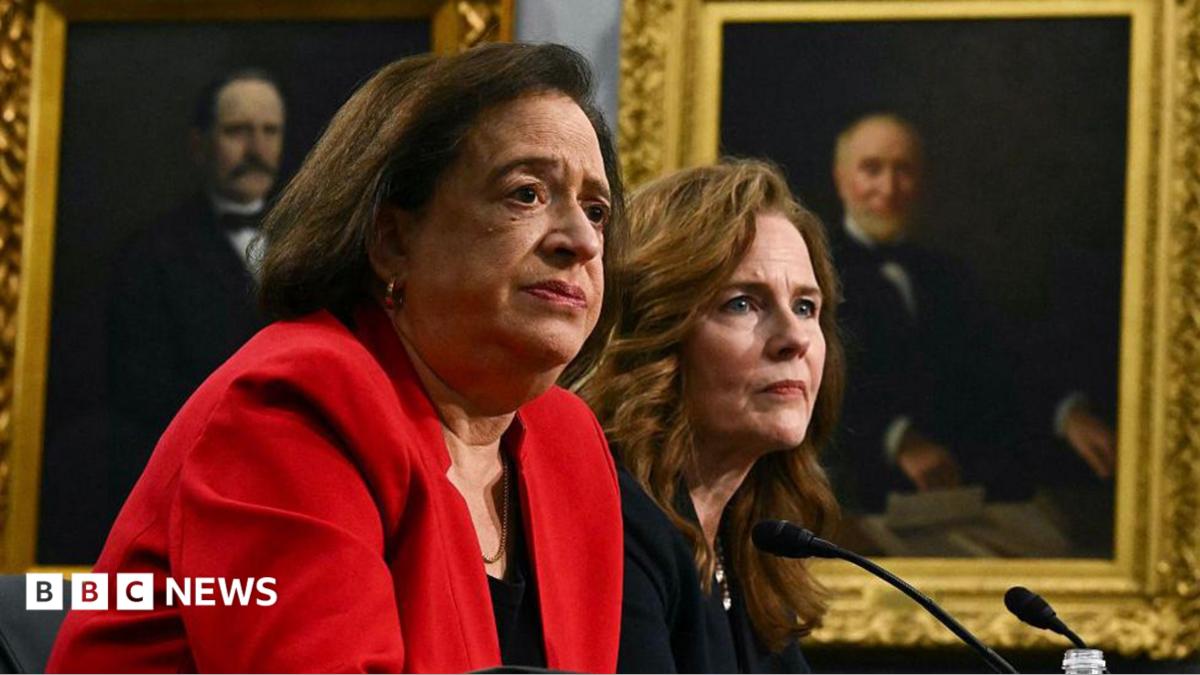
Two justices of the United States Supreme Court, Amy Coney Barrett and Elena Kagan, recently appeared before the House Appropriations Committee to request a substantial increase in security funding for themselves and their colleagues. This request reflects growing concerns about threats to the safety of Supreme Court justices amid an increasingly polarized political climate and rising security risks.
The court has formally asked Congress for $228 million in security funding, representing a 53% increase over last year's allocation. The majority of these funds are intended to enhance security measures to better protect the justices, their families, and court personnel. This hearing marked a rare occasion in which sitting Supreme Court justices publicly addressed Congress, highlighting the seriousness of the threats they face.
Justice Amy Coney Barrett, a conservative member of the court, spoke candidly about the intense and personal nature of the threats against her and her family. She recounted a "swatting" incident that occurred six weeks prior, in which someone made a false emergency call reporting gunshots at her home. This hoax prompted a heavy police response, with multiple patrol cars surrounding her residence. The distress caused by such incidents extends beyond the justices themselves to their families, who must live with the constant fear of violence.
Barrett also revealed that around the time she was part of the majority decision to overturn abortion laws in 2022, her security detail had her wear a bulletproof vest for her protection. This was a surprising and sobering reality for her, especially when she had to explain the significance of the vest to her children. "I didn't expect that performing this service was going to put me in the position of explaining to my children what a bulletproof vest was and why I had to wear one," she said.
Justice Elena Kagan, a liberal member of the court, provided additional context on the nature and scale of the threats. She testified that the Supreme Court police anticipate a 38% increase in security threats this year alone. Kagan emphasized that many of these threats have come alarmingly close to materializing and that all justices live with the awareness that such dangers persist. She pointed to the rise in cyberattacks, which have surged "by magnitudes," and noted that rapid advancements in artificial intelligence have made such attacks increasingly feasible and sophisticated.
Kagan's remarks underscored the growing complexity of the threats faced by the court, which now include not only physical violence but also technologically advanced cyber threats. The use of drones and other emerging technologies as potential tools for harm was also mentioned, reflecting the evolving landscape of security risks.
The hearing referenced data from the US Marshals Service indicating that as of July 1, there have already been 370 threats reported against federal judges in the current fiscal year. This figure represents a 31% increase from the previous year, a trend described by Democratic committee member Rosa DeLauro as "deeply alarming." The rising number of threats suggests that the judiciary as a whole is under increasing pressure and vulnerability.
Currently, Supreme Court justices typically receive protection from between four to eight security personnel, depending on the circumstances. Justice Barrett expressed hope that with increased funding, the level of protection would be elevated closer to that provided to cabinet-level officials. She described the ongoing threats as "constant," underscoring the persistent danger justices face as they perform their duties.
The hearing also brought attention to specific incidents illustrating the severity of the threat environment. One example highlighted was the case of a woman sentenced to eight years in prison after police found a bag full of guns in her car. She had confessed to having intentions of harming herself and Chief Justice John Roberts, demonstrating the tangible nature of some of the risks confronting the court.
Barrett and Kagan's participation in the House Appropriations Committee hearing is notable as it was the first time a sitting Supreme Court justice testified before Congress since 2019. Several members of the committee expressed a desire for justices to engage more frequently with lawmakers. This suggestion comes amid concerns about declining public trust in the Supreme Court, with critics calling for greater transparency and accountability from the judiciary.
The justices' appearance and testimony took place shortly after the Supreme Court's last term ended in late June. That term included rulings on several high-profile and contentious issues, covering topics such as tariffs, voting rights, and birthright citizenship. These decisions elicited both praise and criticism from various sectors of the public and political spectrum, further intensifying debates about the court's role and legitimacy.
A recent survey by the Pew Research Center revealed that only 50% of Americans currently hold a favorable view of the Supreme Court, a sharp decline from 70% in 2022. This drop reflects growing polarization and dissatisfaction with the court's decisions and perceived partisanship.
The security concerns highlighted by Justices Barrett and Kagan are part of a broader context in which the Supreme Court faces unprecedented scrutiny and threats. The court has recently issued rulings that have been both lauded and condemned, including decisions limiting the use of race in electoral map drawing, upholding birthright citizenship in a significant blow to former President Donald Trump's policies, and delivering setbacks to Trump in other areas while expanding certain presidential powers.
In summary, the testimony of Justices Amy Coney Barrett and Elena Kagan before Congress sheds light on the heightened security challenges faced by the US Supreme Court amid increasing political polarization and technological threats. Their request for a substantial increase in funding aims to ensure their safety as they continue to interpret and enforce the law at the highest level. The justices' candid accounts of personal threats and evolving dangers underscore the urgent need for enhanced protection measures and greater engagement with the public to restore confidence in the nation's judicial system.