
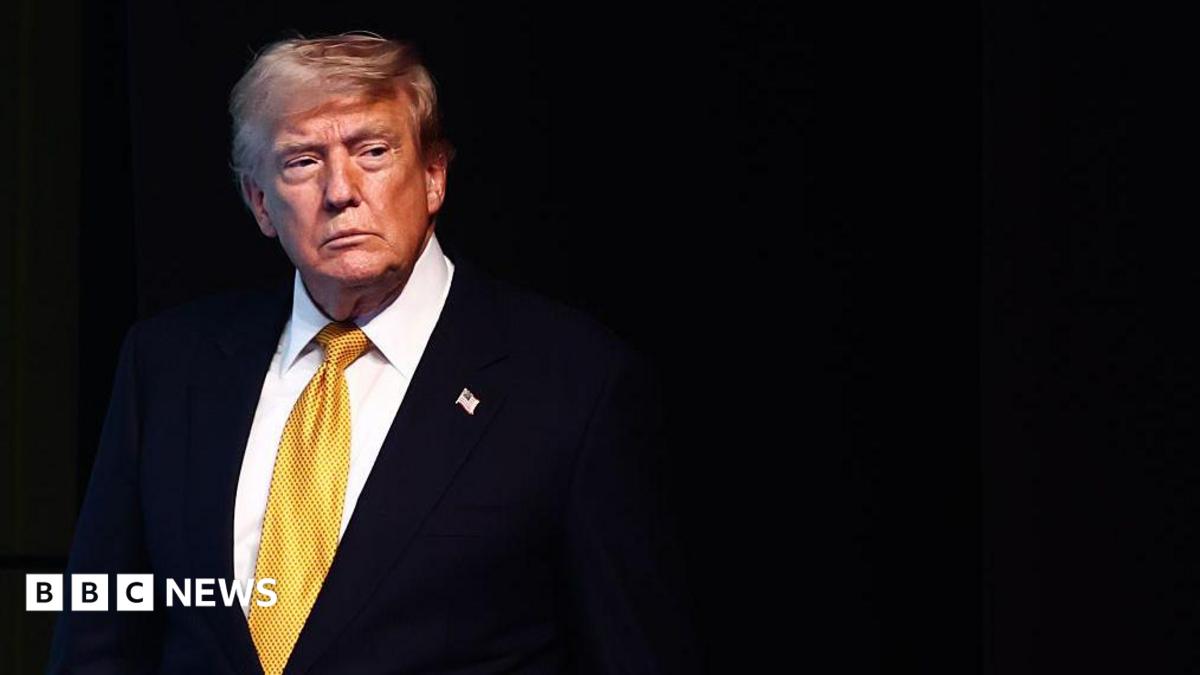
Donald Trump's recent handling of the ongoing conflict between the United States and Iran has underscored a presidency grappling with a complex and volatile situation, marked by sudden policy shifts and uncertain strategies. The latest episode, involving a brief proposal to impose a 20% fee on all shipping through the Strait of Hormuz, followed by a rapid reversal, reveals a leader searching for unconventional solutions amid a protracted and politically sensitive war.
On Monday morning, Trump announced via a social media post that the United States would resume a naval blockade targeting Iranian shipping. More controversially, he declared that every vessel transiting the Strait of Hormuz-including those belonging to US allies-would be required to pay a 20% fee. This charge was intended to reimburse the US for the costs of maintaining safety and security in what he described as "this very volatile section of the world." The Strait of Hormuz is a strategic chokepoint through which a significant portion of the world's oil supply passes, making control and security of the waterway a critical issue in the conflict.
However, this proposal was short-lived. Within 24 hours, Trump abandoned the idea of imposing the fee and instead hinted at a different approach: forging "trade and investment deals" with Gulf allies. This alternative strategy implied the United States would provide safe passage through the Strait of Hormuz in exchange for economic cooperation, marking a significant shift from the previous day's stance. The abrupt about-face highlighted the uncertainty and fluidity of Trump's approach to the Iran conflict.
This recent development takes place against the backdrop of a war that has now dragged on for over four months. Despite a memorandum of understanding (MOU) signed about a month ago, which established a temporary ceasefire and laid the groundwork for negotiations, there has been little progress toward lasting peace. The ceasefire itself has been fragile, punctuated by intermittent hostilities and mutual accusations.
Trump appears hesitant to escalate the conflict further, likely due to the war's unpopularity among the American public, the potential for rising global energy prices, and the risks to US forces and allies in the region. At the same time, he may be reluctant to accept a resolution that does not surpass the 2015 agreement negotiated under the Obama administration, which he has criticized. This dilemma contributes to the prolonged stalemate.
Rosemary Kelanid, Director of the Middle East program at Defense Priorities, characterized the situation as a "war of attrition" with no clear endpoint in sight. She argued that such conflicts tend to drag on indefinitely, reflecting the current deadlock.
The promise of the US-Iran memorandum of understanding effectively ended on Tuesday at 10:16 ET (16:16 BST), when Trump announced on his social media platform, Truth Social, that the US blockade of Iranian shipping would resume. This announcement coincided with a series of new US military strikes on targets within Iran, effectively ending the ceasefire.
The contents of the MOU had been intentionally vague, allowing both sides to claim victory. It envisioned some Iranian role in overseeing shipping through the Strait of Hormuz, specifying that Iran would use "its best efforts for the safe passage of commercial vessels with no charge." The agreement also included commitments for billions of dollars in investment in Iran and an easing of international sanctions. However, Iran has been eager to assert control over the Strait, and the MOU's provisions failed to prevent renewed Iranian attacks on US allies and commercial shipping, which once again nearly paralyzed traffic through this crucial waterway.
Despite military gains by the United States, including the destruction of Iranian ships, aircraft, and other assets, the conflict remains unresolved politically. Iran's ability to threaten the Strait of Hormuz remains a significant strategic advantage, limiting US options unless it is willing to escalate militarily.
Trump's brief proposal for a 20% fee on shipping through the Strait was not entirely new, having been suggested in various forms during the conflict. It may have been an attempt to make the US military commitment more acceptable domestically by framing it as a cost-recovery measure. However, this proposal conflicted with established international law and was criticized by US officials, including Secretary of State Marco Rubio, who condemned any notion of charging tolls on international waterways.
The quick reversal on the fee underscores the lack of a clear or consistent strategy from the Trump administration. The MOU's failure to prevent renewed hostilities has left both sides back at square one. Iran faces ongoing US military pressure and economic sanctions that cut off critical oil revenue, while the US confronts the dilemma of escalating the conflict or accepting a prolonged stalemate with a hostile Iran regime still in power.
Elliot Abrams, a senior fellow for Middle Eastern studies at the Council on Foreign Relations, summarized the predicament as a test of endurance: "Who's got more patience? The Iranians, who will not be able to export oil, or the US and other countries that use Persian Gulf oil?"
The economic stakes are high. On Tuesday, amid escalating tensions, the price of a barrel of oil surged nearly 10%, marking the largest one-day increase in six years. Rising oil prices threaten to reverse recent declines in US inflation, a political risk for the Trump administration ahead of the midterm congressional elections.
Previously, the US blockade had helped bring Iran to the negotiating table, resulting in the MOU and a temporary ceasefire. Now, however, experts like Kelanid believe that Trump's leverage has diminished. The administration has already employed the military options at its disposal, including targeted strikes on regime and military sites, without compelling Iran to concede.
One potential new target suggested by Trump is Pickaxe Mountain, a heavily fortified nuclear research site near Tehran. Yet there is uncertainty about the strategic value of this site and whether US airstrikes could inflict significant damage, given the facility's deep tunnels beneath granite rock.
If another ceasefire and negotiations eventually occur, the fundamental issues that sparked the war remain unresolved. These include control over the Strait of Hormuz, Iran's nuclear ambitions, and its broader influence in the Middle East.
Abrams noted that while there might be scope for negotiation regarding the Strait of Hormuz, a return to the previous MOU is unlikely. The conflict appears poised to continue without a clear resolution.
Trump himself acknowledged the protracted nature of the conflict, comparing it to other long-lasting American wars such as Vietnam. However, the Vietnam War's legacy-its damage to US global standing and the presidency of Lyndon Baines Johnson-is a fate Trump presumably wishes to avoid. His political base is also weary of "forever wars," a theme Trump emphasized during his presidential campaigns.
With the MOU in tatters, the ceasefire ended, and the prospect of renewed conflict looming, the Iran War shows little sign of resolution even as it approaches its fifth month. Trump's shifting tactics and the ongoing stalemate highlight the challenges of navigating a complex regional conflict with high geopolitical stakes and no easy solutions.
In summary, the latest developments in the US-Iran conflict reveal a president experimenting with different approaches-from naval blockades and fees on shipping to trade deals-yet struggling to find a sustainable path forward. The fragile ceasefire has collapsed, military strikes have resumed, and economic and political pressures continue to mount on both sides. With deep-seated issues unresolved and both nations demonstrating resilience, the conflict appears destined to persist, underscoring the enduring complexity of Middle Eastern geopolitics.