
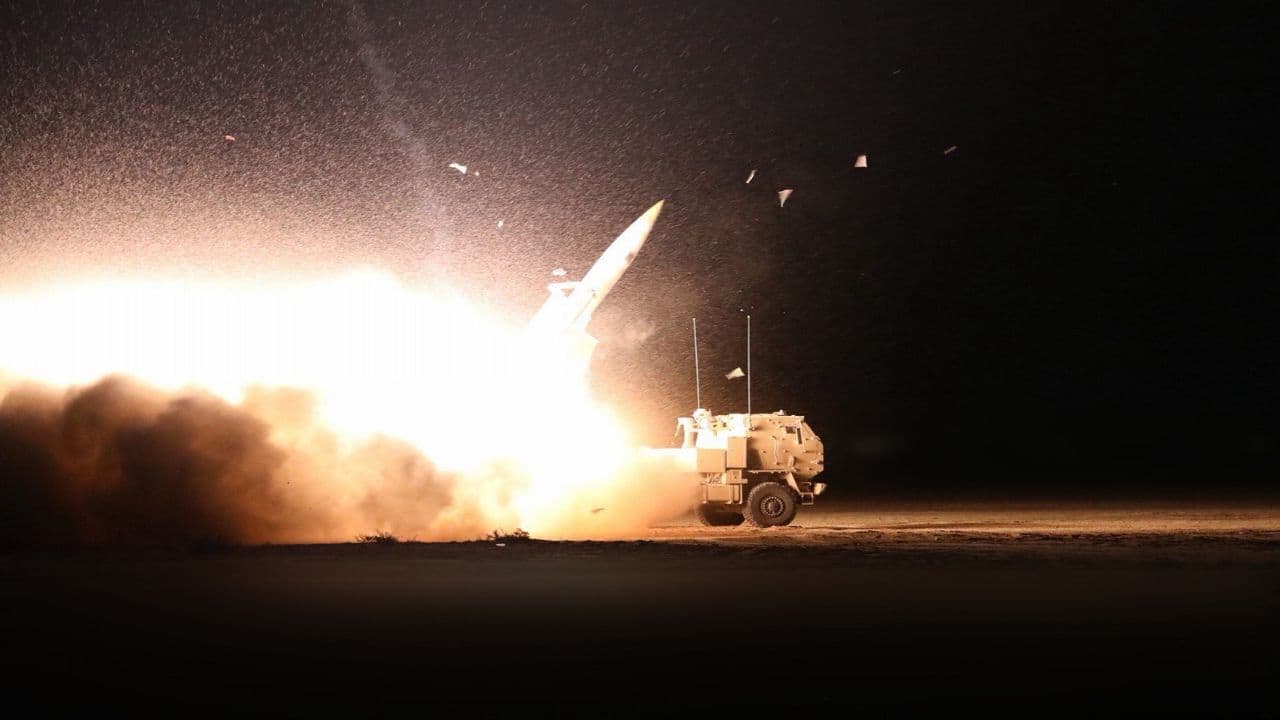
The escalating tensions between the United States and Iran have taken a new turn, with Iran's Islamic Revolutionary Guard Corps (IRGC) launching missile and drone attacks on US military facilities located in Bahrain and Kuwait. This development marks the third wave of Iran's so-called 'Operation Nasr 2,' a campaign initiated in retaliation to recent American strikes against Iranian military positions. The unfolding events highlight the increasing volatility in the Gulf region and raise concerns about the security of critical energy supply routes.
According to an official statement released through Iran's state broadcaster, Islamic Republic of Iran Broadcasting (IRIB), the IRGC Navy and Aerospace Forces conducted coordinated missile and drone assaults targeting American military assets at two key bases in the Gulf. The statement detailed that the Sheikh Isa Air Base in Bahrain was struck, specifically aiming at weapons and equipment storage facilities, as well as parts of US aircraft and naval assets. Simultaneously, the Ali Al Salem Air Base in Kuwait was targeted, with attacks focusing on the area used for deploying MQ-9 drones-unmanned aerial vehicles that play a significant role in US surveillance and combat operations.
The IRGC's statement described the operation as a decisive blow to the US military presence in the region. It said, "The brave warriors of the IRGC Navy and Aerospace Forces in the third wave of Operation Nasr 2 destroyed several weapons and parts storage sheds for enemy ships and aircraft at the Sheikh Isa base in Bahrain during a simultaneous missile and drone operation." The statement further claimed success in damaging or destroying multiple MQ-9 drones at the Ali Salem base in Kuwait, emphasizing the precision and impact of the attacks.
These strikes came in direct response to prior US military actions against Iranian coastal military locations, underscoring a cycle of retaliation between the two adversaries. Tehran framed its operation as a measured response to American aggression, warning that "the retaliation and punishment of the aggressor will continue as long as America's crimes continue," and cautioning that any future attacks by the US would be met with "surprising responses." This rhetoric signals Iran's willingness to escalate the conflict should it perceive further threats to its military infrastructure.
Adding a further layer of complexity, the Iranian military issued a stark warning regarding energy shipments from the Gulf region. It stated that continued US military operations could threaten the export of oil and gas, commodities crucial to the global economy. "As long as America's evils exist in the region, not a single drop of oil or gas will be exported from the region," the IRGC warned. The statement also suggested that such hostilities would delay the reopening of the Strait of Hormuz, a strategically vital waterway through which a significant portion of the world's oil supply transits. The threat to disrupt energy shipments through this narrow channel has long been a point of tension, and Iran's warning signals a potential attempt to leverage its geographic position in the ongoing conflict.
This latest Iranian offensive followed a US military operation announced by the United States Central Command (CENTCOM). According to CENTCOM, American forces carried out a series of coordinated strikes against Iranian military sites along Iran's southern coast, targeting locations including Bushehr, Chah Bahar, Jask, Konarak, Abu Musa, and Bandar Abbas. The operation lasted approximately five hours and concluded at 10:15 pm Eastern Time on July 13.
CENTCOM reported that precision-guided weapons were employed during the strikes, focusing on Iranian coastal defense systems, missile facilities, drone positions, and naval capabilities. The stated objective of the US operation was to diminish Iran's capacity to threaten commercial shipping routes, particularly those passing through the Strait of Hormuz. By targeting military infrastructure that could be used to disrupt maritime traffic, the US aimed to safeguard the flow of goods and energy resources vital to global markets.
Furthermore, CENTCOM highlighted that over 50,000 US military personnel are currently deployed throughout the Middle East, maintaining a high state of readiness to respond to any emerging threats. This substantial military presence underscores America's commitment to securing the region and protecting its interests, even as the situation grows more volatile.
The cycle of attack and retaliation between the US and Iran reflects the deep-seated animosity and strategic rivalry that has persisted for decades. The recent flare-up, marked by missile and drone strikes on both sides, raises the stakes for a wider conflict that could have significant ramifications for regional stability and global economic security. The critical importance of the Strait of Hormuz as a transit route for oil exports means that any disruption could cause spikes in energy prices and impact countries far beyond the Middle East.
Iran's announcement of Operation Nasr 2 and its explicit threats regarding energy exports serve as a reminder of the leverage Tehran holds due to its geographic location and military capabilities. At the same time, the US military's decisive strikes and continued readiness highlight Washington's determination to counter Iranian influence and ensure the free flow of commerce through the Gulf.
As the situation develops, international observers and stakeholders in global energy markets will be closely monitoring the actions of both Iran and the United States. The risk of miscalculation or unintended escalation remains high, making diplomatic efforts and careful management of tensions crucial to preventing further deterioration of security in the region.
For now, the exchanges of missile and drone attacks between the IRGC and US forces illustrate a dangerous pattern of tit-for-tat conflict. Both sides have demonstrated advanced military capabilities and a willingness to engage in offensive actions, signaling that the dispute is far from resolved. The coming days and weeks will be critical in determining whether this cycle of violence can be de-escalated or whether it will spiral into a broader confrontation with far-reaching consequences.
In summary, the recent missile and drone strikes by Iran's IRGC on US military bases in Bahrain and Kuwait constitute a significant escalation in the ongoing hostilities between Tehran and Washington. These attacks, part of Operation Nasr 2, came in retaliation for earlier US strikes on Iranian coastal military sites. Iran has warned of continued retaliation and threatened to disrupt oil and gas exports through the Strait of Hormuz. Meanwhile, the US conducted its own precision strikes against Iranian military infrastructure, aiming to protect vital shipping lanes. With tens of thousands of US forces deployed in the region and both sides prepared for further conflict, the situation remains tense and unpredictable, with global implications for security and energy markets.