
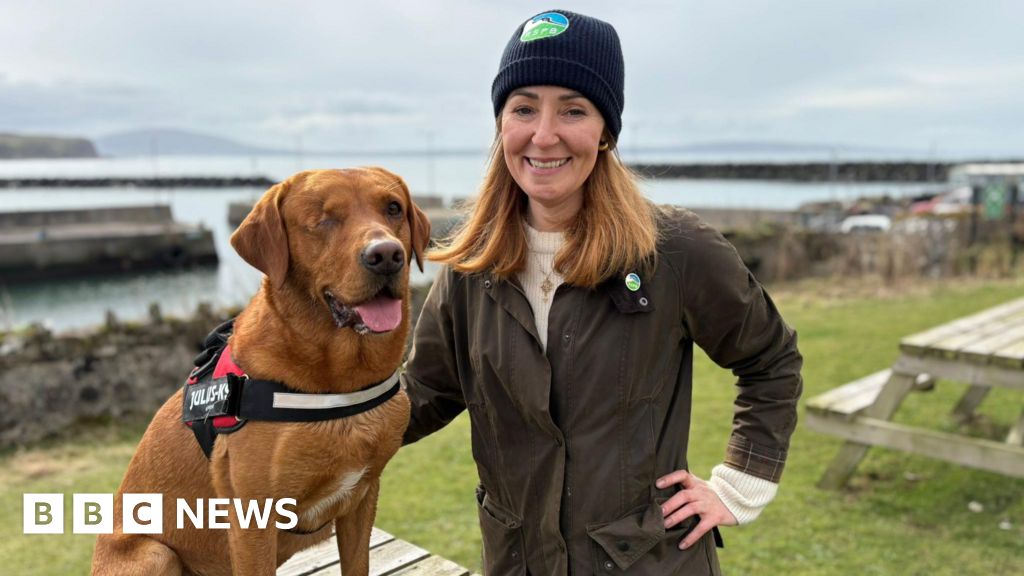
In a groundbreaking conservation achievement, Rathlin Island has become the first place in the world to completely eradicate ferrets, a non-native predator that had severely threatened the island’s internationally important seabird populations. This success story is the result of a dedicated five-year effort known as the Life Raft project, a £4.5 million initiative aimed at removing invasive ferrets and rats from the island to protect native wildlife. Central to this victory was Woody, a specially trained red fox labrador whose keen sense of smell played a critical role in detecting the elusive ferrets, ensuring the island’s complete clearance of this destructive species.
Rathlin Island, located off the coast of Northern Ireland, has long been recognized for its rich biodiversity, particularly its seabird colonies, which are of global conservation significance. However, the introduction of ferrets to the island in the 1980s severely disrupted this delicate ecosystem. Originally brought in to control pests such as rabbits and rats, the ferrets instead turned their attention to the island’s ground-nesting birds, preying on eggs, chicks, and adult birds alike. Over time, their presence contributed to a dramatic decline in seabird numbers, threatening the survival of species that rely on Rathlin as a breeding haven.
The problem was compounded by the presence of rats, which are believed to have arrived on the island in the 19th century via boats. Both ferrets and rats proved devastating to the native fauna, prompting the launch of the Life Raft project in 2021. This ambitious conservation program involved laying over 400 ferret traps in 2023 and nearly 7,000 handmade rat bait traps spaced systematically across the island in 2024. The project’s comprehensive approach targeted both invasive species simultaneously, aiming to restore the island’s ecological balance.
While the extensive trapping efforts were vital, the key to the project’s success was Woody, the conservation dog trained specifically to sniff out ferrets. Wearing protective goggles during his work, Woody’s exceptional olfactory abilities allowed the team to locate and remove hidden ferrets that might otherwise have gone undetected. His role was not only crucial in the eradication phase but continues to be essential for maintaining the island’s ferret-free status. After a tragic accident in which Woody lost an eye due to a thorn injury, his keen nose remained fully operational, allowing him to transition into a new role as the island’s biosecurity dog.
Woody’s ongoing duties involve inspecting shipments of supplies such as hay, farm feed, and wood, which could potentially harbor rodents or other invasive species. By checking these materials both during loading at Ballycastle and upon arrival on Rathlin, Woody helps prevent the reintroduction of ferrets and rats, safeguarding the hard-won conservation gains. This biosecurity measure is critical to ensuring the island remains free of invasive predators, protecting its wildlife into the future.
The impact of eradicating ferrets from Rathlin is already becoming apparent. Since no ferrets have been sighted since October 2023, conservationists are cautiously optimistic about the upcoming breeding seasons. Claire Barnett, area manager for RSPB Northern Ireland, notes that seabird colonies can recover rapidly when threats are removed, and early signs from the last breeding season suggest that seabird numbers on Rathlin are beginning to rebound. This recovery offers hope not only for Rathlin but also for other islands and regions worldwide facing similar challenges with invasive predators.
The benefits of ferret removal extend beyond wildlife conservation, positively affecting the island’s human community as well. Tom McDonnell, a lifelong resident and wildlife photographer, highlights how the eradication allows locals to keep chickens again without fear of predation, enhancing their self-sufficiency. He also looks forward to seeing the return of other native animals, such as hares, whose populations had suffered due to predation on young leverets. McDonnell describes the project as a “win-win” for both nature and the people of Rathlin.
The urgency of protecting seabirds is underscored by broader trends across the UK and Ireland, where breeding seabird populations have declined by 62% over the past two decades. Erin McKeown, Senior Seabird and Marine Policy Officer at RSPB NI, recalls a heartbreaking incident in 2017 when a feral ferret killed 27 puffins in just two days on Rathlin. The eradication of ferrets aims to halt such devastating attacks, giving seabirds a safe space to