
**Massive ‘No Kings’ Protests Sweep the US Amid Political Tensions**
In a remarkable demonstration of political activism, nearly seven million Americans took to the streets across the United States for the latest round of "No Kings" protests, voicing their opposition to the Trump administration and what they describe as increasingly authoritarian tendencies in the country’s leadership. The protests, which spanned all major cities, were largely peaceful and marked by a diverse array of participants and creative forms of expression, even as they unfolded against the backdrop of a federal government shutdown.
**Origins and Growth of the ‘No Kings’ Movement**
The “No Kings” movement began earlier this year as a grassroots response to what many see as the Trump administration’s attempts to concentrate power and erode traditional checks and balances. The name itself is a direct reference to the American founding principle that rejects monarchy and unchecked executive authority. Protesters argue that President Trump’s recent statements and actions have crossed lines of constitutional restraint, prompting widespread concern about the future of American democracy.
According to organizers cited by major news outlets such as CNN and ANI, the turnout for this latest round of demonstrations was approximately seven million—an increase of two million over the first wave of protests that took place in June. This surge in participation reflects both growing frustration with the administration and the ability of protest organizers to galvanize support across political, generational, and geographic lines.
**A Nationwide Display of Dissent**
The protests were notable not only for their size but also for their reach. Rallies were reported in cities and towns large and small, with particularly large gatherings in Chicago, Los Angeles, and Washington, D.C.
In Chicago, demonstrators marched with homemade signs—including the widely-seen slogan “Hands Off Chicago”—and waved upside-down American flags, a traditional signal of distress. The crowds included a mixture of local residents, activists, and community leaders. Alongside the American flags, Mexican and Pride flags were also visible, indicating the broad coalition of groups who see the current political climate as threatening to their rights and values.
In Los Angeles, the protests took on a festive atmosphere, with many participants donning inflatable costumes and waving American flags as they paraded through the streets. The creative displays were aimed not only at drawing attention but also at fostering a spirit of resilience and unity among protestors.
Meanwhile, in the nation’s capital, the protests intersected with ongoing government turmoil. On the 18th day of a federal government shutdown, current and former federal employees joined the protests along Pennsylvania Avenue, calling for a return to more respectful and effective political discourse in Washington. Their presence underscored the tangible impact of political gridlock on everyday Americans and lent additional urgency to the protesters’ demands.
**A Peaceful but Powerful Message**
Despite the massive scale of the demonstrations and the charged political atmosphere, law enforcement agencies reported that the rallies remained overwhelmingly peaceful. There were no significant incidents of violence or arrests, a testament to both the organization of the protests and the determination of participants to keep their message focused and constructive.
Organizers emphasized the importance of nonviolence, framing their cause as a defense of democratic norms rather than an attack on any particular individual. Many protestors cited concerns about the erosion of civil liberties, the politicization of federal agencies, and the broader implications of executive overreach.
**Social Media and Presidential Response**
As with many modern protest movements, social media played a central role in both organizing the demonstrations and amplifying their message. Hashtags related to the “No Kings” movement trended nationally, with participants sharing images, videos, and personal stories from the front lines of the rallies.
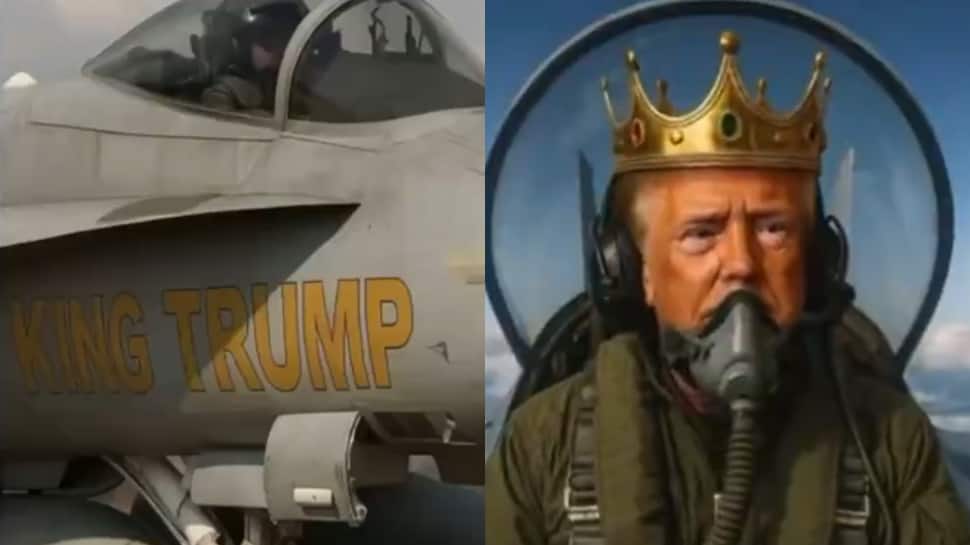
The Trump administration, however, responded in a characteristically controversial manner. On Sunday, President Trump shared an AI-generated video clip on his social media platform, Truth Social. The 19-second video depicted a cartoonish version of Trump piloting a fighter jet labeled “King Trump” and spraying a brown liquid, resembling mud, over demonstrators. The video appeared to mock the protests, suggesting that their impact was negligible and that the administration remained unbowed.
The White House further stoked controversy by posting a screengrab on X (formerly Twitter) of Trump wearing an emperor’s crown, a not-so-subtle jab at the protestors’ central message about the dangers of autocracy. These posts drew sharp rebukes from critics, who saw the images as dismissive and inflammatory at a time when millions of Americans were expressing genuine