
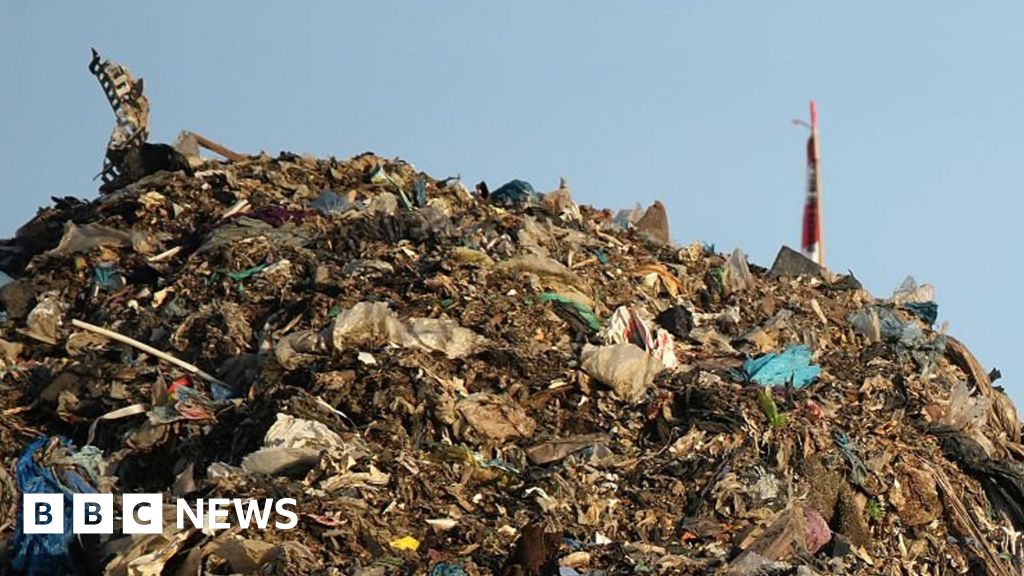
The UK government has announced a significant new national waste crime action plan aimed at tackling some of the worst illegal rubbish dumps across England. This initiative includes the clearance of three of the country’s most notorious illegal waste sites, which together contain tens of thousands of tonnes of rubbish. In a departure from usual practice, the clean-up will be funded by taxpayers rather than landowners, marking a notable shift in how such environmental hazards are addressed.
Among the sites targeted for clearance are massive waste dumps located in Wigan, Sheffield, and Lancashire. These three locations collectively hold approximately 48,000 tonnes of illegally dumped rubbish. Additionally, a site in Kidlington, Oxfordshire, containing around 20,000 tonnes of waste, is already being cleared at a cost exceeding £9 million. Typically, the responsibility and financial burden for clearing illegal waste on private land fall on the landowners. However, due to the scale and severity of these sites, the government has stepped in to manage and fund the clean-up process.
The decision to clear these sites has been welcomed by local communities affected by the waste dumps. For instance, residents near the Wigan dump in Bickershaw have long suffered due to the site’s hazardous conditions. The site gained notoriety last summer when it caught fire, forcing nearby schools to close and raising serious health concerns among locals. People living close to the dump have described living in distressing conditions, plagued by rats, flies, and an unbearable stench. Nicha Rowson, a local beautician who had to move her studio out of her home because of the smell, expressed relief and happiness at the government’s announcement to clear the site. She praised the decision as “amazing news” but criticized the delay, arguing that the health and wellbeing of residents had been sidelined in favor of money. She also expressed frustration that no one responsible for the illegal dumping had yet been prosecuted, leaving taxpayers to foot the bill for the clean-up.
The other two sites earmarked for clearance include a 20,000-tonne illegal dump located on an industrial site in Sheffield and a 10,000-tonne tip in Hyndburn, Lancashire. While the government has not disclosed the total cost of clearing these sites, officials have stressed that site-specific assessments are still underway to determine the logistics and feasibility of the clean-up operations before work can begin. This cautious approach aims to ensure that any intervention is both safe and effective.
Earlier investigations by the BBC have revealed that England is home to hundreds of illegal waste dumps, among which at least 11 are classified as “supersites” — sites containing more than 20,000 tonnes of waste. One such notorious site is located in Over, near Gloucester. Here, tens of thousands of tonnes of rubbish have been dumped over time, with witnesses reporting that at the site’s peak, 30 to 50 vehicles were dumping waste daily. A fire at the Over site in June 2025 led to emergency services being called out and caused dumping operations to largely cease. However, the site itself remains open and unsealed.
Local officials near Over have expressed frustration with the perceived inaction by the Environment Agency (EA). Charlie Coats, chairman of Highnam Parish Council, voiced his disappointment with the government’s new waste crime action plan, noting that the Over site was conspicuously absent from the list of sites scheduled for clearance. Coats described a recent meeting with the Environment Agency as unhelpful and lacking urgency, criticizing the agency for not taking the issue seriously enough or providing constructive solutions. This sentiment reflects broader concerns from communities living near illegal dumps that feel overlooked or neglected.
In response, a spokeswoman for the Department for Environment, Food and Rural Affairs (Defra) stated that the sites selected for clearance represent the “most egregious cases” of illegal dumping. She emphasized that the government continues to tackle other illegal waste sites through enforcement actions such as restriction notices, permit revocations, and disruption efforts, all of which are being strengthened under the new action plan.
The government’s wider waste crime action plan includes several measures designed to empower local authorities and enforcement agencies. One key aspect of the plan is to offer local councils a rebate on landfill tax if they take on the responsibility of clearing illegal dumps within their jurisdictions. This financial incentive aims to encourage more proactive local action against waste crime.
Furthermore, the government has pledged to provide the Environment Agency with an additional £45 million over the next three years to bolster enforcement activities.