
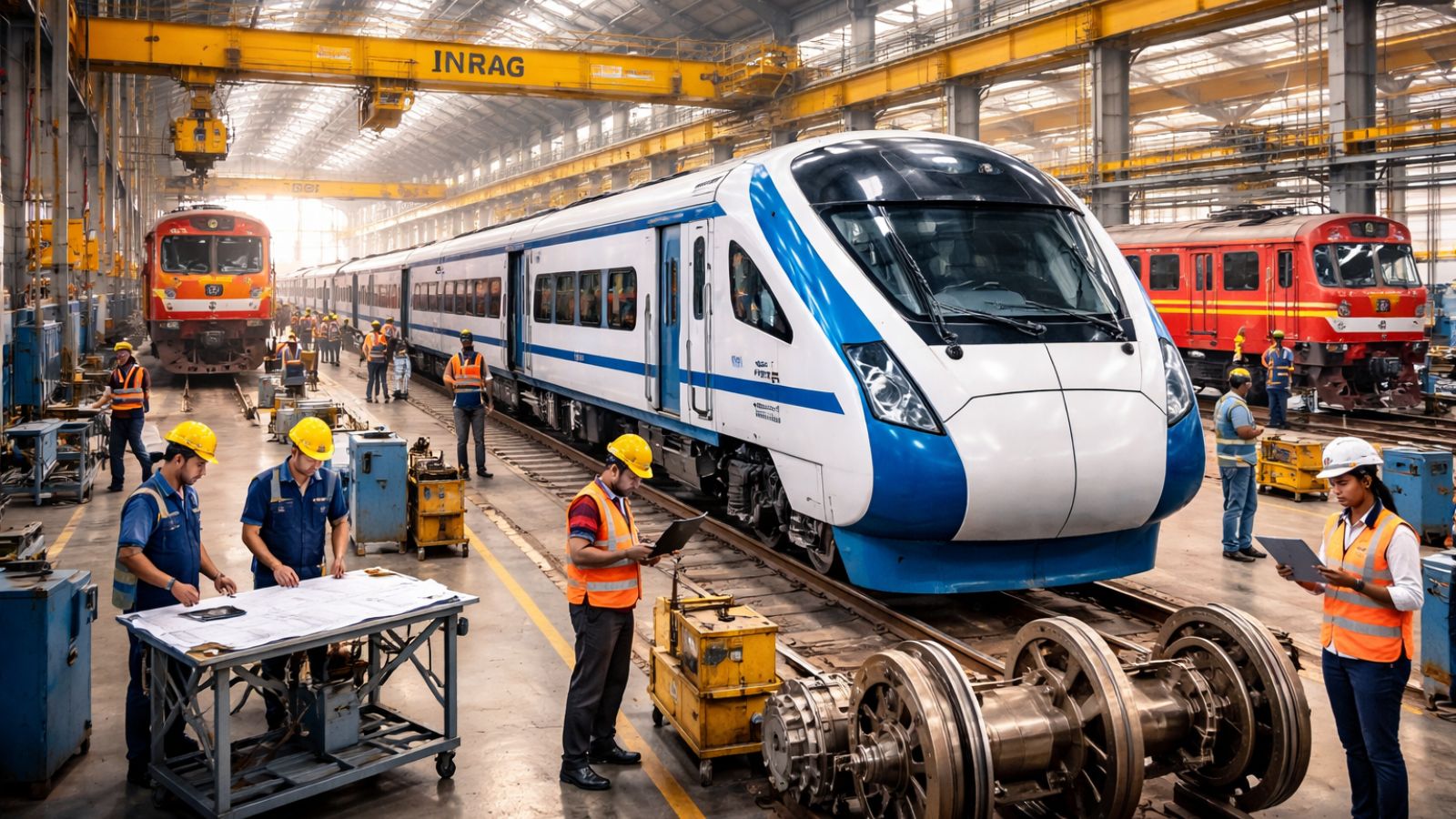
A recent report by the Standing Committee on Railways has highlighted the urgent need for the Ministry of Railways to modernize its production units to meet ambitious rolling stock targets. Rolling stock in the Indian Railways context refers to the fleet of coaches, wagons, locomotives, and various types of train sets such as EMU (Electric Multiple Unit), DEMU (Diesel Electric Multiple Unit), MEMU (Mainline Electric Multiple Unit), among others. The committee's findings were outlined in its Demands for Grants report for the fiscal year 2026-27, which stresses the importance of upgrading and augmenting production capabilities to address shortfalls in meeting annual production targets.
### Addressing Production Shortfalls and Enhancing Manufacturing Capacity
The committee expressed concern over the shortfall against rolling stock production targets in recent years. To combat this, it recommended a comprehensive modernization push for the Ministry's production units. This would involve not only physical augmentation of facilities but also a focus on indigenization-promoting domestic manufacturing-and skill development aligned with next-generation technologies. The modernization drive aims to ensure that production targets are met on time, which is crucial for the expansion and efficiency of the railway network.
The Ministry of Railways, in its response to the committee, detailed the monitoring mechanisms in place to oversee rolling stock production. Regular meetings are conducted with the Production Units (PUs) to track progress and resolve issues that may hinder timely delivery. These meetings include performance reviews involving all stakeholders such as the Research Designs and Standards Organisation (RDSO) and various Zonal Railways to foster a coordinated approach.
Production targets are formally approved by the Railway Board based on traffic requirements and conveyed to the PUs. Monthly production data is meticulously monitored at the Board level, with performance tracked through regular review meetings to maintain transparency and accountability.
### Ongoing Investments in Infrastructure and Maintenance Facilities
The Ministry reported that there are currently about 291 projects underway across the country's Zonal Railways. These projects focus on establishing new workshops as well as upgrading and augmenting existing maintenance facilities. The goal is to increase the overall overhauling capacity and enhance the infrastructure necessary for the upkeep of rolling stock.
These initiatives take into account several critical factors such as the type of rolling stock to be serviced, the machinery required, and the capacity of workshops. So far, an expenditure of approximately Rs. 3,097 crore has been incurred on these projects, against a total sanctioned budget of Rs. 7,347 crore. The projects are at various stages of completion and are being closely monitored to ensure they are finished on schedule.
### Transition to Modern Coaches and Improved Train Speeds
The Ministry has also made significant strides in replacing older rolling stock with more modern alternatives. Over 1,494 rakes of the older Integral Coach Factory (ICF) design have already been replaced with Linke Hofmann Busch (LHB) coaches, which are lightweight, sturdier, and capable of higher speeds. The remaining 491 ICF rakes are slated for phased replacement in the near future.
This transition has contributed to improved train speeds and overall passenger comfort, as LHB coaches offer better safety features and ride quality. The committee acknowledged this progress and lauded the Railways for introducing advanced rolling stock such as the Vande Bharat Express (Sleeper variant) and the Amrit Bharat Express. These new trains feature enhanced safety systems and modern passenger amenities, reflecting a move towards higher-capacity, faster, and more reliable train services.
### Emphasis on Workshop Modernization and Skill Development
While manufacturing capabilities have improved, the committee noted that the maintenance ecosystem in Zonal workshops must be strengthened to match these advancements. Modern rolling stock requires sophisticated maintenance regimes supported by advanced diagnostic equipment and digital maintenance systems. To this end, the committee recommended prioritizing the modernization of workshops through the induction of such technology.
Furthermore, it advocated for the development of structured technical training modules to enhance the skills of the workforce responsible for maintaining these assets. A key recommendation was to institutionalize a formal mechanism for seamless technology transfer and technical know-how from production units to maintenance workshops. This would help ensure the reliability and safety of rolling stock, reduce maintenance time and cost, and optimize the lifecycle performance of railway assets.
### Conclusion
The Standing Committee on Railways' report underscores the critical need for the Ministry of Railways to invest in modernizing and expanding its production and maintenance infrastructure. Achieving rolling stock targets is essential for meeting the growing demand for rail transport in India, improving passenger experience, and ensuring operational efficiency. The committee's recommendations focus on a balanced approach that combines infrastructure augmentation, technological advancement, skill development, and institutional coordination.
The Ministry's ongoing projects and the replacement of older rolling stock with modern coaches like the LHB rakes and Vande Bharat trains are positive steps in this direction. However, the committee stresses that sustained efforts, particularly in workshop modernization and workforce training, are vital to fully realize the benefits of these advancements and to maintain the Indian Railways' status as a world-class transport system.
---
**About the Author** Anish Mondal is a journalist with over nine years of experience specializing in coverage of railways and roadways. Currently a member of the Indianexpress.com editorial team, Anish has a strong background in reporting on high-impact infrastructure sectors. His professional journey includes work at Rajya Sabha Television (now Sansad TV), FinancialExpress.com, and ETNowNews.com. Anish holds a Master of Journalism and Mass Communication and a Post Graduate Diploma in Journalism and Production from Apeejay Stya University, along with a Bachelor of Arts in English Honours from the University of Calcutta. His expertise lies in connectivity projects, including Indian Railways and National Highway expansion.