
The escalating conflict between the United States, Israel, and Iran has profoundly shaken the global economy, with widespread repercussions felt across energy markets, stock exchanges, and developing nations struggling to manage soaring fuel costs. Attacks and counterattacks targeting Iran's critical energy infrastructure-refineries, pipelines, gas fields, and tanker terminals in the Persian Gulf-have intensified fears that the economic fallout will be protracted, possibly extending for months or even years.
Initially, energy experts hoped that a swift end to hostilities would limit long-term damage. Christopher Knittel, an energy economist at the Massachusetts Institute of Technology, remarked that just a couple of weeks ago, he believed that if the war ceased immediately, the long-term economic implications would be minimal. However, the ongoing destruction of vital energy infrastructure has dashed those hopes, indicating that the conflict's consequences will be far-reaching and enduring.
One of the most significant blows came on March 18 when Iran struck Qatar's Ras Laffan natural gas terminal. This facility produces approximately 20% of the world's liquefied natural gas (LNG), and the attack crippled 17% of Qatar's LNG export capacity. QatarEnergy, the state-owned energy company, warned that repairs could take up to five years, signaling a severe and sustained disruption to global LNG supplies.
The conflict triggered an immediate oil shock. In retaliation to U.S. and Israeli military actions on February 28, Iran effectively closed off the Strait of Hormuz, a crucial maritime chokepoint through which about one-fifth of the world's oil passes. Iran threatened tankers attempting to transit the strait, leading Gulf oil producers such as Kuwait and Iraq to reduce their output since they had no viable route to export their crude. This blockade resulted in a loss of 20 million barrels of oil per day, described by the International Energy Agency (IEA) as the largest supply disruption ever recorded in the global oil market.
As a result, oil prices surged dramatically. Brent crude oil prices rose 3.4% in a single day to $105.32 per barrel, up from roughly $70 just before the conflict began. U.S. benchmark crude climbed even more sharply, settling at $99.64 per barrel, a 5.5% increase. Historically, such sharp oil price shocks have precipitated global recessions, according to Knittel.
The renewed energy crisis has revived fears of stagflation-a toxic economic condition marked by simultaneous inflation and stagnant growth-reminiscent of the 1970s oil shocks. Carmen Reinhart of Harvard Kennedy School, a former World Bank chief economist, highlighted the danger of rising inflation combined with slowing economic growth. Gita Gopinath, former chief economist at the International Monetary Fund, noted that pre-war forecasts projected global economic growth at 3.3% for 2025. However, with oil prices averaging $85 per barrel in 2026, growth could slow by 0.3 to 0.4 percentage points.
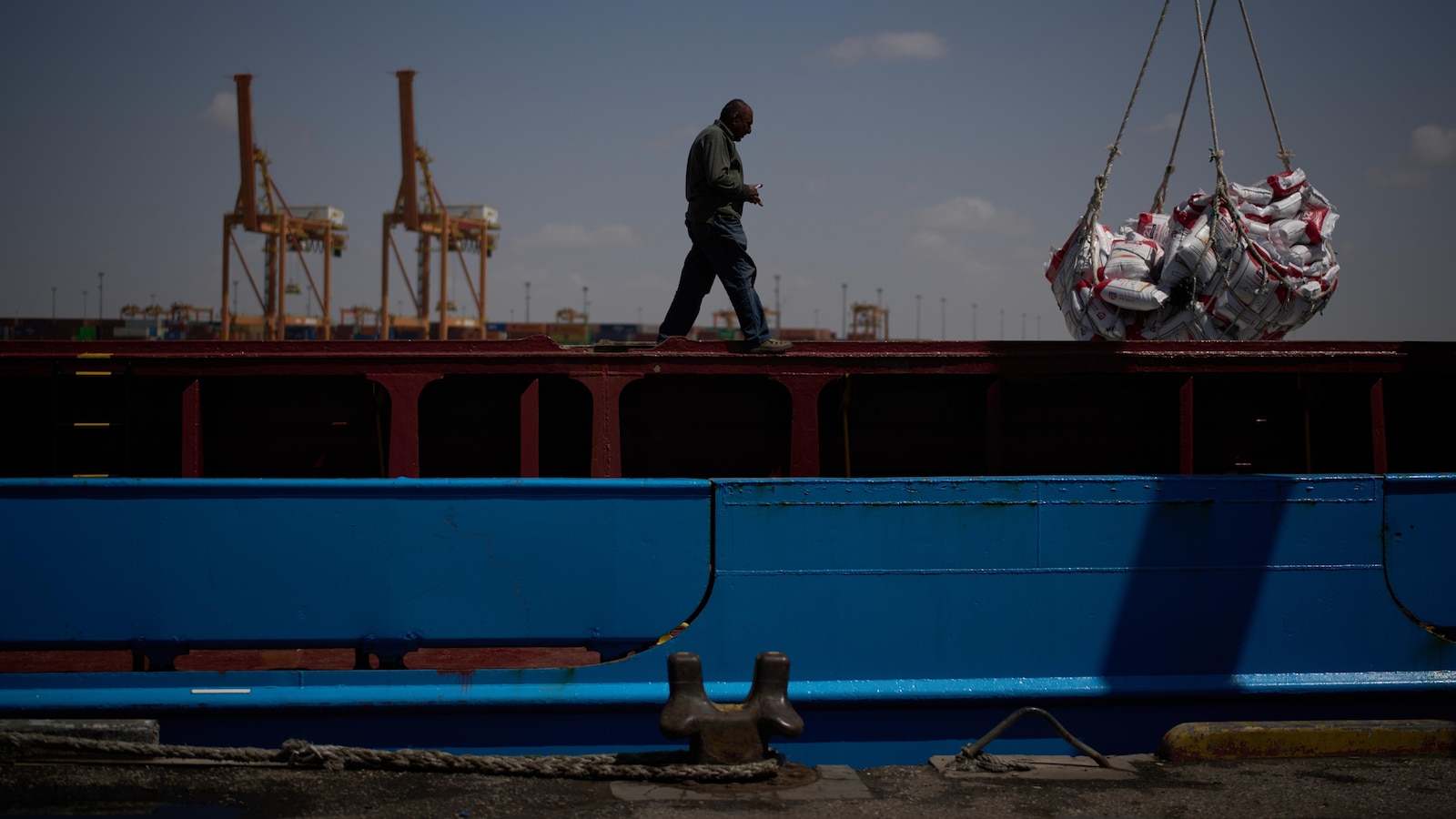
The conflict's ramifications extend beyond oil and gas to global agriculture. The Persian Gulf region is a major exporter of key fertilizers-accounting for a third of global urea and a quarter of ammonia exports. These fertilizers rely heavily on natural gas, which is abundant and low-cost in the Gulf. Since up to 40% of nitrogen fertilizer exports pass through the now-blocked Strait of Hormuz, prices for urea have surged 50%, while ammonia prices have increased by 20% since the war's outset.
Countries like Brazil, which imports 85% of its fertilizer, face significant vulnerability. Egypt, a substantial fertilizer producer itself, also depends on natural gas for production, and disruptions threaten its output. Higher fertilizer costs are expected to raise food prices worldwide and reduce agricultural yields as farmers cut back on fertilizer use. These pressures will particularly affect poorer populations who already struggle with food security.
The conflict has also disrupted the global helium supply. Helium, a byproduct of natural gas, is essential for various high-tech industries, including semiconductor manufacturing, aerospace, and medical imaging. Qatar's Ras Laffan facility produces about one-third of the world's helium, and its damage adds another layer of complexity to global supply shortages.
The International Energy Agency's head, Fatih Birol, warned on March 23 that no country will be immune if the crisis continues to escalate. Developing nations are especially at risk, facing severe energy shortages as wealthier countries outbid them for limited oil and gas supplies. Lutz Kilian, director of the Center for Energy and the Economy at the Federal Reserve Bank of Dallas, emphasized that poorer countries will suffer the most.
Asia is particularly vulnerable, as more than 80% of the oil and LNG passing through the Strait of Hormuz is destined for the region. Many Asian countries have already begun rationing energy and imposing conservation measures. For instance, the Philippines has shortened government office hours to four days a week and mandated air conditioning not be set below 75°F (24°C). In Thailand, public workers have been instructed to use stairs instead of elevators to save energy.
India, the world's second-largest importer of liquefied petroleum gas (LPG) used for cooking, is prioritizing household supply over businesses and absorbing much of the price increases to shield poor families. However, LPG shortages have forced some restaurants to reduce operating hours, temporarily close, or scale back menu items that require high energy, such as curries and deep-fried foods.
South Korea, heavily dependent on energy imports, has implemented restrictions on public employees' car use and reinstated fuel price caps dropped in the 1990s to manage costs.
The United States, while not immune, is somewhat insulated from the crisis. As a net oil exporter, the U.S. energy sector benefits from higher global prices. Additionally, U.S. liquefied natural gas prices remain lower than in other regions because export facilities are operating at full capacity, preventing significant exports and keeping more gas available domestically. This abundance helps stabilize U.S. energy prices.
Nonetheless, American consumers are feeling the pinch from rising gasoline prices, which have climbed from $2.98 to nearly $4 per gallon in just one month, according to AAA. Mark Zandi, chief economist at Moody's Analytics, noted that gasoline costs heavily influence consumer sentiment and spending behavior. The U.S. economy was already showing signs of slowing before the conflict, with annualized growth slowing to 0.7% in the last quarter of the previous year, down from 4.4% in the prior quarter. Employment gains have also weakened, with unexpected job losses and the slowest hiring since 2002.
Gregory Daco, chief economist at EY-Parthenon, has raised the probability of a U.S. recession in the next year to 40%, compared to a typical 15% risk under normal conditions.
Despite the compounding shocks of the COVID-19 pandemic, Russia's invasion of Ukraine, inflation surges, and tighter monetary policy, the global economy had shown resilience. There was cautious optimism that it could withstand the latest turmoil from the Iran conflict. However, ongoing attacks on Gulf energy infrastructure are eroding that hope.
Repairing damaged LNG facilities, refineries, and tankers will be a slow and costly process. Kilian highlighted that even under the best circumstances, recovery will take years, with many complex logistical challenges involved in restoring production and transportation capacity.
Economists like Zandi emphasize that the conflict offers no economic benefits. The critical questions now involve the conflict's duration and the extent of the damage it will inflict on the global economy.
In summary, the U.S. and Israeli military actions against Iran have precipitated a multifaceted energy crisis, driving up oil, gas, fertilizer, and helium prices worldwide. The disruption of key supply routes and infrastructure in the Persian Gulf threatens to cause sustained economic hardship, particularly for developing countries and vulnerable populations. As global markets and governments grapple with these challenges, the risk of recession and stagflation looms large, underscoring the profound economic costs of geopolitical conflict in a deeply interconnected world.