
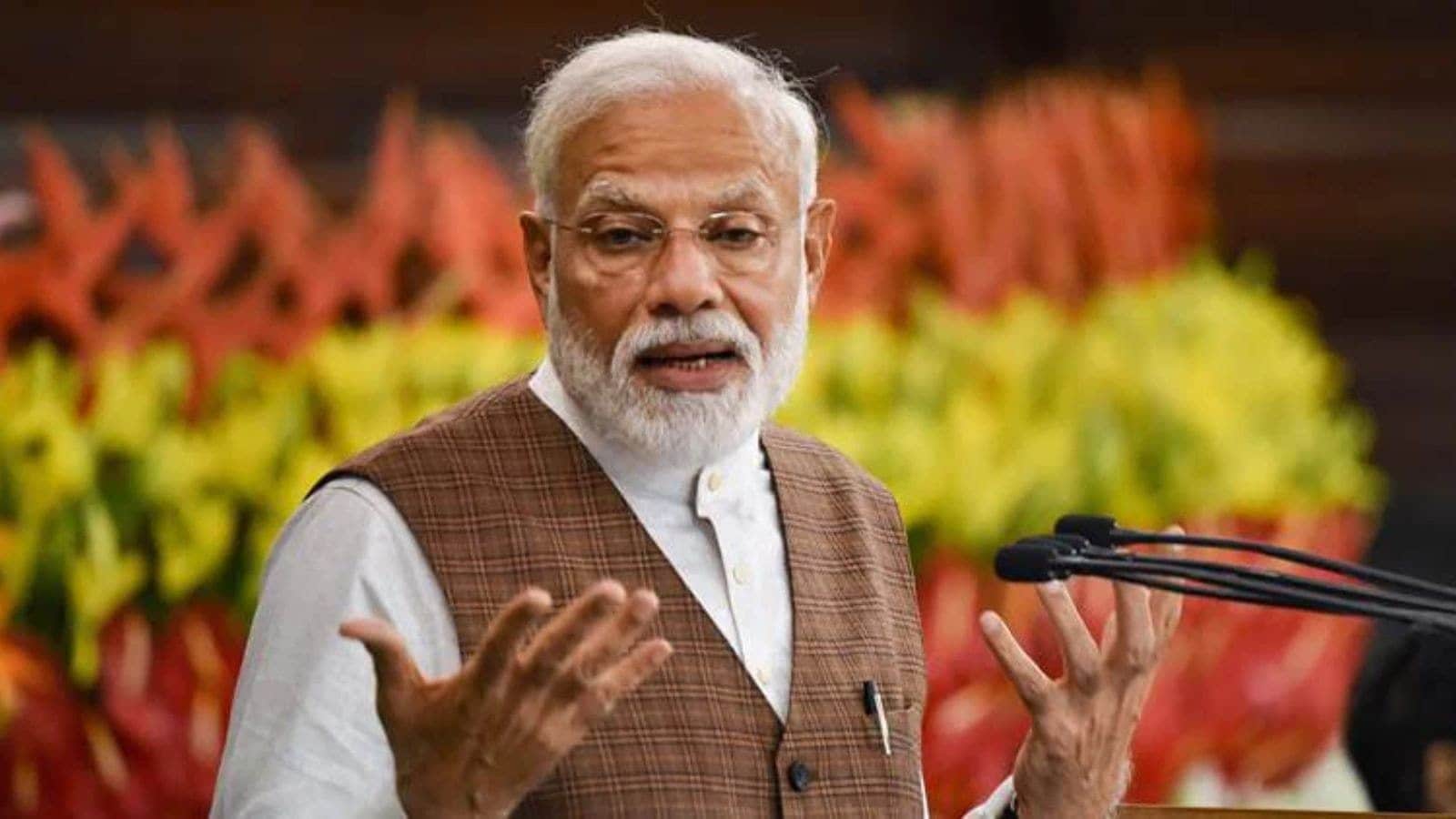
On Sunday, Prime Minister Narendra Modi addressed the nation through his monthly radio program, "Mann Ki Baat," urging all citizens to unite in the face of difficult times caused by the ongoing war in West Asia. He described the conflict as a "fierce war" that has been raging for a month in India's neighborhood, emphasizing the challenging nature of the current situation. Modi called for national unity to overcome these challenges and cautioned against politicizing the crisis, stating clearly that there is no room for self-serving politics in such a grave situation.
The Prime Minister appealed to the people to trust only the information provided continuously by the government and to act solely based on that reliable information. He underscored the importance of collective resolve, expressing confidence that, just as India has overcome past crises, the country will emerge victorious once again from this difficult period.
Addressing the concerns of millions of Indians residing in West Asia, Modi expressed deep gratitude to the Gulf countries for their assistance to over 10 million Indian expatriates living in the region. He highlighted the strategic significance of West Asia as a major center for India's energy requirements, acknowledging that the war there is causing a global crisis related to petrol and diesel supplies.
Modi reassured citizens that India's global relationships, support from various countries, and the strengths the nation has built over the past decade have empowered the country to face these challenging circumstances courageously. He reflected on the turbulence experienced globally in March, noting that many had hoped the world would move towards renewed progress after emerging from the COVID-19 pandemic. However, the continuation of wars and conflicts in different parts of the world has disrupted this hope.
In addition to addressing the geopolitical situation, the Prime Minister highlighted the ongoing Gyan Bharatam Survey, an initiative aimed at collecting information about manuscripts across India. Modi encouraged people to participate in the survey by using the Gyan Bharatam App, through which they can share images and details of manuscripts. He noted that each entry is being carefully verified before being recorded.
Modi expressed satisfaction with the thousands of manuscripts already shared. He gave examples of contributions from various regions and communities: Chao Nantisindh Lokang ji from Namsai, Arunachal Pradesh, shared manuscripts written in the Tai script; Bhai Amit Singh Rana from Amritsar contributed manuscripts in the Gurmukhi script, which is deeply connected to the Sikh tradition and Punjabi language. Other organizations have provided manuscripts written on palm leaves, while the Abhay Jain Library in Rajasthan has shared ancient manuscripts inscribed on copper plates. The Hemis Monastery in Ladakh contributed valuable Tibetan manuscripts, showcasing the diverse cultural heritage of India.
Turning to sports, Modi celebrated recent successes of the Indian cricket team. He recalled the historic victory in the T20 World Cup final held in Ahmedabad, which brought a wave of joy and pride across the country. He also highlighted a thrilling Ranji Trophy final match in Hubli, Karnataka, where the Jammu and Kashmir cricket team won the prestigious trophy for the first time in nearly seven decades.
The Prime Minister praised the leadership of Jammu and Kashmir team captain Paras Dogra, who played a significant role in this victory, and lauded the young Kashmiri bowler Aaqib Nabi, who took an impressive 60 wickets during the tournament. Modi noted that this achievement has not only delighted the players and coaching staff but has also greatly inspired the people of Jammu and Kashmir, boosting enthusiasm for sports among the youth in the region.
Concluding his address, Modi called for continued unity and trust among Indians as the nation navigates these turbulent times, while celebrating the country's rich cultural heritage and sporting achievements that bring the nation together.