
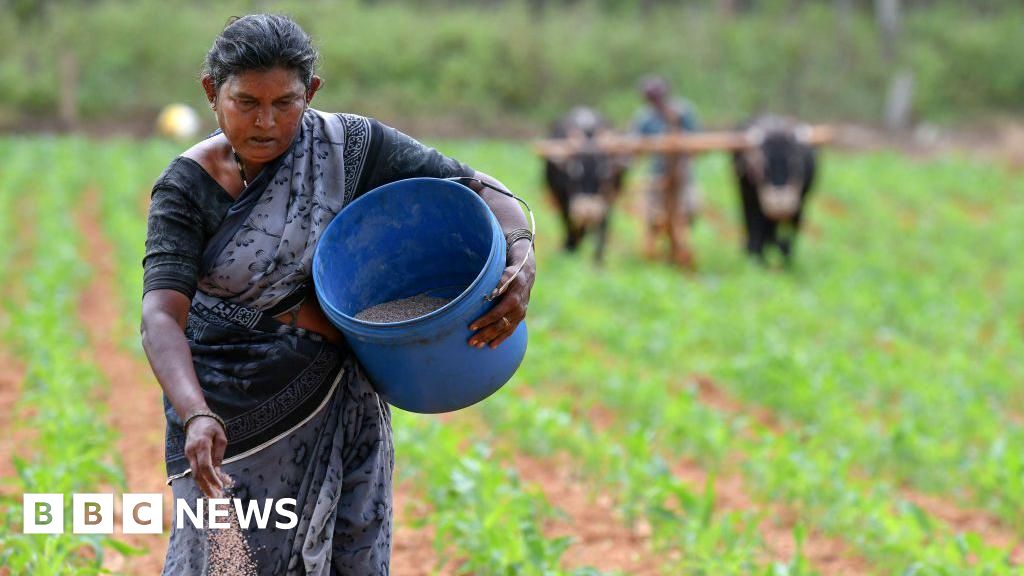
India is facing growing pressure on its fertiliser supplies due to disruptions in shipping routes caused by the ongoing conflict in the Middle East. These interruptions have raised concerns about potential declines in farm production and a subsequent rise in food prices. As the world's second-largest consumer of fertilisers after China, India relies heavily on imports of both raw materials and finished fertiliser products. A significant portion of these imports comes from the Gulf region and passes through the Strait of Hormuz, a critical maritime chokepoint that has seen shipping disruptions amid the war.
Prime Minister Narendra Modi has assured the public that the government is taking proactive measures to secure fertiliser supplies and protect farmers from any adverse effects. While current fertiliser stocks appear sufficient for the upcoming sowing season, experts warn that this situation could deteriorate if the conflict in the Middle East continues for an extended period.
Nitrogen-based fertilisers, particularly urea, are essential for Indian agriculture. Urea is the most widely used fertiliser in the country and plays a vital role in supporting the growth of major food crops like rice and wheat, which cannot absorb adequate nitrogen directly from the atmosphere. India consumes nearly 40 million tonnes of urea annually, a consumption level sustained through extensive government subsidies. Any disruption in the supply chain could influence farmers' decisions on planting, potentially affecting crop yields.
Farmers in key grain-producing states such as Punjab and Haryana have so far not reported any immediate difficulties. These northern states typically begin purchasing urea in May ahead of the main sowing period from June to July. Supplies are currently available through farmer cooperatives as well as warehouses operated by manufacturers and distributors. However, there is growing apprehension about how long these stocks will last should the shipping disruptions persist.
Manpreet Singh Grewal, president of a farmers' collective affiliated with Punjab Agricultural University, expressed concern about the future availability of fertilisers. "We don't know how long the stock will last if the war stretches any further," he said, reflecting a wider anxiety among agricultural communities dependent on steady fertiliser supplies.
According to government data, India held approximately 6.2 million tonnes of urea stocks as of 19 March. Fertiliser use typically peaks during the monsoon crop season from June to September, and analysts believe the current reserves should cover normal demand during this critical period. Nonetheless, experts caution that prolonged disruptions could strain supplies and impact production.
Siraj Hussain, a former federal secretary of agriculture and farmers' welfare, told the BBC that India's fertiliser production is "surely going to be impacted" by these disruptions. He urged the government to prepare for potential shortages of urea and other fertilisers during the monsoon harvest. Hussain also noted that in some regions of India, farmers apply urea excessively-using more nutrients than crops can absorb. This practice may cushion the immediate impact of supply shortages in those areas. However, in regions where fertiliser use is lower, crops could be more vulnerable to any deficit in inputs.
Executives from two fertiliser companies, speaking anonymously to the BBC, indicated that shortages could emerge later in the season if the conflict and associated supply chain issues continue. However, the exact timing and severity of any shortfall would depend on the duration of the disruptions.
A key factor exacerbating the situation is India's dependence on imported natural gas, the primary raw material used in urea production. Approximately 85% of the country's natural gas is imported, mostly from Gulf countries. Alberto Persona, director of fertiliser and sustainability analytics at S&P Global Energy, explained that Indian fertiliser production could absorb up to four weeks of supply disruptions through domestic production or alternative imports. Beyond that, the risk of shortages becomes more severe.
Currently, fertiliser plants across India are operating at around 70% of their natural gas requirements due to a government order issued earlier this month. Industry insiders report that some manufacturers have already reduced production in response to the gas supply constraints.
India is not alone in facing these challenges. Globally, fertiliser prices have surged in recent weeks, with urea prices rising sharply alongside increasing natural gas costs across Asia. The combination of higher prices and reduced availability may prompt some farmers to reduce fertiliser usage, although experts suggest that any immediate impact on crop yields is likely to be limited.
Persona emphasized that the risk to crop yields for the next season is relatively small but grows more significant for future seasons if the supply situation does not improve. He also pointed out that fluctuations in food prices may be influenced more by market expectations than by immediate changes in agricultural output. "The real problem with prices is that they are not always driven by market fundamentals-expectations play an important role," he said.
In response to the crisis, the Indian government is pursuing measures to increase domestic fertiliser production and diversify import sources, thereby reducing dependence on a limited number of countries. On 27 March, Agriculture Minister Shivraj Singh Chouhan directed officials to ensure an equitable and uninterrupted supply of fertilisers to farmers.
However, the situation also threatens to increase the government's subsidy burden. As global fertiliser prices rise, the cost of supplying fertilisers to farmers at controlled rates escalates, potentially straining public finances. Siraj Hussain warned that the government must be prepared for this financial impact while managing supply challenges.
Much now depends on how long the conflict in the Middle East continues and whether shipping routes can return to normal operation. Analysts suggest that if shipping resumes at regular levels within weeks, the supply chains could stabilize without causing severe disruptions to India's fertiliser availability.
In summary, India's fertiliser supplies face significant uncertainty due to the ongoing war in the Middle East, which has disrupted critical shipping routes and restricted access to vital raw materials like natural gas. While current stock levels and government measures provide some buffer, there is growing concern that prolonged disruptions could impact fertiliser availability during the important monsoon sowing season. The government is actively working to mitigate risks, including increasing domestic production and diversifying import sources, but the evolving geopolitical situation remains a key factor influencing the outlook for Indian agriculture and food prices in the coming months.