
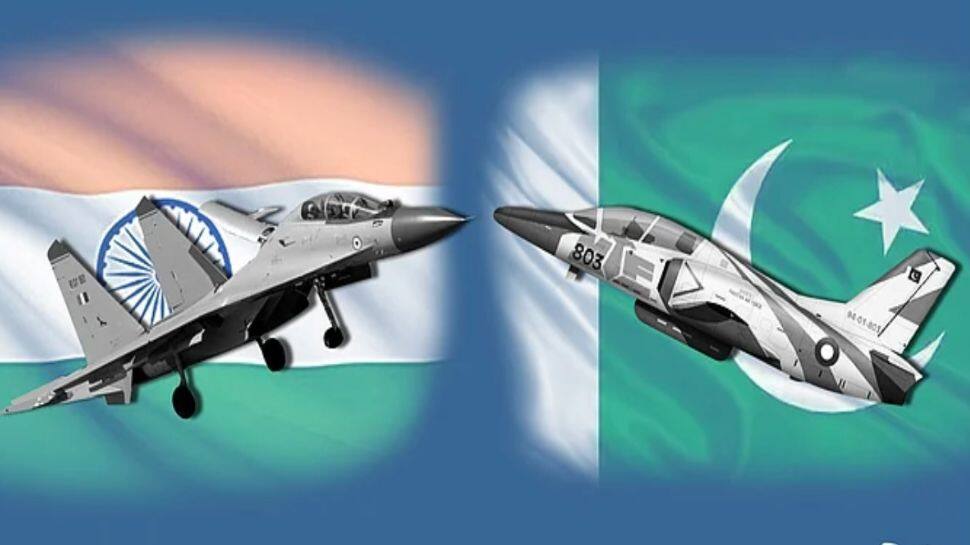
Pakistan is preparing to significantly expand its air force capabilities by seeking to acquire an additional 60 to 70 Chengdu J-10CE fighter jets from China. This potential procurement would bring the total number of J-10CE aircraft in the Pakistan Air Force (PAF) fleet to nearly 100, marking a substantial boost in the country's aerial combat power. This development comes amidst India's ongoing efforts to expand its own fighter fleet, particularly through the acquisition of additional Rafale jets from France. The contrasting moves by the two neighboring countries highlight a shift in regional air combat strategies and military planning.
The Pakistan Air Force currently operates around 20 J-10CE fighters, which were inducted into service in 2022, making them among the most modern aircraft in the PAF's inventory. The J-10CE is a Chinese-designed, single-engine, multi-role fighter built by the Chengdu Aircraft Corporation. It features a delta wing and canard configuration and is classified as an advanced 4.5-generation fighter jet. Capable of reaching speeds up to Mach 1.8, the J-10CE is equipped with modern avionics, an active electronically scanned array (AESA) radar, and beyond-visual-range (BVR) missile capabilities, including the PL-15 long-range air-to-air missile.
Pakistan's move to increase its J-10CE fleet reflects a strategic shift toward enhancing its air combat doctrine. According to defense analysts, the focus is now on developing a fleet of modern fighter aircraft with strong BVR combat capability. BVR involves engaging enemy aircraft at distances beyond the pilot's visual range, relying heavily on advanced sensors and long-range missiles. This approach aligns with Pakistan's broader emphasis on stand-off warfare, which prioritizes using long-range sensors and weapons to strike targets while minimizing exposure to close-range dogfights.
By acquiring up to 70 additional J-10CE jets, Pakistan aims to address gaps in its existing fighter fleet and improve its long-range missile capabilities. The expansion would enable the PAF to conduct a larger number of sorties, maintain wider combat air patrols, and execute coordinated BVR engagements through network-centric warfare strategies. Such a fleet size would significantly enhance Pakistan's operational reach and allow for more extensive air missions.
In contrast, India has been expanding its fleet of Rafale fighter jets, a combat-proven, omni-role aircraft designed for multiple mission profiles. The Rafale is equipped with advanced electronic warfare systems such as the SPECTRA suite, deep-strike capability, and a modern sensor fusion ecosystem that enhances situational awareness and operational effectiveness. These features make the Rafale a highly versatile and lethal platform suited for a range of combat scenarios.
While the Rafale is a sophisticated and proven fighter, the J-10CE offers Pakistan a cost-effective option to rapidly build a larger fleet of modern aircraft. This quantity-over-quality approach allows Islamabad to increase its operational capabilities through numerical strength and enhanced missile technology. Both countries, therefore, appear to be focusing on modern platforms that emphasize long-range weapons and network-centric warfare, albeit with different procurement philosophies.
The J-10CE, sometimes referred to as the Vigorous Dragon, serves as a central pillar in Pakistan's evolving air power strategy. Its combination of speed, avionics, and missile systems positions it as a competitor to contemporary fighters like the Rafale. The aircraft's AESA radar improves target detection and tracking, while the integration of long-range missiles like the PL-15 extends its engagement envelope well beyond visual range.
The potential expansion of Pakistan's J-10CE fleet also reflects broader geopolitical dynamics, as both India and Pakistan seek to maintain credible deterrence and operational readiness amid ongoing regional tensions. India's acquisition of additional Rafale jets has prompted Pakistan to accelerate efforts to modernize and enlarge its own air force capabilities to maintain a balance of power in the region.
The shift toward modern, networked air combat platforms equipped with advanced sensors and long-range missiles indicates a transformation in how air warfare is conducted in South Asia. Traditional dogfighting and close-range engagements are increasingly being supplemented or replaced by stand-off tactics, where the emphasis is on detecting, tracking, and neutralizing threats from greater distances.
In summary, Pakistan's pursuit of up to 70 additional J-10CE fighter jets from China represents a significant upgrade in its air force capabilities, aiming to create a more formidable and technologically advanced fleet. This move comes as a response to India's expansion of its Rafale fighter fleet, highlighting an ongoing regional competition in air power modernization. Both nations are emphasizing modern fighter platforms, long-range weaponry, and network-centric warfare to enhance their operational effectiveness and maintain strategic deterrence. The development underscores changing military doctrines in South Asia, where advanced technology and missile capabilities increasingly shape the future of aerial combat.