
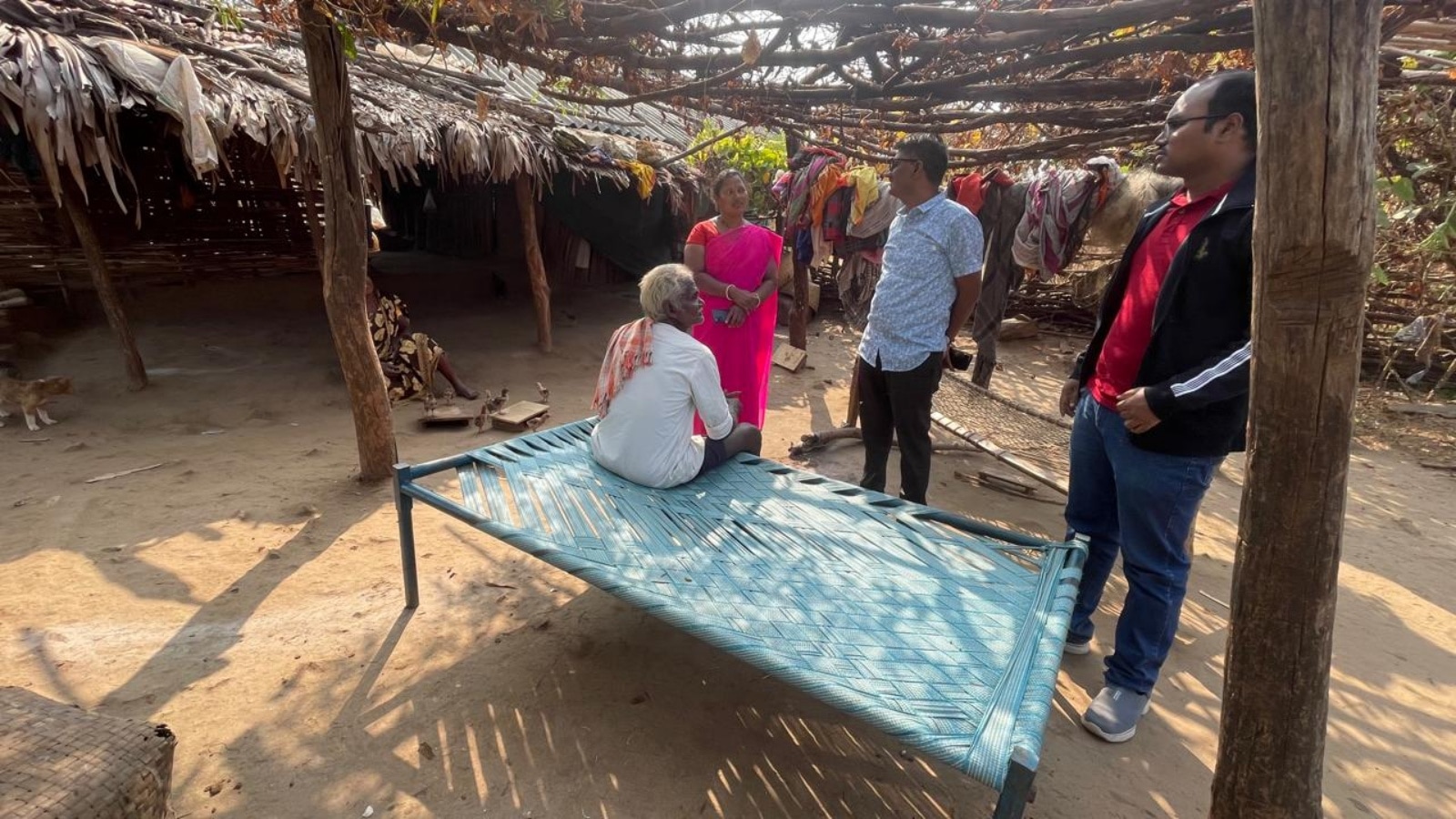
In the remote Lahiri village of Gadchiroli district, Maharashtra, a significant shift is underway in the fight against malaria, one of India's most persistent health challenges. For decades, local faith healers, known as pujaris, have been the primary caregivers for villagers suffering from fever and other ailments. These healers employ traditional rituals called 'jhar phook'-involving chants, scattering and counting of rice grains, and other symbolic acts-to diagnose and treat illnesses believed to be caused by spirits or black magic. Among them is 65-year-old Pengda Kuma Bongani, a pujari who has upheld this practice for generations.
However, since early 2026, Bongani and many others have begun collaborating with the formal healthcare system in a novel and promising way. Instead of relying solely on ritual healing, he now refers patients exhibiting fever symptoms to government health workers, specifically Accredited Social Health Activists (ASHAs) and Auxiliary Nurse Midwives (ANMs). After patients visit the primary health centre (PHC) for medical diagnosis and treatment, Bongani performs his ritual as a complementary step, believing this dual approach enhances recovery. "For us, it is not about money, but about doing good for people and society," he explains, reflecting a remarkable willingness to blend faith with modern medicine.
This change is not isolated but part of a broader strategy by the Maharashtra government to combat malaria in Gadchiroli, a district infamous for its heavy malaria burden. Despite comprising just about 1% of Maharashtra's population, Gadchiroli consistently reports disproportionately high malaria cases, a trend common in tribal and forested regions where traditional beliefs strongly influence health-seeking behavior. Historically, villagers often delay medical treatment, first consulting pujaris who attribute fever to supernatural causes.
Recognizing this cultural barrier, the government launched an intensified malaria elimination initiative in 2025, focusing on improving early detection and treatment through community engagement. A key component has been the identification and training of local pujaris to recognize malaria symptoms and promptly refer suspected cases to health workers. To date, 1,759 pujaris have been registered, and around 1,200 have received counseling and training in workshops conducted since April 2025, according to Dr. Sujita Wadiwe, the district malaria officer.
Under this program, pujaris are encouraged to send any person with a fever to the local ASHAs and ANMs for testing. They receive modest financial incentives for their cooperation: Rs 15 for referring a patient and Rs 500 if the patient tests positive for malaria. Since January 2026, pujaris have referred 27 patients, among whom four were diagnosed with malaria. This system effectively transforms traditional healers from gatekeepers of belief-based care into vital connectors within the public health framework.
Gadchiroli's malaria problem is exacerbated by its challenging geography and lifestyle factors. Over 70% of the district is covered by dense forests, and the region receives an average annual rainfall of 1,700 mm. Many residents sleep outdoors without mosquito nets, increasing exposure to malaria-carrying mosquitoes. The district experiences seasonal spikes in malaria cases, notably from July to August and December to January. Malaria cases have fluctuated over the years: from 6,436 in 2013, surging to 34,206 in 2015, and then dropping before rising again to 12,326 in 2021. In 2025, 7,293 cases and 14 deaths were reported, underscoring the persistent threat.
Healthcare officials emphasize that the critical challenge lies in reducing the delay between the onset of fever and medical diagnosis. In many villages, families first approach pujaris, who often attribute illness to supernatural causes, delaying potentially life-saving treatment. To address this, health teams conduct targeted campaigns in villages with high malaria incidence and in areas where malaria deaths have been reported. Bringing pujaris into the healthcare system is central to this effort.
Plans are underway to further equip pujaris with rapid diagnostic test kits, enabling them not only to identify malaria but also to support other health concerns such as childbirth, routine checkups, sickle cell disease, and anemia. This expanded role could deepen their integration into the healthcare delivery system, improving overall community health outcomes.
The success of this approach has required years of trust-building. Kamal Ramdas Sidam, an Auxiliary Nurse Midwife with over a decade of experience in the region, recounts how initial efforts to directly encourage villagers to seek malaria testing were met with resistance and suspicion. "Fever was rarely seen as something needing treatment," he explains. "People believed it was the result of black magic, something only a pujari could cure." Recognizing that villagers respected and trusted pujaris above outsiders, health workers shifted their strategy to first engage and counsel the healers. Once the pujaris accepted the value of medical testing and treatment, their influence helped convince the community to follow suit.
This model aligns with the work of the Society for Education, Action and Research in Community Health (SEARCH), a non-profit organization based in Gadchiroli that has been working for over 30 years to bridge the gap between traditional beliefs and modern medicine. Dr. Abhay Bang, founder and director of SEARCH, notes that most tribal people initially consult healers when they develop fever symptoms, a delay that can prove fatal if the fever is caused by malaria.
Dr. Bang explains the cultural significance of pujaris in tribal society: they are integral to all major life events such as childbirth, death rituals, weddings, and housewarmings, and are viewed as protectors who shield the community from harm. Rather than attempting to replace traditional healers, SEARCH has chosen to work within this framework, urging collaboration between faith healing and medical treatment. "It is not about choosing between faith and medicine; it is about survival," Dr. Bang says. "If both treatments happen together, patients won't die."
He further elaborates that many fevers naturally subside within a few days, reinforcing faith in traditional healing. However, malaria is different-it does not improve without treatment and can be fatal. This reality has encouraged some healers to become more receptive to medical interventions, as they do not want their patients to die.
Past attempts to involve pujaris in malaria control were unsuccessful due to mistrust and fear. Dr. Bang recalls that twenty years ago, healers were hesitant and intimidated by the formal medical system, especially the hospital environment. To overcome this, SEARCH worked to create familiar and culturally sensitive healthcare spaces, including placing deities that healers respected within healthcare facilities, facilitating acceptance and trust over time.
The current willingness of pujaris to cooperate with healthcare workers represents a meaningful shift and a hopeful step toward reducing Gadchiroli's malaria burden. By integrating traditional healers into the public health system, the district aims to shorten the time between illness onset and treatment, thereby saving lives.
This collaborative model offers lessons for other malaria-endemic tribal and forested areas in India, where traditional beliefs strongly influence health practices. By respecting cultural norms and working with local community leaders, health programs can more effectively reach vulnerable populations and improve health outcomes.
In summary, Gadchiroli's approach to malaria elimination demonstrates how blending traditional faith-based healing with modern medical practices can overcome barriers to healthcare access. The journey of healers like Pengda Kuma Bongani-from exclusive reliance on ritual healing to partnership with government health workers-encapsulates the transformative potential of community engagement. With ongoing training, incentives, and culturally sensitive strategies, Gadchiroli hopes to turn the tide against malaria and provide a model for similar regions grappling with the disease.