
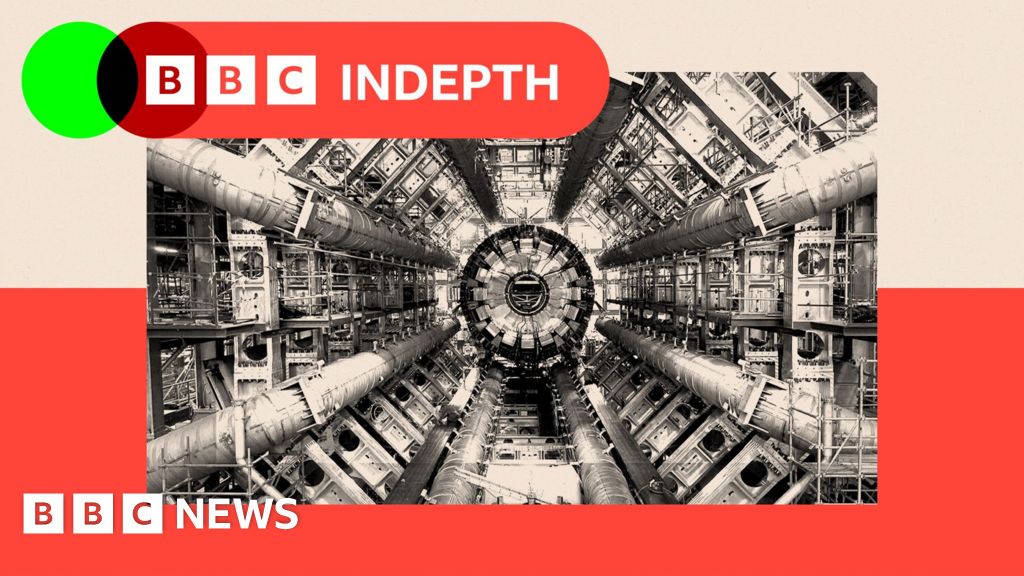
In October 2013, the announcement of the Nobel Prize in Physics captivated audiences worldwide as it recognized a monumental scientific achievement. Among the laureates was Professor Peter Higgs, the British theoretical physicist who, nearly fifty years earlier, had predicted the existence of the Higgs boson — a fundamental particle believed to be responsible for giving mass to other particles, thus holding the universe together. The prize was awarded following a landmark discovery at CERN, the European particle physics laboratory, where experiments using the Large Hadron Collider (LHC) confirmed the particle’s existence in 2012. This discovery was heralded as one of the most significant scientific breakthroughs in a generation.
Peter Higgs, who passed away in 2024, expressed hope that the Nobel recognition would elevate the importance of “blue-sky research” — scientific inquiry driven by curiosity about the universe, rather than immediate practical applications. Blue-sky research is a hallmark of British science, underpinning revolutionary discoveries such as the electron, the structure of DNA, and the development of the first computer. These foundational advances initially had no commercial intent but eventually formed the basis of industries worth billions of pounds, profoundly transforming society.
However, nearly a decade after this achievement, the UK is facing a starkly contrasting situation. The government is preparing to withdraw funding for some of the next major upgrades of the Large Hadron Collider, signaling a potential retreat from the country’s participation in cutting-edge international particle physics research. Similar proposed funding cuts threaten British involvement in other major international projects in particle physics and astronomy. This has raised alarm among scientists and advocates, who fear the UK could lose its leading role in exploring the fundamental nature of the universe.
At the heart of the controversy lies a debate over the allocation of scientific research funding. Critics argue that the UK government and its research funding bodies are diverting resources away from blue-sky, curiosity-driven science in favor of “applied” research that aims to produce immediate economic benefits. This shift is seen as prioritizing government-defined strategic priorities — such as artificial intelligence, quantum computing, and commercial innovation — over fundamental discovery science.
The tension surfaced in internal documents and minutes from meetings of the Science and Technology Facilities Council (STFC), the body responsible for funding particle physics and astronomy research. These records suggest a deliberate reallocation of funds from curiosity-driven projects towards targeted programs aligned with government priorities. Despite these claims, officials including Lord Vallance, the UK Science Minister, and Professor Sir Ian Chapman, head of UK Research and Innovation (UKRI), have denied any such diversion, insisting that blue-sky research remains protected and adequately funded.
The UKRI introduced a restructuring of research funding into three “buckets”: one for fundamental, curiosity-driven science; one for government priority areas like AI and quantum technologies; and a third for supporting business-driven innovation. While the government emphasizes that this model aims to balance discovery and economic impact, many scientists contend that the new system effectively starves basic research of the resources it needs to thrive.
This funding reorganization coincided with a “likely” 30% cut — approximately £162 million — proposed to the STFC’s budget, which oversees particle physics and astronomy projects. Professor Michele Dougherty, the STFC’s head, told a parliamentary committee that the reductions were necessary due to previous overcommitments and financial pressures exacerbated by inflation and currency fluctuations. However, some senior scientists involved with STFC dispute this explanation, suggesting that the budget cuts are a pretext for shifting funds away from fundamental physics and astronomy.
The consequences of these decisions are already being felt at the individual researcher level. Dr. Simon Williams, a theoretical physicist at Durham University who uses quantum computers to study subatomic particles, testified before the House of Commons Science Innovation and Technology Select Committee that about 30 young physicists were unable to secure research grants in the UK this year due to delays and uncertainties caused by STFC’s funding plans. Many of these early-career scientists, regarded among the brightest in their fields, face the prospect of moving abroad or leaving research altogether, weakening the UK’s scientific talent pool.
Williams warned that cutting blue-sky research threatens not only academic progress but also the industrial base that depends on foundational science. “If the research is removed from the country, then I have a strong belief that the industry will be removed from the country,” he told MPs. His metaphor of “killing the tree by removing the roots” captures the concern that undermining fundamental research