
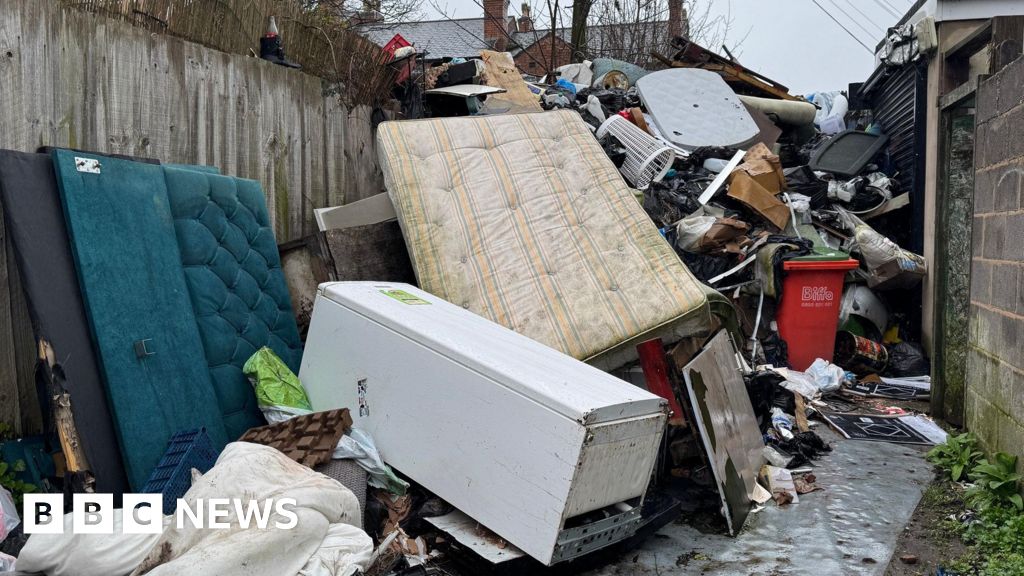
Local authorities in England are poised to receive new powers aimed at cracking down on the growing problem of fly tipping—illegal dumping of waste—by enabling faster enforcement measures that do not require court proceedings. Announced on Wednesday as part of a broader government action plan expected on Friday, these measures are designed to tackle the surge in waste crime that has increasingly burdened communities and the environment.
The Environment Agency (EA), the regulatory body responsible for waste management, reported a troubling rise in illegal dumping sites. In the 2024-2025 period alone, it identified 749 new illegal waste sites, which is double the number detected the previous year. This sharp increase has underscored the urgent need for more effective enforcement tools.
Under the new proposals, local councils could issue conditional cautions to fly tippers, requiring offenders to undertake up to 20 hours of community service—specifically clearing up the waste they illegally dumped—and pay fines of up to £300. This approach would allow councils to bypass lengthy court proceedings, expediting the process of holding perpetrators accountable. However, if offenders fail to comply with the conditions of the caution, councils would retain the option to pursue prosecution through the courts.
Environment Secretary Emma Reynolds emphasized the government’s intent behind the move: “If you dump rubbish on our streets, you will be joining a clean-up squad and picking up the bill, not the taxpayer.” She highlighted the government’s commitment to empowering both the Environment Agency and local authorities with tougher enforcement capabilities and faster responses to illegal dumping.
In addition to these new enforcement powers, the government has recently proposed other measures to deter fly tipping. Drivers caught dumping waste could face penalty points on their driving licenses. The Environment Agency may also be granted police-like powers, including the authority to search premises without a warrant and arrest individuals suspected of involvement in fly tipping. These enhanced powers signal a more robust approach to tackling waste crime at all levels.
The urgency for such measures stems from a notable increase in so-called “super sites,” large-scale illegal dumping grounds that contain tens of thousands of tonnes of rubbish. A BBC investigation earlier this year identified 11 such super sites, including one in Gloucestershire where residents reported up to 50 vehicles delivering waste daily at the height of the dumping activity. These massive sites pose significant environmental hazards and financial costs to clean up.
The proposed new powers aim primarily at addressing smaller-scale illegal dumping incidents. Mary Creagh, the government’s nature minister, clarified that while local authorities would handle enforcement for smaller sites, the Environment Agency would take responsibility for sites exceeding 20,000 tonnes in volume, which require more specialized intervention.
Currently, councils have the authority to issue fixed penalty notices of £150 for littering offenses, but this level of penalty is unlikely to have a significant impact on the larger illegal dumping operations, which can cost millions of pounds to remediate. The introduction of conditional cautions for fly tipping is seen as a way to close this enforcement gap for smaller offenses, reducing the burden on courts and speeding up the process of holding offenders accountable.
The Local Government Association (LGA), representing councils across England, has cautiously welcomed the proposals but stressed the importance of adequate resourcing. Arooj Shah, Chair of the LGA’s Neighbourhoods Committee, said councils are eager to collaborate with the government to combat fly tipping and protect communities from environmental harm. However, she warned that councils must be properly funded and supported to effectively implement the new enforcement powers. Shah also called on the government to strengthen sentencing guidelines to ensure that penalties reflect the seriousness of the offense and the damage caused to communities.
One of the perennial challenges in tackling fly tipping is identifying the perpetrators. The Local Government Association and local police have highlighted the difficulties in catching waste criminals who often operate across county borders, complicating enforcement efforts. Without effective mechanisms to identify and apprehend offenders, fines and penalties risk becoming ineffective deterrents.
Robyn Munt, Vice-President of the National Farmers’ Union (NFU), expressed hope that the tougher powers could serve as a deterrent to would-be fly tippers. However, she pointed out that only a tiny fraction—around one in 1,000—of fly tipping incidents are currently prosecuted by the police. Munt emphasized the need for additional measures to improve the detection and reporting of illegal dumping, including simpler ways for the public to report fly tipping incidents.
The scale of the problem is immense. Government data shows that councils in England dealt with 1.26