
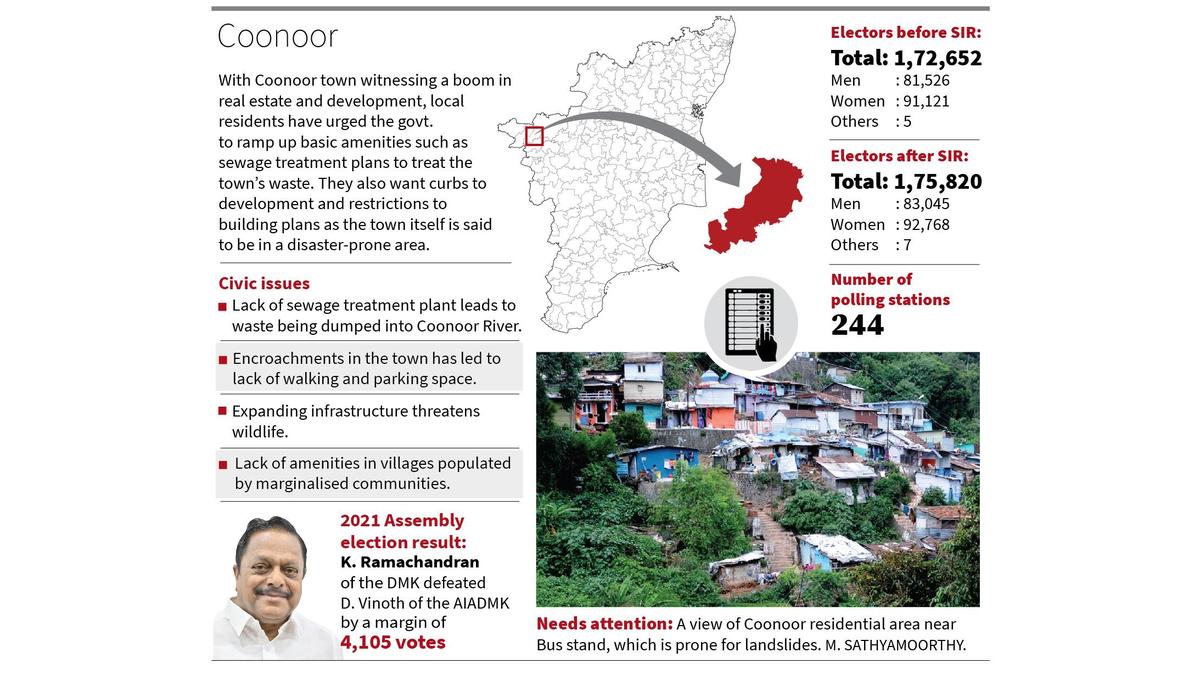
Coonoor, a picturesque town in Tamil Nadu's Nilgiris district, draws many visitors with its scenic beauty, especially the sight of the Coonoor River flowing freely as one approaches the town from Mettupalayam. Locals and tourists alike often admire the river's charm, particularly during the rainy season or winter months when it appears especially magnificent. However, beneath this surface allure lies a troubling reality: the Coonoor River is heavily polluted, with much of its course contaminated by untreated sewage and waste.
Residents and local activists have long raised concerns about the environmental degradation of the river. According to S. Manogaran, president of the Coonoor Consumer Protection Association, the river's pollution is emblematic of the town's broader failure to develop sustainably despite significant growth over the past few decades. Wastewater from the town flows untreated into the river, which eventually merges with the Bhavani River, posing serious health and safety risks to hundreds of thousands of people living downstream. Despite repeated demands from residents for the installation of a sewage treatment plant, government action has been lacking, leaving this critical issue unaddressed.
The environmental challenges facing Coonoor extend beyond the river's pollution. The town's rapid expansion has brought pressures that impact both the natural environment and the social fabric. Former Citizens Forum of Coonoor president T.A.
Jabarathnam highlights the limited employment opportunities for young people in the Nilgiris, which has led to a migration of youth to other districts and states in search of work. Jabarathnam emphasizes the need for a sustainable development model-one that balances environmental preservation with economic growth and livelihood opportunities. He also calls for greater transparency in the approval process for construction and development projects; currently, multiple government departments are involved, and applicants often encounter delays and confusion due to a lack of clear communication and tracking mechanisms.
To improve this, Jabarathnam suggests appointing a dedicated nodal officer to oversee and facilitate the approvals, ensuring clarity and accountability at each stage.
Illegal constructions and encroachments are another pressing concern in Coonoor. The Coonoor Consumer Protection Association has urged authorities to remove unauthorized buildings, which have contributed to severe traffic congestion and disrupted daily life for residents. These encroachments also exacerbate the risk of flooding and other disasters during the monsoon season, further endangering the community. The unchecked expansion threatens not only the town's infrastructure but also its environmental resilience.
Moreover, certain marginalized communities in and around Coonoor face significant hardships due to inadequate infrastructure and basic amenities. Resident R. Hariharan, from Adhigaratty town panchayat, points out that villages inhabited by Dalit and Sri Lankan repatriate populations often suffer from neglect. For example, the village of Selvip Nagar lacks proper footpaths and reliable bus services, forcing residents to walk several kilometers to reach transportation hubs in Coonoor or Udhagamandalam. Hariharan calls for increased attention and resources to improve living conditions and accessibility for these vulnerable communities, highlighting the social disparities within the region.
The ongoing development pressures also threaten the local wildlife and green spaces that are integral to Coonoor's identity. Azad Kamil of the Ongil Nature Trust notes that Coonoor has become a favored destination for retirees, particularly business professionals, leading to the purchase of large estates that were once wildlife habitats. These estates are often converted into fenced-off bungalows, resorts, homestays, or subdivided into plots for sale, reducing the available green pockets and fragmenting habitats. Kamil stresses the urgent need for a strategic plan to protect the remaining natural areas and ensure that development does not come at the expense of biodiversity and ecological balance.
Politically, Coonoor remains a significant constituency in Tamil Nadu's assembly elections, with a history of closely contested races. In the last election, K. Ramachandran, the current chief whip of the state government and former Forest and Tourism Minister, narrowly defeated AIADMK candidate D. Vinoth by just over 4,100 votes. Ramachandran's tenure has been noted for its successes, but due to his advancing age, he is not expected to contest in the upcoming elections. This sets the stage for another tight contest between the DMK and AIADMK parties. Speculation surrounds the possible candidacy of former Coonoor MLA A. Shanthi Ramu, whose experience could influence the dynamics of the race.
In summary, Coonoor today stands at a crossroads where rapid development, environmental sustainability, and social equity intersect. The town's natural beauty, symbolized by the Coonoor River, masks underlying challenges including pollution, inadequate infrastructure, lack of employment for youth, illegal construction, and marginalization of vulnerable communities. The pressure on land and resources has also imperiled the local wildlife and green spaces that contribute to the region's charm and ecological health. Addressing these issues requires coordinated government action, transparent governance, and community engagement to foster a sustainable future that benefits all residents while preserving the environment.
As the 2026 Tamil Nadu Assembly elections approach, the political contest in Coonoor will be closely watched, with voters deciding who will lead the town through these complex challenges. The choices made will not only shape the trajectory of development but also the protection of Coonoor's natural heritage and the well-being of its diverse population.