
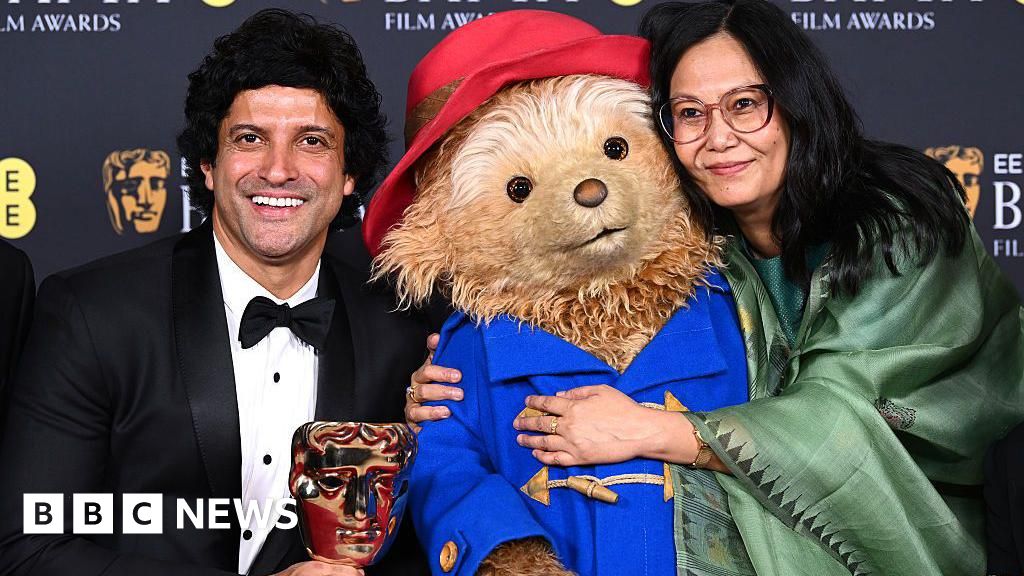
Lakshmipriya Devi, an Indian filmmaker from the northeastern state of Manipur, has recently gained widespread acclaim for her debut feature film, Boong, which won the Best Children’s & Family Film award at the prestigious British Academy Film Awards (Baftas). This recognition marks a historic milestone as Boong became the first Indian film to win in this category, triumphing over globally popular contenders such as Zootopia 2, Lilo & Stitch, and the French sci-fi film Arco. Beyond the award itself, Devi’s victory has brought significant attention to both her film and the troubled region of Manipur, which has been grappling with ethnic violence and unrest since mid-2023.
Boong is a coming-of-age film told in the Manipuri language and centers around a young boy’s emotional journey amid a backdrop of social and political tensions. The story follows Brojendro “Boong” Singh, a mischievous schoolboy living with his mother in Imphal, the capital of Manipur. Boong’s father, who had left to run a furniture shop in Moreh—a border town near Myanmar—has mysteriously stopped communicating with the family. Refusing to accept rumors of his father’s death, Boong embarks on a quest to find and bring his father back home as a gift for his mother. Alongside his best friend Raju, Boong’s journey explores themes of hope, resilience, and the yearning for family unity.
Filmed prior to the outbreak of ethnic conflict in Manipur, Boong’s story has gained a new layer of poignancy given the recent violence between the Meitei majority and the Kuki-Zo communities. This conflict, rooted in disputes over identity, land rights, and political representation, erupted in May 2023 and has since resulted in over 260 deaths and the displacement of tens of thousands of people. The communities involved remain largely segregated, even as political negotiations and rehabilitation efforts continue. Against this backdrop, Devi’s film and her acceptance speech at the Baftas have resonated deeply, emphasizing the need for peace, forgiveness, and healing in a region scarred by strife.
During her acceptance speech, Devi poignantly described Boong as “rooted in a place that’s very troubled, very much ignored and very under-represented in India—my homeland, Manipur.” She used the global stage not only to celebrate the film’s success but also to call for reconciliation and hope. “We pray that all the internally displaced children, including the child actors in the film, regain their joy, their innocence, and their dreams once again,” she said. “We pray that no conflict is ever formidable enough to destroy the one super power that all of us have as human beings—that is forgiveness.”
Boong’s narrative is intimate and personal, yet it touches on larger issues that have long affected Manipur. The film explores themes of ethnic tensions, migration, political suspicion, and the militarization of the state due to its strategic location bordering Myanmar. These issues have shaped the lives of many in the region but are rarely portrayed in mainstream Indian cinema. This lack of representation is partly because films from India’s northeastern states face significant challenges in distribution and visibility. The mainstream Indian film industry, dominated by Hindi-language productions, often overlooks regional stories, especially those from smaller markets like Manipur.
The cast of Boong also reflects the region’s rich ethnic diversity. Gugun Kipgen, a 12-year-old actor from the Kuki-Zo community, plays the titular character Boong, who is Meitei. Boong’s best friend Raju belongs to the Marwari community, originally from western Rajasthan but now settled in various parts of South Asia. Marwaris are often seen as “outsiders” or “mainlanders” in the northeast, adding a layer of complexity to the friendships and social dynamics depicted in the film.
Critics have praised Boong for its sensitive and nuanced portrayal of its characters and setting. A review in The Hollywood Reporter India highlighted that the film “trusts its personal story to convey the history of a place without exoticizing it” and reminds viewers that the characters “are humans before they’re Manipuri, Hindu, invisibilised or Indian.” This humanizing perspective is crucial in a region often reduced to conflict statistics or ethnic stereotypes in media narratives.
Boong was produced by Excel Entertainment, a Mumbai-based production company co-founded by Bollywood actor Farhan