
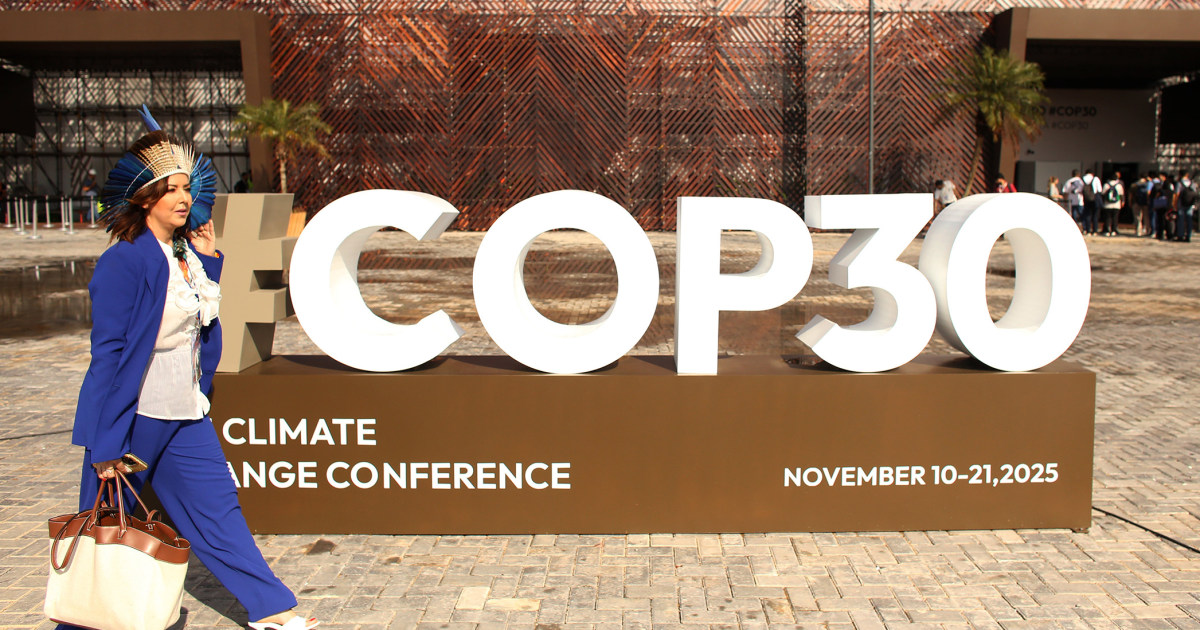
At the conclusion of the United Nations’ COP30 climate summit this week in Belém, Brazil, the absence of the United States delegation was striking—and perhaps more telling was the Trump administration’s simultaneous announcement of sweeping rollbacks on environmental protections at home. While nearly 200 nations gathered to negotiate a global roadmap toward phasing out fossil fuels, accelerating climate action, and limiting global warming, the U.S. took a markedly different path: stepping back from international climate leadership and instead pushing policies to expand oil drilling and weaken key environmental safeguards.
For the first time in the history of the COP summits, the United States, one of the world’s largest greenhouse gas emitters, did not send an official delegation to the talks. Rather than participating in the global effort to combat climate change, the Trump administration unveiled a series of controversial proposals aimed at expanding fossil fuel extraction and rolling back longstanding environmental regulations. These included plans to open approximately 1.27 billion acres of U.S. coastal waters—off the coasts of California and Florida, among other areas—to new offshore oil drilling for the first time in decades, as well as proposed rule changes designed to weaken the Endangered Species Act and limit the Environmental Protection Agency’s (EPA) authority to protect wetlands and streams.
Environmental advocates quickly condemned these moves as a direct contradiction to the urgent need for climate action. Jessie Ritter, associate vice president of waters and coasts for the National Wildlife Federation, criticized the new rules, saying they “double down on the administration’s refusal to confront the climate crisis in a serious way and, in fact, move us in the opposite direction.” She emphasized that the proposals signal to the world just how much the United States has retreated from meaningful climate leadership. “It’s unfortunate, given the example the U.S. sets and what our leadership, or lack thereof, emboldens other countries to do,” Ritter said.
From the White House perspective, however, these announcements represented a “historic” advancement in what they describe as “President Trump’s American energy dominance agenda.” White House spokesperson Taylor Rogers told NBC News that the administration’s approach is about “reversing government overreach, restoring energy security, and protecting American jobs by rolling back excessive, burdensome regulations and creating new opportunities to ‘DRILL, BABY, DRILL.’” Rogers framed the administration’s actions as serving the American people, contrasting their stance with what she called “radical climate activists who have fallen victim to the biggest scam of the century.”
Despite the administration's framing, the offshore drilling plan drew bipartisan criticism. Notably, Senator Rick Scott, a Republican from Florida, publicly opposed opening Florida’s coasts to drilling, citing concerns about the impact on tourism, the environment, and military training areas. Scott urged Interior Secretary Doug Burgum to maintain the existing moratorium on drilling in these areas, a moratorium that President Trump himself had extended during his first term. Similarly, California Governor Gavin Newsom condemned the proposal on social media, calling it “idiotic” and accusing the administration of catering to “Big Oil donors.” Newsom asserted that California would not allow its coastal economy and communities to be jeopardized by these plans.
The drilling proposal came just days after the administration unveiled proposed changes to the Clean Water Act of 1972, which would significantly narrow federal protections for many of the nation’s small streams and wetlands. Under the administration’s plan, the definition of “waters of the United States”—which determines which bodies of water qualify for federal protection—would be sharply curtailed. According to Jon Devine, who leads the water policy team at the Natural Resources Defense Council (NRDC), these changes could leave the fewest freshwater resources under federal protection since the Clean Water Act was enacted.
Currently, wetlands play a vital environmental role by acting as natural buffers that absorb and store excess water during heavy rainfall and flooding events. With climate change expected to increase the frequency and severity of floods, protecting these wetlands is more critical than ever. Devine warned that the proposed rollback would increase the vulnerability of flood-prone areas, potentially exacerbating the impacts of climate change on communities across the country. Moreover, because many wetlands and streams feed into larger bodies of water that serve as crucial drinking water sources, critics expressed concern that the changes could threaten water quality and public health in some regions.
In addition to the drilling and water protections rollbacks, the administration announced a set of four proposed rules that would weaken the Endangered Species Act (ESA