
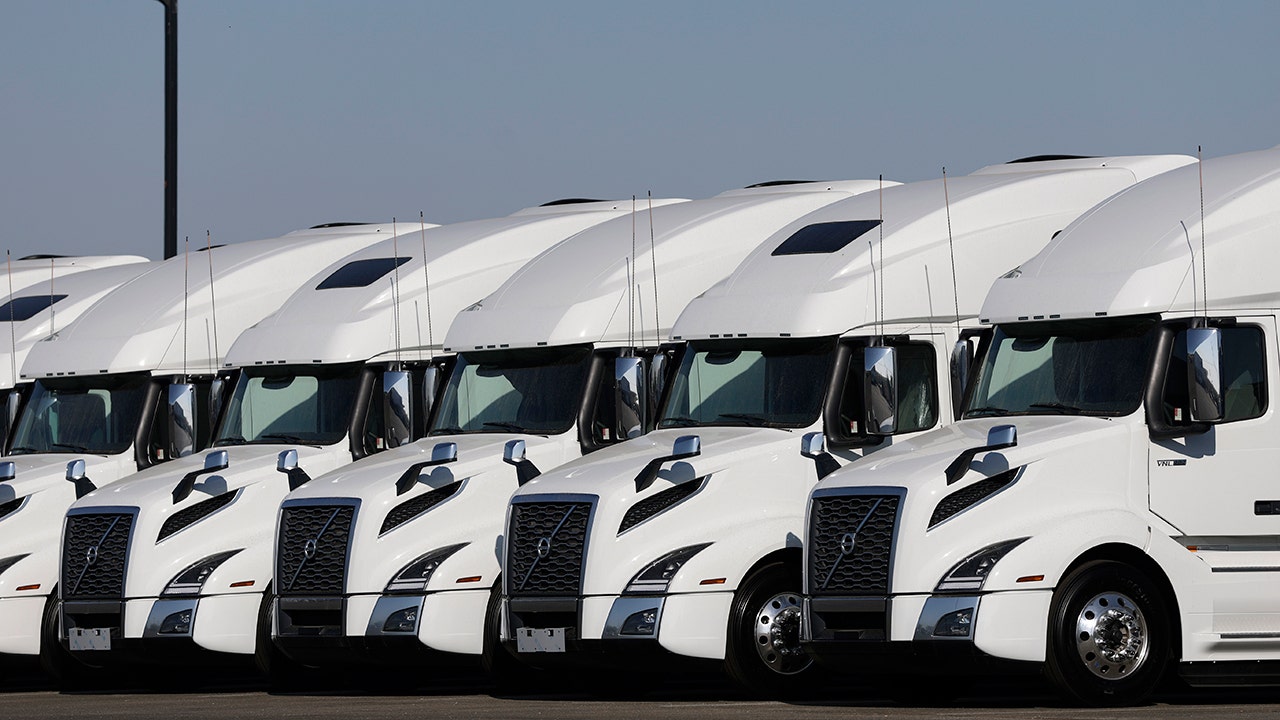
A transformative era has begun in the trucking industry with the advent of AI-powered autonomous driving technology, poised to address critical challenges such as a growing shortage of drivers, escalating operational costs, and increasing demand for faster deliveries. At the forefront of this revolution is Waabi, a leader in physical artificial intelligence, which has recently announced a significant milestone by integrating its Waabi Driver system with Volvo’s VNL Autonomous truck. This partnership marks a major stride toward achieving a safe, scalable autonomous trucking solution ready for broad commercial deployment.
The integration also incorporates cutting-edge technology from NVIDIA, utilizing their DRIVE AGX Thor and Hyperion 10 computing architecture. This collaboration between Waabi, Volvo Autonomous Solutions, and NVIDIA reflects a concerted effort to push Level 4 autonomous trucking—vehicles capable of fully self-driving under specific conditions—closer to reality.
In early 2025, Waabi and Volvo Autonomous Solutions formalized a long-term partnership aimed at developing and deploying autonomous trucks on a large scale. Volvo’s New River Valley plant in Virginia is now producing the VNL Autonomous model equipped with six critical redundant systems to ensure safe, reliable operation without a human driver. These multiple backup systems cover essential functions such as braking, steering, communication, computing, power, energy storage, and motion control, creating a robust safety net for autonomous driving.
At the heart of this technological breakthrough is Waabi’s Waabi Driver, an end-to-end AI model that continuously learns from experience and adapts to new driving scenarios. Complementing this is Waabi’s advanced simulator, Waabi World, which exposes the AI to millions of realistic driving conditions before deployment on actual roads. This method, which Waabi terms "physical AI," enables the system to generalize across diverse environments, enhancing safety and reliability.
Raquel Urtasun, Founder and CEO of Waabi, emphasized the importance of safety, scalability, and customer-centric design in the future of autonomous trucking. She stated, “Together with Volvo and NVIDIA, we're leading autonomous freight into a safer and more efficient era.” The integration of Waabi’s AI system with Volvo’s hardware, supported by NVIDIA’s powerful computing platform, exemplifies how collaboration across the tech and automotive sectors is driving innovation forward.
The U.S. freight industry continues to grapple with increased demand for goods delivery alongside a persistent shortage of qualified truck drivers. Autonomous trucks powered by AI offer a promising solution to these challenges by maintaining the flow of goods without depending solely on human labor. By incorporating self-driving technologies from partners like Waabi and Aurora Innovation into the Volvo VNL Autonomous, Volvo Autonomous Solutions is delivering trucks with original equipment manufacturer (OEM) quality and consistency, critical for commercial deployment.
Nils Jaeger, President of Volvo Autonomous Solutions, highlighted the broader impact of this partnership, noting that autonomy can address significant issues in transportation, including safety, efficiency, and capacity. The integration of NVIDIA’s purpose-built compute platform further enhances these capabilities. Rishi Dhall, NVIDIA’s Vice President of Automotive, remarked that self-driving vehicles represent one of the first practical applications of physical AI, with Level 4 autonomy in trucking already becoming a reality.
Despite the enthusiasm surrounding autonomous trucking, substantial challenges remain. Safety is paramount, as trucks must navigate unpredictable weather, road debris, and interactions with human drivers. While extensive simulation prepares AI systems for countless scenarios, regulatory frameworks are still evolving to establish standards for nationwide certification and deployment.
Moreover, the shift toward automation raises important economic and social questions. Trucking employs millions of workers across the U.S., and as autonomous systems become more prevalent, job roles are expected to evolve. Labor groups and state officials are advocating for retraining programs to help drivers transition to new positions that support and oversee automated fleets, ensuring that workforce changes are managed responsibly.
Data privacy and cybersecurity are additional concerns, as autonomous trucks rely on continuous cloud connectivity, making them potential targets for cyberattacks. Robust security measures will be essential to protect these vehicles and the sensitive data they generate.
Public perception also plays a crucial role in the pace of adoption. While many people embrace technological innovation, some remain hesitant about sharing the road with fully autonomous vehicles. Building public trust will require transparent communication, rigorous safety trials, and demonstrable performance on open highways.
The integration of Waabi’s AI with Volvo’s VNL Autonomous truck represents a key step toward Level 4 autonomy, where trucks can operate without human intervention under defined conditions. This milestone builds on Volvo Group Venture Capital’s early investment in Waabi in