
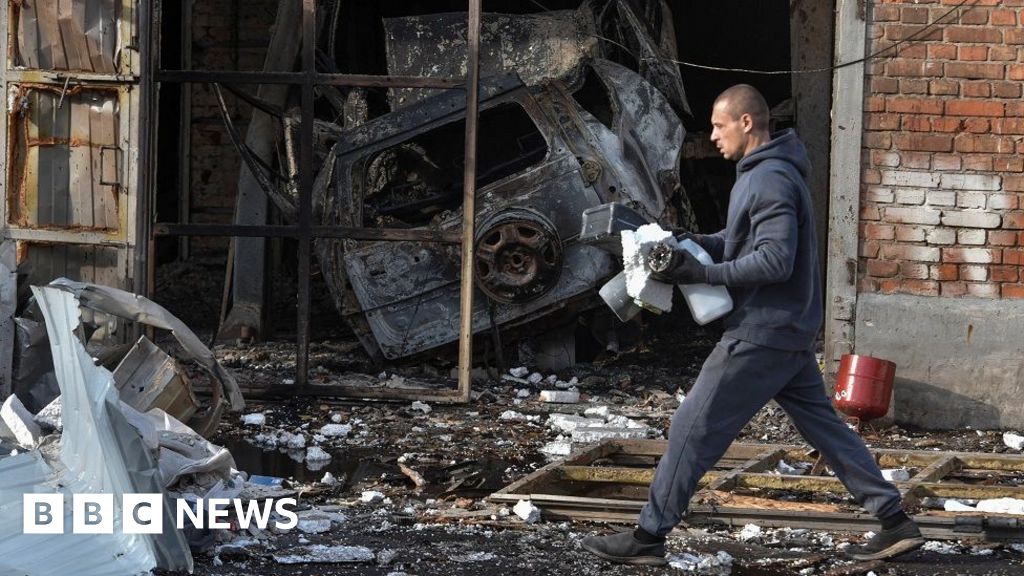
Senior Pentagon officials have recently arrived in Ukraine to engage in discussions aimed at bringing an end to the ongoing war with Russia, according to statements from the US military. This delegation, led by US Army Secretary Dan Driscoll, engaged in talks with Ukrainian Prime Minister Yulia Svyrydenko and was scheduled to meet President Volodymyr Zelensky later. Their visit marks the highest-level military engagement in Kyiv since President Donald Trump took office in January.
The timing of this visit comes amid reports that the US and Russia have been working on a new proposed framework designed to end the conflict. This plan reportedly demands significant concessions from Ukraine, including relinquishing control over some territories in the eastern Donbas region and drastically reducing its military capabilities. These reports have sparked concern and controversy, as Ukraine’s leadership, including President Zelensky, has firmly rejected any territorial concessions to Russia.
The White House has acknowledged that President Trump had expressed frustration with both Russia and Ukraine due to their reluctance to commit to a peace agreement. Subsequently, his administration has been quietly developing a detailed and acceptable peace plan. A senior US official revealed that Steve Witkoff, a special envoy for Ukraine, has been working behind the scenes on this plan, gathering input from both Ukrainian and Russian representatives about which terms might be acceptable to bring the conflict to an end. The official emphasized that “both sides will have to make concessions, not just Ukraine,” signaling that the plan is aimed at a mutual compromise.
Details of the draft, described as a 28-point plan, became public more than three weeks after Witkoff and his Russian counterpart, Kirill Dmitriev, reportedly spent three days in Miami, Florida, negotiating the terms. However, Moscow has neither confirmed nor denied the existence of such a plan. Kremlin spokesman Dmitry Peskov stated only that “contacts” with the US had taken place but denied that any formal consultations or negotiations were ongoing.
Media outlets such as Axios, the Financial Times, and Reuters have cited sources familiar with the matter to report that the plan would require Kyiv to cede parts of the Donbas region it still controls, reduce the size of its armed forces significantly, and forgo many of its weapons. These demands align closely with long-standing Russian preconditions for peace, which Ukraine has consistently rejected.
Notably, neither the European Union nor Ukrainian officials appear to have been involved in drafting this new proposal. This exclusion has raised concerns among European leaders that the plan could be heavily skewed in Russia’s favor. EU foreign policy chief Kaja Kallas cautioned that any successful peace plan must have the full support of Ukrainians and their European allies. Similarly, French Foreign Minister Jean-Noël Barrot stressed that “the Ukrainians do not want any form of capitulation,” underscoring the importance of maintaining Ukrainian sovereignty and territorial integrity in any peace negotiations.
Following the meeting with US officials, Ukraine’s Prime Minister Svyrydenko refrained from addressing the rumored peace plan directly. Instead, she described the US delegation’s visit as an “opportunity for representatives of the American administration to assess the situation on the ground and see the consequences of Russian aggression.” This suggests that the focus of the talks may have been more on understanding the current military and humanitarian situation rather than on finalizing peace terms.
The visit coincided with a tragic event in Ukraine’s western city of Ternopil, where a Russian missile and drone attack struck residential blocks, killing at least 26 people and leaving another 22 missing, according to an update from President Zelensky. At the time of the attack, Zelensky was in Turkey, where unconfirmed reports suggested that talks had been planned with Trump’s envoy but were subsequently canceled. The attack underscored the ongoing volatility and human cost of the conflict, even as diplomatic efforts proceed.
Driscoll’s delegation includes some of the highest-ranking US military officials: Army Chief of Staff General Randy George, the top US Army commander in Europe General Chris Donahue, and Sergeant Major of the Army Michael Weimer. Upon arrival in Kyiv, there was no public mention of the proposed peace framework. Army spokesman Colonel David Butler stated that the team was on a fact-finding mission on behalf of the Trump administration, meeting Ukrainian officials to discuss efforts to end the war without elaborating further.
A Ukrainian official, speaking anonymously to CBS News (a US media partner of the BBC), indicated that the discussions would focus on the military situation on the ground