
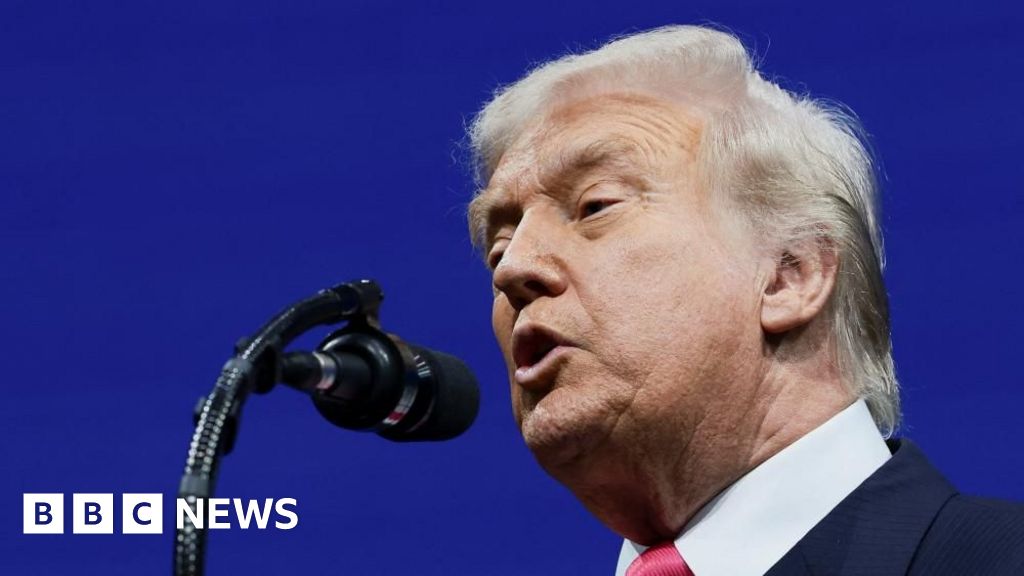
US President Donald Trump has signed a bill mandating the release of government files related to the late convicted sex offender Jeffrey Epstein, marking a significant shift in a months-long battle over the disclosure of these documents. The Justice Department now has 30 days to publicly share all information stemming from federal investigations into Epstein, although it retains the authority to withhold files connected to active criminal investigations or those that may infringe on personal privacy.
This move represents a major reversal for Trump, who had previously opposed the measure. His change of heart came after mounting pressure from Epstein’s victims and members of his own Republican Party. With Trump’s endorsement, the resolution passed overwhelmingly in both chambers of Congress, signaling broad bipartisan support for transparency in the Epstein case.
Prior to this development, Trump had dismissed calls for the documents’ release, labeling the effort a Democrat-led “hoax” designed to distract from Republican achievements. This stance itself marked a departure from his earlier position during the lead-up to the 2024 election, when he had promised to make Epstein-related files public. In a social media post announcing the bill’s signing, Trump suggested that the release might expose “the truth about these Democrats, and their associations with Jeffrey Epstein,” framing the issue as politically charged.
Although no congressional vote was strictly necessary to release the files—since the president could have ordered their disclosure independently—the House of Representatives passed the legislation with a decisive 427-1 vote. The Senate granted unanimous consent, swiftly sending the bill to Trump’s desk for signature. The sole dissenting vote came from Louisiana Republican Clay Higgins, who voiced concerns that the broad scope of information to be released could endanger “thousands of innocent people” who might have cooperated with investigators regarding Epstein.
Under the new law, Attorney General Pam Bondi is tasked with releasing the documents within 30 days. These files include materials from criminal investigations, such as transcripts of interviews with victims and witnesses, evidence seized in raids of Epstein’s properties, internal Justice Department communications, flight logs, and records of individuals and entities linked to Epstein. However, the law permits the withholding of any documents tied to ongoing criminal investigations, as well as information that could identify victims or reveal sensitive medical details.
Following the bill’s signing, Trump indicated he would ask Bondi to investigate Epstein’s connections with people who had apparently communicated with him. Bondi responded promptly, stating the Justice Department “will pursue this with urgency and integrity.” Despite this assurance, some lawmakers remain wary. Republican Congressman Thomas Massie, one of the bill’s architects, expressed concern that the administration might initiate a surge of investigations as a pretext to withhold certain files. He fears that these investigations could be used to justify non-disclosure, undermining the bill’s intent.
Victims’ privacy protections are a significant aspect of the legislation, with explicit language reinforcing their rights. Christine Dunn, an attorney specializing in sexual violence and victims’ rights, welcomed this focus, emphasizing the importance of safeguarding privacy to avoid retraumatizing survivors. Nonetheless, it remains uncertain how extensively the files will be redacted before their release.
The release of these files follows earlier document disclosures from the Epstein investigation. Early in his 2024 presidential campaign, Trump’s administration made public thousands of pages, primarily flight logs. However, despite initial promises of further releases, Attorney General Bondi announced in July that no additional documents would be forthcoming. This decision prompted bipartisan efforts in Congress to compel the release through legislation.
Among the bill’s most vocal advocates was Republican Representative Marjorie Taylor Greene, a staunch Trump ally who has publicly clashed with the president in recent weeks over his opposition to the bill. After the resolution’s passage, Greene vowed to publicly read aloud the names of any powerful individuals implicated in the released files during sessions on the House floor.
It is important to note that the files mandated for release differ from the more than 20,000 pages of documents from Epstein’s estate that Congress made public last week. Those estate documents included some references to Trump, including 2018 messages from Epstein boasting he could “take him down” and claiming knowledge of Trump’s alleged dirt. Trump, who was a friend of Epstein’s for years but says they fell out in the early 2000s, has consistently denied any wrongdoing related to Epstein.
Addressing reporters following the bill’s signing, Trump sought to distance himself and his party from Epstein’s activities, stating, “Republicans had nothing to do with Epstein. It’s