
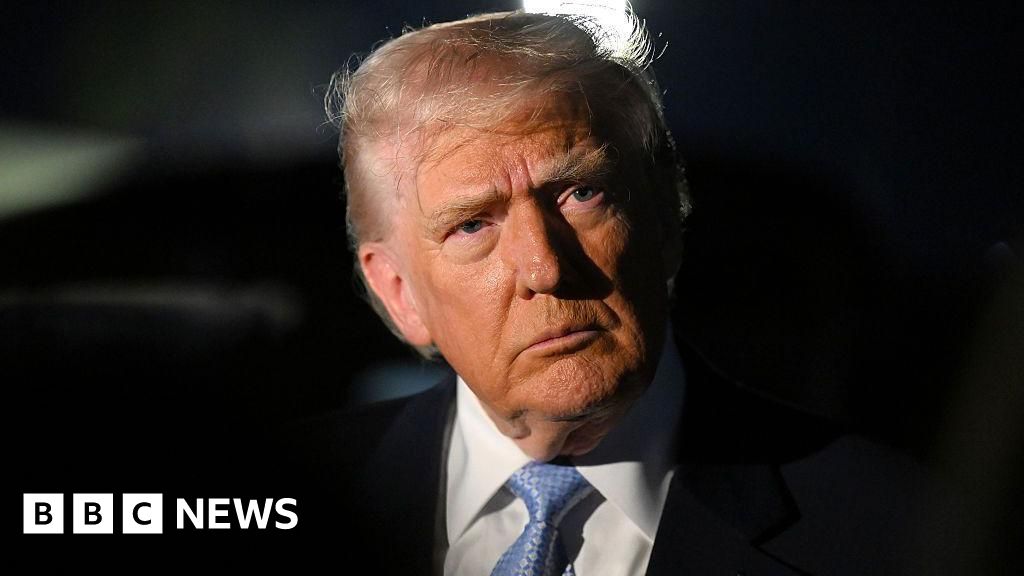
Former President Donald Trump has ignited a fierce controversy by accusing six Democratic lawmakers of “seditious behavior, punishable by death,” after they released a video urging U.S. service members to refuse unlawful orders. The lawmakers, all of whom have backgrounds in the military or intelligence community, responded strongly to Trump’s accusations, condemning his remarks as dangerous threats against elected officials.
The video in question was shared on Tuesday by Senator Elissa Slotkin of Michigan and features Arizona Senator Mark Kelly, along with Representatives Chris DeLuzio of Pennsylvania, Maggie Goodlander of New Hampshire, Chrissy Houlahan of Pennsylvania, and Jason Crow of Colorado. In the video, Senator Kelly, a former Navy officer and astronaut, states clearly: “Our laws are clear. You can refuse illegal orders.” The lawmakers emphasize that no service member is required to carry out orders that violate the law or the U.S. Constitution.
The message of the video highlights concerns that the current administration is creating division by pitting uniformed military and intelligence personnel against American citizens. The lawmakers remind viewers that they, like the service members, have sworn an oath to protect and defend the Constitution. They warn that threats to the Constitution now come not only from foreign adversaries but also from within the country itself.
In response to the video, Trump took to his social media platform, TruthSocial, on Thursday morning, posting a series of inflammatory messages. He described the lawmakers’ actions as “SEDICIOUS BEHAVIOR AT THE HIGHEST LEVEL” and labeled them “traitors” who should be “ARRESTED AND PUT ON TRIAL.” Trump warned that allowing their words to stand would threaten the very existence of the country, declaring, “An example MUST BE SET.” He repeated the call for legal action in multiple posts, including one that stated, “SEDITIOUS BEHAVIOR, punishable by DEATH!” Additionally, Trump reposted a message on TruthSocial that called for hanging the lawmakers, invoking George Washington in the statement: “HANG THEM GEORGE WASHINGTON WOULD !!”
The provocative nature of Trump’s posts prompted questions about whether he was advocating violence against members of Congress. However, White House press secretary Karoline Leavitt sought to deflect such interpretations during a press briefing on Thursday. She rejected suggestions that Trump was calling for executions, instead framing his response as a reaction to the lawmakers allegedly encouraging military personnel to defy lawful orders. Leavitt pointedly said, “Many in this room want to talk about the president’s response, but not what brought the president to responding in this way.”
Meanwhile, leadership in the U.S. House of Representatives announced they are working closely with Capitol Police to ensure adequate protection for the lawmakers and their families who have become targets of Trump’s posts. The heightened security measures reflect growing concerns about politically motivated threats and violence in the United States.
These tensions come amid a broader atmosphere of increased political violence and polarization nationwide. An October Pew Research Center survey found that 85% of Americans believe politically motivated violence is on the rise, a sentiment corroborated by a November poll conducted by Politico and Public First. Several high-profile violent incidents have underscored these fears in recent months.
Among these incidents was the assassination of conservative commentator Charlie Kirk, an event that shocked many and prompted widespread condemnation. In the aftermath, numerous conservatives, including Trump, blamed Democrats for fostering an environment of political hostility that they say has contributed to rising violence. Additionally, there was a notable arson attack on the home of Pennsylvania Governor Josh Shapiro and the killing of a Minnesota lawmaker and her husband, further fueling anxieties about safety for public officials.
Republican Congresswoman Marjorie Taylor Greene has also spoken publicly about receiving an increased number of threats since she began opposing Trump on certain policies. Greene revealed that her son was the target of a death threat, an incident confirmed by local law enforcement. Such threats have become part of a disturbing trend that includes “swatting” — the practice of making false emergency calls to provoke a SWAT team response — targeting public officials.
One recent victim of swatting was an Indiana Republican lawmaker who also faced criticism from Trump on TruthSocial regarding his position on redistricting in the state. This pattern of online attacks and real-world threats has intensified concerns over the safety and security of elected officials across the political spectrum.
In summary, the exchange between former President Trump and the six Democratic lawmakers has escalated political tensions