
In today’s deeply interconnected world, the vast majority—over 95%—of global internet traffic, voice communications, and data transmissions rely on an extensive network of undersea fiber optic cables. These cables, laid across the floors of oceans and seas, serve as the backbone of modern digital life. They are faster, more reliable, and more cost-effective than alternatives like satellite communication, making them indispensable for everything from everyday messaging and financial transactions to sensitive government and military communications. In essence, these undersea cables are the veins and arteries sustaining the global economy and international connectivity.
However, this heavy reliance on submarine cables also presents a significant vulnerability. Recently, concerns have risen about the potential for these cables to become targets of sabotage, especially amid growing geopolitical tensions. Analysts and NATO officials have accused Russia of increasing “hybrid warfare” tactics in Europe, which include covert attempts to disrupt critical infrastructure like undersea cables. According to Sidharth Kaushal, a senior research fellow at the Royal United Services Institute (RUSI), a British military think tank, targeting vital infrastructure is a clear part of Russian modern warfare strategy. He pointed to recent years’ events as evidence of deliberate sabotage aimed at undermining societies’ functional “critical nodes.”
Since Russia’s full-scale invasion of Ukraine in February 2022, Moscow has launched military strikes against Ukrainian energy and transport facilities. Yet, beyond the battlefield, Russia allegedly extends its campaign to destabilize Western countries by targeting essential infrastructure, including undersea cables that connect NATO allies. This new wave of sabotage, according to Gabrielius Landsbergis, Lithuania’s former foreign minister, marks a troubling escalation. He described these acts as a “new phenomenon” linked to Russia’s more aggressive militarization and hostility—not only aimed at Ukraine but also directed at Western nations supporting it.
Russia denies these allegations, dismissing claims of interference with undersea cables as “Russophobia.” Yet the geopolitical landscape in the Baltic Sea region—where many NATO countries border Russia—makes these concerns particularly acute. The Baltic Sea is nearly enclosed by eight NATO countries alongside Russia, and it features relatively few cables linking some Baltic states like Lithuania to the rest of Europe. As Landsbergis explained, the Baltic states are almost like islands in terms of connectivity, relying heavily on a limited number of submarine cables passing through the Baltic Sea to access Western infrastructure.
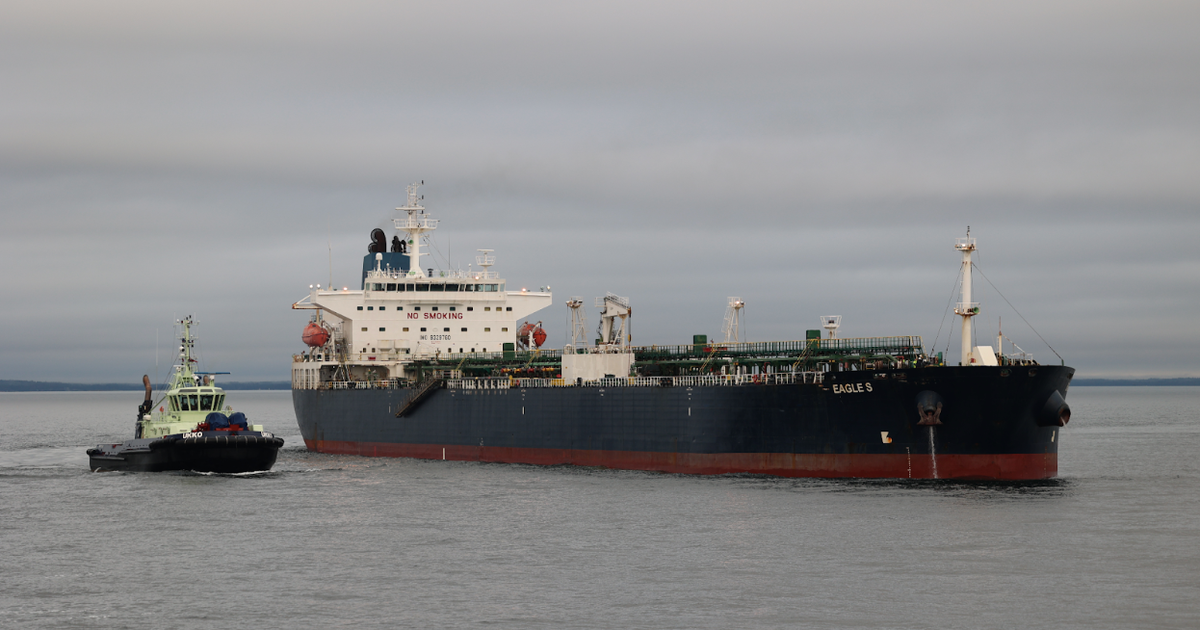
The Baltic Sea’s shallow waters further complicate security. Ships can easily drag anchors along the seabed, potentially damaging cables either accidentally or intentionally. This shallow depth provides a convenient cover for hostile actors attempting sabotage, as it allows plausible deniability. Russia’s so-called “shadow fleet”—a collection of vessels with ambiguous registrations and insurance that enable them to bypass Western sanctions—has been implicated in these suspicious activities. This fleet’s presence has heightened fears about covert operations aimed at disrupting the cables.
When Finland and Sweden joined NATO, many Western observers hoped the Baltic Sea would effectively become a “NATO lake,” a secure area free from hostile interference. However, multiple incidents over recent years suggest a spike in sabotage attempts, especially since Russia’s invasion of Ukraine. Landsbergis noted that prior to 2022, such incidents were rare or nonexistent, but now they occur with troubling frequency—almost monthly.
Kaushal from RUSI views these sabotage efforts as part of an evolving hybrid warfare strategy used by Russia and other adversaries of the United States. Since the 1990s, Russian military doctrine has emphasized exploiting the fragility of modern infrastructure—the “anthropogenic shell” of society—as a key vulnerability. Attacks on undersea cables, missile strikes on infrastructure in Ukraine, and cyberattacks are all components of this multifaceted approach to warfare.
Landsbergis believes Russia’s goal in disrupting undersea cables is twofold: to intimidate local populations and to test the political and military responses of NATO countries. He warned that the lack of a firm, unified response could embolden Russian President Vladimir Putin to perceive NATO as weakened or divided—especially in the post-Trump era when some U.S. pressure on European allies for increased self-reliance has altered alliance dynamics. Putin might see this as an opportunity to “test” NATO’s resolve further.
In response to these threats, NATO launched an operation called “Baltic Sentry” at the start of 2025 to enhance the protection of critical infrastructure in the region. This operation involves coordinated maritime patrols, aircraft and naval drones, and