
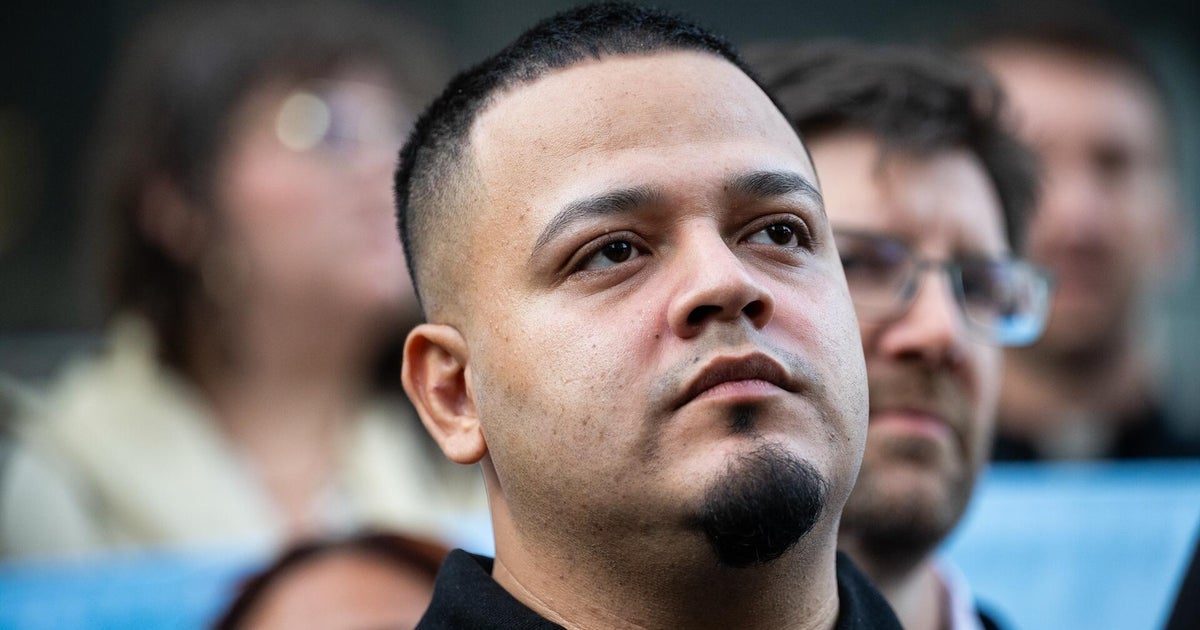
On November 20, 2025, a federal court hearing in Greenbelt, Maryland, brought renewed attention to the controversial case of Kilmar Abrego Garcia, a Salvadoran immigrant facing deportation amid criminal charges and ongoing legal battles. U.S. District Judge Paula Xinis expressed significant frustration with the Trump administration’s handling of the situation and the testimony presented by senior immigration officials regarding efforts to deport Abrego Garcia to Liberia, a West African country.
Kilmar Abrego Garcia’s case has become a focal point of debate in the Trump administration’s aggressive immigration enforcement policies. Abrego Garcia, who entered the United States illegally as a teenager in 2011, was initially denied asylum in 2019 by an immigration judge but was granted withholding of removal. This protection bars deportation to his home country of El Salvador due to concerns about potential persecution. Despite this, he was removed to El Salvador in March 2025, a move that ran contrary to the immigration judge’s order and sparked legal action.
Following his removal, Abrego Garcia was detained in one of El Salvador’s notorious mega-prisons, and subsequently returned to the U.S. in June to face two felony human smuggling charges. He denies these charges. With his criminal trial scheduled for next year, the Trump administration has sought repeatedly to deport him again, but this time with a twist: rather than removing him to El Salvador, authorities have proposed sending him to various African countries, including Uganda, Eswatini, and most recently Liberia.
The government’s shifting plans for Abrego Garcia’s deportation have raised questions and legal challenges. Abrego Garcia has designated Costa Rica as a country to which he would be willing to be removed, but the administration has reportedly dismissed this option. Instead, the Trump administration insists on deporting him to Liberia, citing diplomatic assurances from the Liberian government that he would not face persecution, torture, or subsequent removal to another country where his safety might be at risk.
On Thursday, John Cantú, a senior official from Immigration and Customs Enforcement’s Enforcement and Removal Operations, testified in court to explain the government’s position and the steps taken regarding Abrego Garcia’s deportation. Cantú described the logistics of the potential removal, saying that if the government received clearance, they would arrange for a commercial or charter flight to Liberia. He also stated that the State Department received assurances from Liberia about Abrego Garcia’s treatment.
However, Judge Xinis was highly critical of Cantú’s testimony, describing it as “a zero” and “the worst of all” compared to previous witnesses. She expressed frustration that Cantú seemed unfamiliar with the contents of his own affidavit and appeared to rely heavily on information provided by others without adequate understanding. This was not the first time Xinis had voiced dissatisfaction with the government’s witnesses, signaling broader concerns about the administration’s transparency and preparedness in this case.
Judge Xinis also probed the Justice Department lawyers on whether a final order of removal had ever been formally issued for Abrego Garcia. While the 2019 immigration judge’s decision denied asylum, it did grant withholding of removal, preventing deportation to El Salvador. Abrego Garcia’s legal team contends that no final removal order exists, which supports their argument that he should be released from immigration detention. Currently, Abrego Garcia remains in federal custody pending resolution of these deportation issues.
The Trump administration has urged Judge Xinis to lift her August injunction that bars Abrego Garcia’s deportation, arguing that it has met all procedural requirements to move forward with his removal to Liberia. The Justice Department asserts that Abrego Garcia was interviewed by a U.S. asylum officer in October, who concluded he did not establish a credible fear of persecution or torture in Liberia. The administration claims that further legal process is unnecessary and that Abrego Garcia’s claims are both procedurally barred and meritless.
Supporting their position, the Justice Department submitted declarations from U.S. officials affirming that Liberia’s assurances regarding Abrego Garcia’s safety are “sufficient and credible.” Additionally, Liberia’s government issued a press release stating it agreed to receive Abrego Garcia on “a strictly humanitarian and temporary basis,” responding to a U.S. request. Despite this, Abrego Garcia’s attorneys express concern about what happens after this temporary period and question whether Liberia might eventually expel him to yet another unspecified country.
Andrew Rossman, one of Abrego Garcia’s lawyers, criticized the vague nature of these arrangements. He questioned the administration