
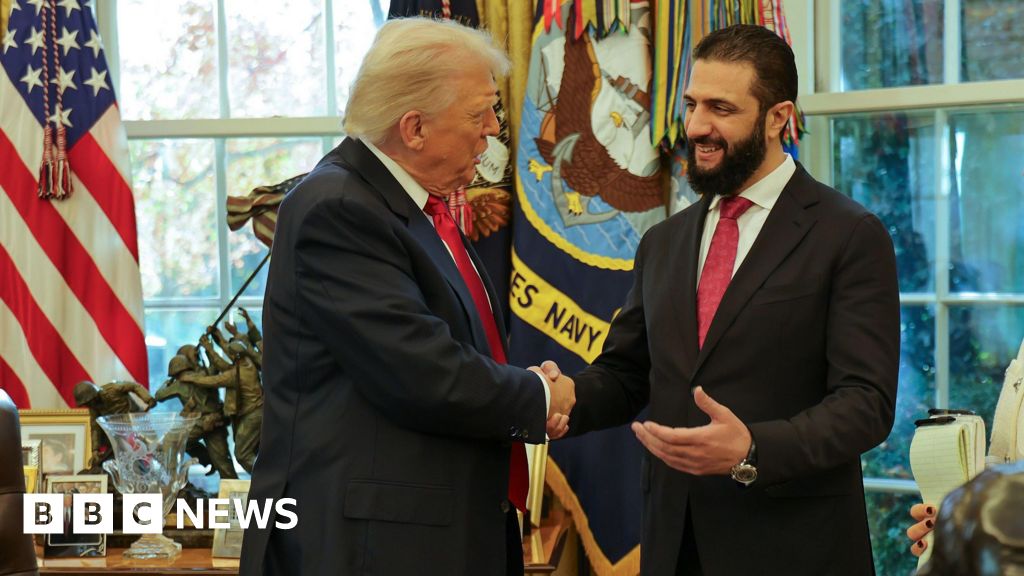
In a significant shift in U.S. foreign policy toward the Middle East, Syria has agreed to join the international coalition aimed at combating the Islamic State (ISIS). This development was confirmed by a senior official in the Trump administration following a historic meeting between U.S. President Donald Trump and Syrian President Ahmed al-Sharaa at the White House. Al-Sharaa’s visit marked the first-ever appearance of a Syrian head of state at the White House, symbolizing a potential new chapter in U.S.-Syria relations.
During his visit, al-Sharaa described the meeting as the beginning of a “new era” of cooperation between Syria and the United States. This is a notable transformation considering the longstanding hostility and lack of formal diplomatic relations between the two countries, which have been frozen since 2012 amid the Syrian civil war. The U.S. had previously designated al-Sharaa as a terrorist due to his past affiliations; however, President Trump has expressed his support for the Syrian leader, signaling a willingness to engage with him in efforts to stabilize and rebuild Syria.
With Syria’s inclusion, the coalition to defeat ISIS now comprises 90 countries working together to eliminate the remaining ISIS strongholds and prevent the flow of foreign militants into the region. This expanded partnership reflects a pragmatic approach to combatting terrorism by incorporating former adversaries into a broader security framework.
Following the meeting, a senior U.S. administration official revealed that the Treasury Department, along with the State and Commerce Departments, would soon announce new measures aimed at easing economic restrictions on Syria. These measures are designed to provide “compliance clarity for investors,” which could encourage foreign investment and economic activity in Syria after years of devastating conflict. A key component of this policy shift is the temporary suspension of the Caesar Act sanctions for 180 days. The Caesar Act, enacted in 2019, had imposed stringent sanctions on the Syrian government to pressure President Bashar al-Assad’s regime.
President Trump, speaking from the Oval Office shortly after the meeting, expressed optimism about Syria’s future, stating, “We want to see Syria become a country that’s very successful.” He also voiced confidence in al-Sharaa’s leadership, saying, “I think this leader can do it. I really do.” This optimism is underscored by the decision to allow Syria to re-open its embassy in Washington, marking a restoration of diplomatic ties that had been severed for over a decade.
Al-Sharaa’s visit to the White House was the culmination of several meetings with President Trump earlier in the year. Their previous encounters included a meeting in May on the sidelines of the Gulf Cooperation Council summit and a dinner during the United Nations General Assembly in September. These interactions have laid the groundwork for the current rapprochement and signal a growing willingness on both sides to engage constructively.
The transformation of Ahmed al-Sharaa’s image and political standing is remarkable. Until recently, he was a leading figure in jihadist circles, having led a branch of Al-Qaeda, the terrorist organization responsible for the 9/11 attacks and many other atrocities. Later, he headed Hayat Tahrir al-Sham (HTS), an armed Islamist group that the U.S. government classified as a terrorist organization until just four months before the White House meeting. The U.S. had even placed a $10 million bounty on his capture. However, the Treasury Department removed al-Sharaa from its “specially designated global terrorist list” shortly before his visit, signaling a dramatic shift in U.S. policy and perception.
As interim president of Syria, al-Sharaa has worked to distance himself from his militant past and has sought to present a more moderate and pragmatic image. His focus has been on rebuilding Syria after more than a decade of brutal civil war, with an emphasis on attracting foreign support and investment. President Trump acknowledged al-Sharaa’s difficult history but framed it as a factor that could contribute to his ability to lead effectively, stating, “He has had a rough past. And I think, frankly, if you didn’t have a rough past, you wouldn’t have a chance.”
In an interview with Fox News’ Special Report, al-Sharaa emphasized that his discussions with President Trump did not dwell on his past but rather concentrated on the “present and the future” of Syria. He described Syria’s new role as a “geopolitical” and economic partner to the United States, highlighting a desire to reorient the country’s international relationships and rebuild its battered economy.
Despite these positive overt