
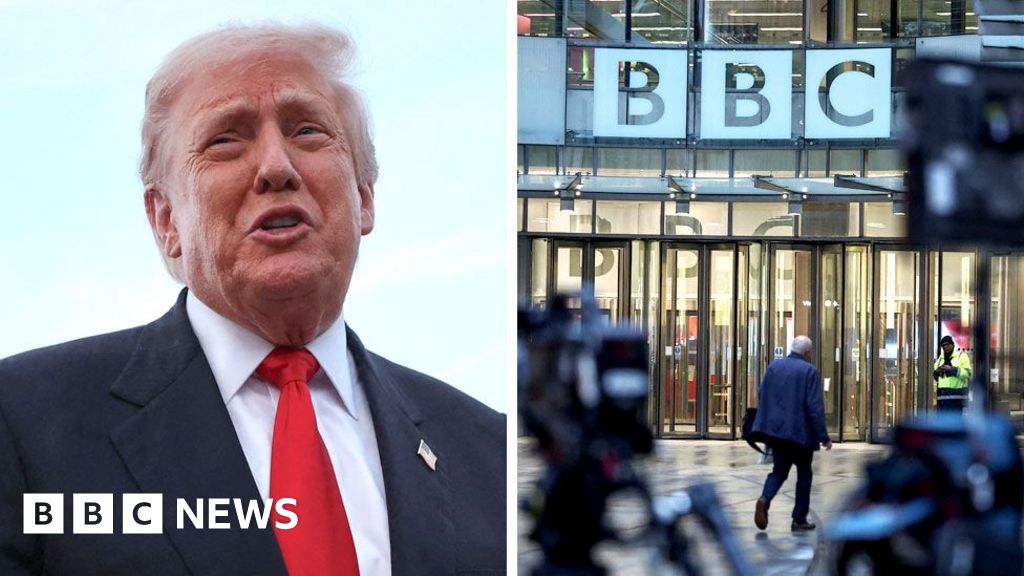
Former US President Donald Trump has threatened to sue the BBC for $1 billion (£760 million) over the way a speech he made on 6 January 2021 was edited and presented in a Panorama documentary. Trump’s legal team has given the BBC a deadline of 14 November to issue a “full and fair retraction” of the documentary, or face legal action. The dispute centers on allegations that the BBC manipulated parts of Trump’s speech, making it appear as though he explicitly urged supporters to attack the US Capitol following his election defeat.
A leaked internal BBC memo revealed that the documentary spliced together two sections of Trump’s speech that were originally more than 50 minutes apart. This editing created the impression that Trump was directly encouraging violent action during the Capitol riot, a claim that Trump vehemently denies. The edited version showed Trump saying: “We’re going to walk down to the Capitol... and I’ll be there with you. And we fight. We fight like hell,” which was juxtaposed with an earlier part of his speech in which he said: “We’re going to walk down to the Capitol, and we’re going to cheer on our brave senators and congressmen and women.” Critics argue that the BBC’s edit distorted the original context and misled viewers.
The controversy has intensified following the publication of a memo by Michael Prescott, a former independent adviser to the BBC’s editorial standards committee. The memo criticized the corporation for multiple issues, including alleged bias in its coverage of Gaza—particularly by BBC Arabic—anti-Trump and anti-Israel bias, and one-sided reporting on transgender issues. It also highlighted the problematic Panorama edit. The publication of this memo put considerable pressure on the BBC’s leadership, contributing to the resignations of Deborah Turness, the outgoing CEO of BBC News, and Tim Davie, the Director General. Both announced their departures on Sunday, citing a variety of reasons, though the controversy surrounding the Panorama documentary and the wider editorial concerns were acknowledged as significant factors.
BBC Chair Samir Shah publicly accepted that an “error of judgement” was made in the Panorama documentary, acknowledging that the way the speech was edited gave the false impression of a “direct call for action.” Shah expressed regret over the decision and said the BBC would like to apologize for the mistake. However, he firmly rejected claims that the memo’s revelations had been deliberately suppressed or ignored by the BBC. He emphasized that the issues raised had been discussed internally, and corrective actions had been taken where appropriate.
In response to the legal threat, Trump’s legal team accused the BBC of making “false, defamatory, disparaging, misleading, and inflammatory statements” about him. Alejandro Brito, Trump’s attorney, specifically cited defamation under Florida law, signaling the seriousness of the potential lawsuit. Trump’s letter to the BBC also demands an apology and appropriate compensation for the damage caused by the documentary.
Shah’s letter to the UK Parliament’s Culture Media and Sport Committee revealed that the BBC had received over 500 complaints since Prescott’s memo became public. The controversial Panorama edit had been reviewed by the BBC’s Editorial Guidelines and Standards Committee earlier in the year, during a broader assessment of the corporation’s US election coverage. Prescott and other committee members had expressed concerns about the edit at that time. However, Shah explained that the BBC’s News division defended the editing decision by stating that the intention was to convey the overall message of Trump’s speech, helping Panorama’s audience to understand how the speech was received by Trump’s supporters and the atmosphere on the ground during the Capitol events.
Shah acknowledged that, with hindsight, the BBC should have taken more formal action regarding the edit. He noted that the segment had not initially attracted significant audience feedback and had aired before the US midterm elections, which may have contributed to the issue not being pursued further at that time.
The resignations of Tim Davie and Deborah Turness have added further turbulence to the BBC’s leadership. Tim Davie, who stepped down on Sunday, stated that while the current debate about the BBC’s editorial standards was not the sole reason for his decision, it did “understandably contribute” to it. He took “ultimate responsibility” for mistakes made during his tenure but emphasized that overall the BBC was performing well. Deborah Turness, who had overseen news and current affairs since 2022, made her first public remarks since announcing her departure, defending the BBC against accusations of institutional bias. Speaking outside the BBC’s London headquarters