
Pakistan has escalated its military readiness to unprecedented levels following recent heightened tensions in the region, particularly after a terror attack in Delhi. The country has issued a red alert across all its airports and airfields, signaling the seriousness of the security situation. This heightened alert extends beyond the conventional military branches to include paramilitary forces and police departments across all four provinces of Pakistan, emphasizing a nationwide state of preparedness.
At the heart of Pakistan’s response is an emergency meeting convened by the country’s Army Chief, General Asim Munir, who gathered top military leadership including Air Chief Marshal Zaheer Ahmad Babar, head of the Pakistan Air Force, and senior naval officials. Following this meeting, Pakistan’s armed forces—the army, navy, and air force—have been placed on high alert with orders to maintain full operational readiness. The Pakistan Air Force has activated its air defense systems and is conducting continuous sorties along the border with Rajasthan, India, since the previous night. General Munir has instructed that aircraft stationed at forward bases be prepared for immediate takeoff if necessary.
In addition to aerial defense measures, Pakistan has issued a Notice to Airmen (NOTAM), a formal advisory tightening flight safety protocols and restricting airspace in border areas experiencing heightened tension. The Pakistan Navy has also been directed to maintain vigilant surveillance around the coastal city of Karachi, a strategic port area. All branches of the military have been tasked with closely monitoring developments in India, especially in the wake of the recent terror blast in Delhi.
The attack in Delhi has significantly raised tensions between India and Pakistan, with the Indian Armed Forces reportedly preparing for potential retaliatory action. India’s Defence Minister Rajnath Singh has reiterated that Operation Sindoor, the ongoing military campaign aimed at dismantling terrorist infrastructure, is still active. Similarly, India’s Foreign Minister S. Jaishankar has clarified that recent interactions with Pakistan did not amount to a ceasefire agreement but rather a temporary cessation of hostilities.
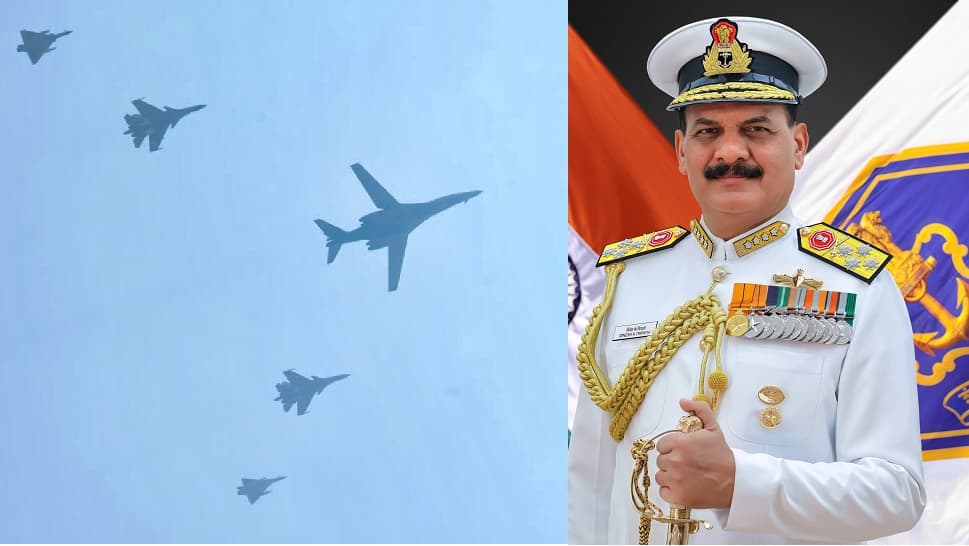
Amid this volatile atmosphere, India is simultaneously strengthening its strategic partnerships and military capabilities. The Indian Air Force (IAF) is currently conducting a bilateral air exercise with the United States Air Force (USAF) from November 10 to 13, 2025. This exercise is designed to foster mutual learning and enhance interoperability between the two air forces. The USAF is participating with its B-1B Lancer bombers, showcasing a significant level of strategic cooperation. This drill is particularly critical given the ongoing regional instability following the terror incident in Delhi.
Meanwhile, Admiral Dinesh K. Tripathi, Chief of the Indian Navy, is on an official visit to the United States to further cement the robust maritime partnership between India and the US. During this visit, Admiral Tripathi is meeting with senior officials at the US Department of War, as well as key figures such as Admiral Samuel J. Paparo, Commander of the United States Indo-Pacific Command (USINDOPACOM), and Admiral Stephen T. Koehler, Commander of the United States Pacific Fleet (USPACFLT). These high-level discussions aim to review ongoing maritime cooperation, strengthen operational linkages, and enhance mechanisms for information sharing and maritime domain awareness between the two navies.
The visit also includes engagements with key US naval institutions and operational commands, focusing on shared maritime priorities in the Indo-Pacific region. Collaborative efforts within multilateral frameworks such as the MILAN naval exercise and the Combined Maritime Forces (CMF) initiatives are expected to be key discussion points. This partnership is seen as crucial in maintaining a strong strategic balance amid the heightened tensions between India and Pakistan.
From India’s perspective, the military is preparing methodically for any escalation that might follow the Delhi terror attack. While Pakistan anticipates a strong Indian retaliation, Indian forces are reportedly waiting for the right opportunity to decisively target terrorist infrastructure across the border. The ongoing Operation Sindoor underscores India’s commitment to counter-terrorism and dismantling terror networks that operate from Pakistani territory.
Pakistan’s decision to place its entire military apparatus on high alert, including paramilitary and police forces, reflects the seriousness with which Islamabad views the current situation. Sources indicate that this is the highest level of security alert the country has implemented in recent times. The activation of air defense systems, continuous fighter sorties, and tightened airspace restrictions demonstrate Pakistan’s readiness to respond swiftly to any Indian military actions.
The situation remains highly fluid, with both sides closely observing each other’s moves. The international community is watching the developments with concern, given the