
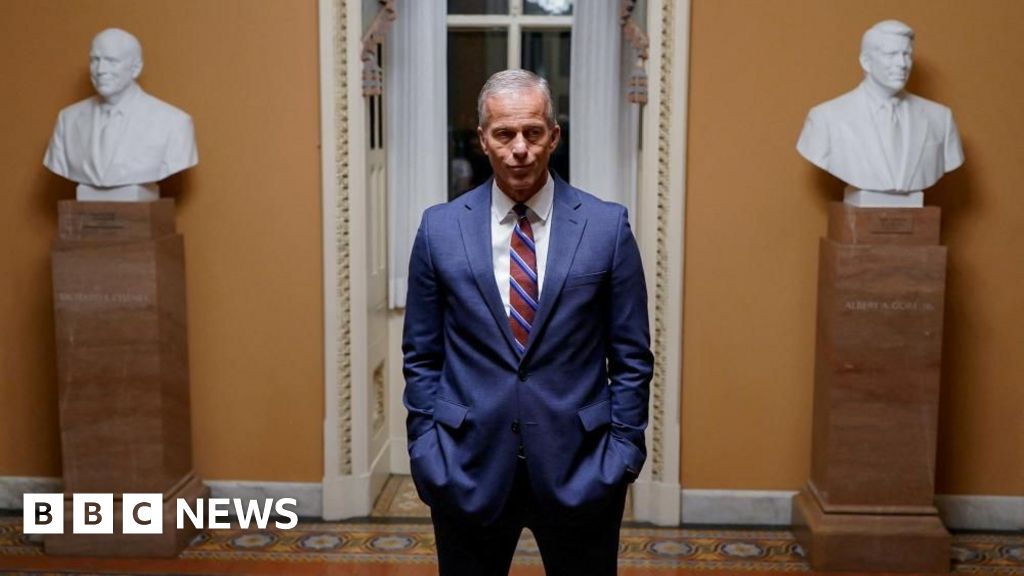
After a prolonged budget impasse between Republicans and Democrats in the United States Congress, a deal to reopen the federal government has successfully passed the Senate, signaling a significant step toward ending the longest government shutdown in the nation’s history. The Senate approved the funding bill with a vote of 60 to 40 on November 10, after seven Democrats and one independent joined Republicans in supporting the measure. However, the bill must still pass the House of Representatives before the shutdown can officially end.
The current government shutdown, which began on October 1, has resulted in the temporary suspension of many government services and has placed approximately 1.4 million federal employees either on unpaid leave or working without pay. Although some essential services have continued operating during the shutdown, the stalemate has created widespread disruption, affecting government workers and citizens alike.
The newly passed Senate bill provides temporary funding to the federal government through January 30, 2024. Additionally, it includes a provision to fund the Supplemental Nutrition Assistance Program (SNAP), commonly known as food aid, until September 2026. This is a critical component of the bill, as it ensures that millions of low-income Americans who rely on SNAP will continue to receive assistance. The legislation also guarantees back pay for all federal workers affected by the shutdown and reverses the layoffs of thousands of furloughed employees.
President Donald Trump expressed his intent to abide by the deal, signaling his support for the bill’s passage into law. One of the key Democratic demands during negotiations has been the extension of health care subsidies that are set to expire at the end of the year. Although Republicans in the Senate agreed to allow a vote on extending these subsidies in December, House Republicans have not committed to taking up the healthcare issue, leaving some uncertainty around that aspect of the agreement.
The bill now moves to the House of Representatives, where Republicans hold a narrow majority of just two seats. This slim margin makes the vote outcome uncertain. While most House Republicans are expected to support the bill, House Democrats are likely to oppose it. The lack of a firm commitment from House Republicans on the healthcare subsidies complicates the path forward. House Speaker Mike Johnson stated, “I’m not promising anybody anything,” underscoring the tentative nature of the negotiations in the lower chamber.
The U.S. legislative process requires that both the House and Senate approve a spending plan before it can be sent to the president for signature and become law. Although Republicans control both chambers of Congress, the Senate’s previous inability to secure the 60 votes needed to advance an earlier spending bill gave Democrats significant leverage. Democrats insisted that the new bill include extensions of expiring tax credits designed to make health insurance more affordable for millions of Americans.
Prior to the shutdown, the House had passed a temporary funding bill aimed at preventing a lapse in government funding. However, it was unable to overcome Democratic opposition in the Senate. This impasse led to the shutdown commencing on October 1, marking the first federal government shutdown in nearly seven years.
During the shutdown, thousands of government employees classified as non-essential were furloughed, meaning they were placed on temporary unpaid leave. Nonetheless, essential government functions continued to operate. Federal law enforcement agencies remained active, Social Security and Medicare payments continued to be distributed, and mail delivery was maintained. The Trump administration allocated funds to ensure military personnel continued to be paid.
Despite being required to work without pay, some air traffic controllers called in sick during the shutdown, contributing to widespread flight cancellations and delays. Meanwhile, more than 42 million Americans who rely on SNAP benefits have experienced partial payments. This is due in part to a Supreme Court decision allowing the administration to withhold some funding pending further legal proceedings.
While most federal employees have not been paid during the shutdown, members of Congress have continued to receive their salaries, a point of contention among the public. The economic impact of government shutdowns is generally limited and temporary, comparable to the disruption caused by a natural disaster such as a hurricane. However, the shutdown has caused significant delays in loan and permit approvals and has suspended hundreds of millions of dollars in federal contracts.
An important distinction is that federal contractors, unlike government employees, do not receive back pay once a shutdown ends. Many contractors are small businesses that rely heavily on government contracts, meaning the shutdown has caused financial hardship for these entities without the safety net of back pay.
Economists estimate that the ongoing shutdown will reduce U.S. economic growth by approximately 0.1 to 0.2