
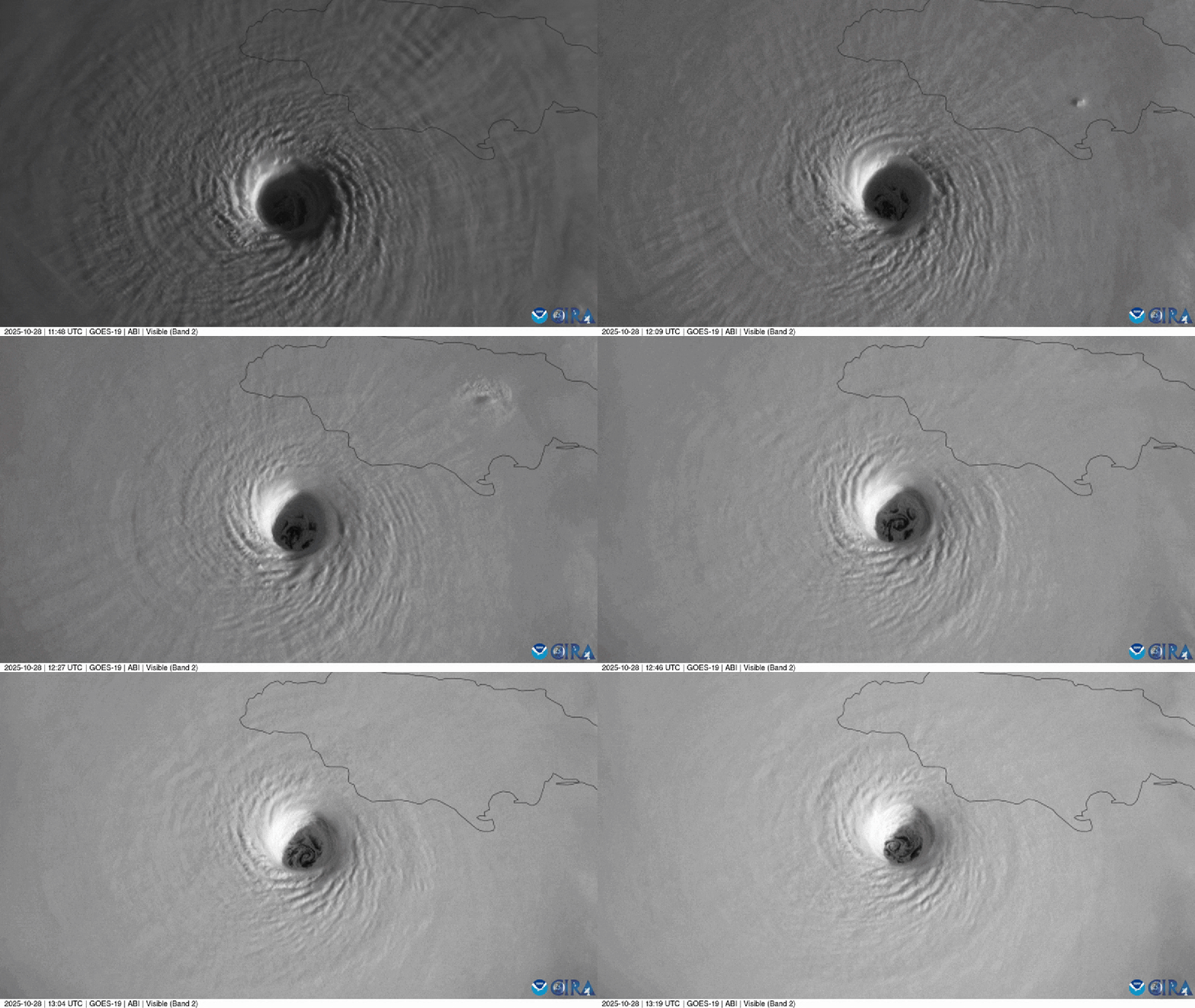
In October 2025, Hurricane Melissa, a Category 5 storm in the Caribbean, demonstrated extraordinary power, setting new benchmarks for wind speeds recorded in the Atlantic Ocean. Recent scientific analyses have revealed that the hurricane produced a wind gust reaching an astonishing 252 miles per hour. This measurement places Melissa’s gust just one mile per hour shy of the fastest wind gust ever recorded on Earth, according to the World Meteorological Organization. Furthermore, it surpasses by four miles per hour the previous record for the strongest gust measured in a tropical cyclone over the ocean.
This remarkable wind gust was captured using advanced meteorological technology during the hurricane’s peak intensity. Scientists deployed dropsondes—specialized instruments released from Hurricane Hunter aircraft—to measure wind speeds and atmospheric conditions from the upper reaches of the storm down to the ocean’s surface. These devices provide invaluable data that help forecasters understand the dynamics of such powerful storms. The data collected from Hurricane Melissa underwent meticulous verification to rule out any instrument errors, ensuring the reliability of the record-breaking measurement.
Holger Vömel, an atmospheric scientist at the National Center for Atmospheric Research (NCAR) in Boulder, Colorado, played a pivotal role in analyzing the data from Melissa. With extensive experience scrutinizing extreme weather measurements, including reviewing past claimed records such as a contested wind reading from Hurricane Katrina in 2005, Vömel confirmed the authenticity of the new gust measurement. “Everything behaved exactly as it was intended to,” he affirmed, emphasizing the robustness of the observation. This confirmation is significant because it validates Melissa’s place among the most intense storms ever recorded.
The distinction between wind gusts and sustained winds is crucial in meteorology, particularly when categorizing hurricanes. Sustained winds—the average wind speed measured over a one-minute interval—are the standard metric used to rank a storm on the Saffir-Simpson Hurricane Wind Scale, which ranges from Category 1 to Category 5. Gusts, on the other hand, are brief bursts of higher wind speeds that do not persist for the required duration to influence the storm’s category. Hurricane Melissa’s sustained winds reached 185 miles per hour, just 5 mph short of the Atlantic Ocean’s record for sustained wind speeds. This sustained strength, combined with the record gust, underscores the storm’s extraordinary intensity.
Melissa’s exceptional power was largely due to its slow movement over warm Caribbean waters. Warm ocean temperatures provide the energy needed for tropical cyclones to intensify, fueling their winds and lowering central pressure. At its peak, Melissa’s minimum central pressure dropped to 892 millibars, tying it as the third-strongest hurricane on record in the Atlantic basin. Lower central pressure in a hurricane generally correlates with stronger winds and greater storm severity, further highlighting Melissa’s formidable nature.
Comparing Melissa’s gust to previous records illustrates its significance in the broader context of tropical cyclone history. The fastest wind gust recorded on Earth was 253 mph, measured during a 1996 tropical cyclone that struck Barrow Island, Australia. However, scientists caution against direct comparisons because that measurement was taken at a height of 10 meters (about 33 feet) above ground level, where natural and man-made terrain can accelerate wind speeds through channeling effects. By contrast, Melissa’s 252-mph gust was recorded approximately 20 times higher above the ocean surface, in an environment less influenced by such topographical factors. This difference means Melissa’s gust is arguably more representative of the storm’s true intensity in open ocean conditions.
Beyond its wind records, Hurricane Melissa also left a significant mark through its impacts on land, particularly in Jamaica. It was the strongest storm ever to make landfall on the island, bringing devastating winds and heavy rainfall. Melissa’s rains set a new benchmark for the nation’s rainfall totals, recording the second-highest accumulation since 2000. These impacts serve as a sobering reminder of the destructive power of such storms, which pose serious threats to communities and infrastructure.
Experts like Vömel stress the importance of treating these storms with the utmost seriousness. While the scientific achievement of capturing and verifying record-breaking data is remarkable, the human cost of hurricanes like Melissa must not be overlooked. The intense winds and flooding that accompany such storms can cause widespread suffering and damage, underscoring the need for continued research, preparedness, and resilience efforts.
The study and understanding of hurricanes are continually advancing thanks to improvements in technology and methodology. Dropsondes, for example, represent a critical tool in hurricane research