
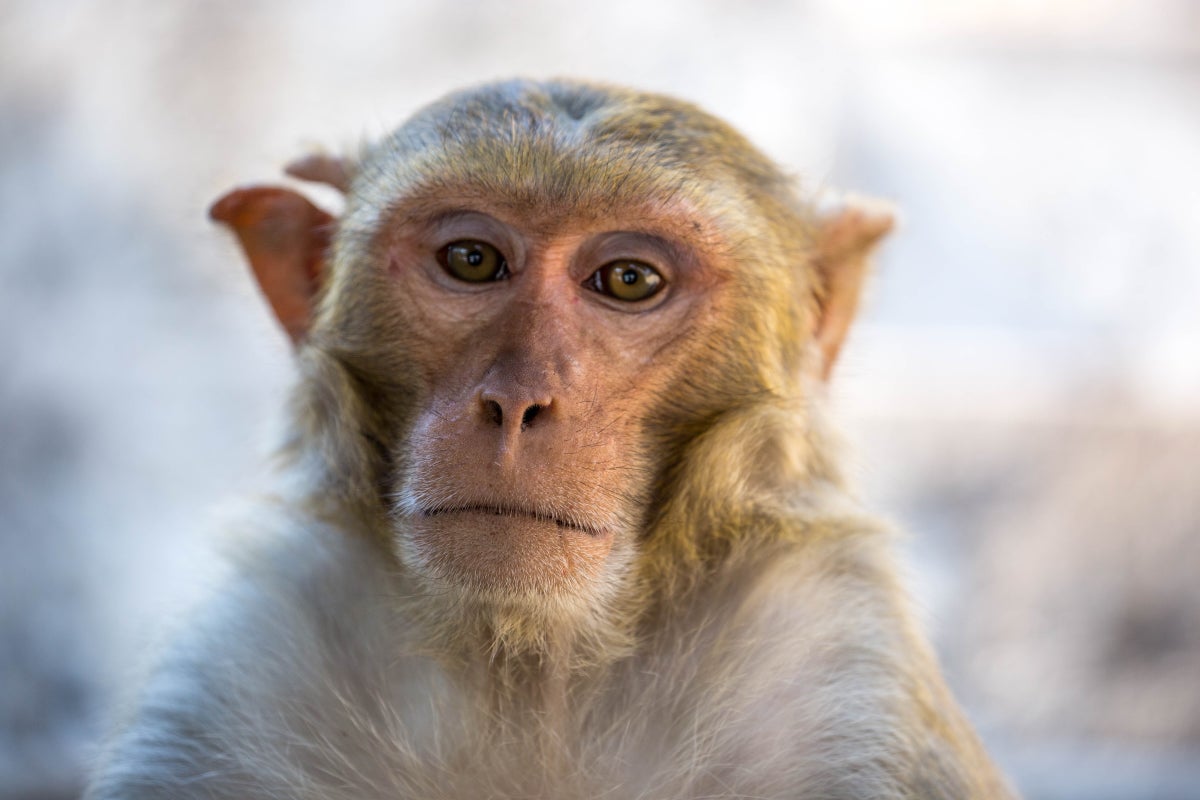
On November 21, 2025, the U.S. Centers for Disease Control and Prevention (CDC) announced it will be ending its monkey research program, a decision that will impact studies involving approximately 200 macaque monkeys housed at the agency’s headquarters in Atlanta. These animals have been integral to research on infectious diseases such as HIV and hepatitis, and the future of the monkeys following the program’s termination remains uncertain. The move represents a significant shift in the CDC’s approach to infectious disease research and signals a broader trend within federal agencies toward reducing reliance on animal models in scientific studies.
The CDC’s directive to halt all monkey research comes amid ongoing debates about the ethical considerations of using nonhuman primates in biomedical research. According to a spokesperson for the CDC, the agency is committed to the “highest standards of ethical and humane care” and aims to minimize the use of laboratory animals in accordance with established principles of replacement, reduction, and refinement—three guiding tenets of animal welfare in scientific research. This means the CDC regularly reviews its research portfolio and strives to employ non-animal research methods wherever feasible, provided that public health and safety are not compromised.
The decision to end the monkey research program reportedly originated from Robert F. Kennedy, Jr., the Secretary of Health and Human Services, who has prioritized curbing animal research as part of his “Make America Healthy Again” agenda. CDC staff were informed about the decision through official channels, including a notification from the agency’s deputy chief of staff. The directive calls for a complete cessation of primate-based studies by the end of the year.
This development has elicited concern from experts in infectious disease research. JoAnne Flynn, a distinguished professor and chair of microbiology and molecular genetics at the University of Pittsburgh, expressed apprehension about the potential scientific consequences. Flynn emphasized the critical role that nonhuman primates play in infectious disease research, noting that many pathogens and diseases can only be effectively studied in systems that closely resemble humans. While alternative models such as mice or cell cultures are widely used, they often fall short in replicating the complex interactions that occur in primates. She worries that halting ongoing studies prematurely could lead to significant losses in valuable research knowledge.
Despite these concerns, some experts point out that the CDC’s monkey research program represents only a small fraction of the broader landscape of primate research in the United States. Nancy L. Haigwood, a professor and former director of the Oregon National Primate Research Center, noted that other federally funded centers and universities continue to conduct primate research under strict peer review processes. These institutions justify their use of nonhuman primates only when alternative methods are inadequate, ensuring that such studies remain essential and scientifically valid.
The CDC’s move aligns with a growing trend among federal agencies to reduce reliance on animal models in favor of cutting-edge alternatives. Since the return of President Donald Trump to office in January, several agencies have increased investments in innovative research tools such as chip-based and cellular models. These technologies offer promising avenues for studying diseases without the ethical and logistical challenges of using live animals. The CDC’s decision reflects a broader administrative priority to advance such alternatives while maintaining research integrity and public health protections.
The implications of this shift are multifaceted. On one hand, reducing animal research addresses ethical concerns related to animal welfare and responds to public and political pressures to find more humane scientific methods. On the other hand, the complexity of many infectious diseases means that nonhuman primate models are often indispensable for understanding disease mechanisms and developing treatments and vaccines. This tension highlights the ongoing challenge of balancing scientific progress with ethical responsibility.
Furthermore, the fate of the 200 macaques currently involved in CDC studies remains unclear. The agency has not disclosed specific plans for the animals post-research, raising questions about their care and potential relocation. The uncertainty adds another layer of complexity to the decision and underscores the need for clear policies and transparent communication regarding the welfare of research animals.
This development also underscores the importance of public engagement and support for science. Claire Cameron, Breaking News Chief at Scientific American and the author reporting on this story, emphasized the critical role that informed journalism and public understanding play in navigating these complex issues. She highlighted that Scientific American, with its long history of advocating for science, depends on subscribers to continue providing high-quality coverage of scientific discoveries and policy decisions that shape the future of research.
In an era where scientific findings and methodologies are increasingly scrutinized, the CDC’s decision to end its monkey research program serves as a pivotal