
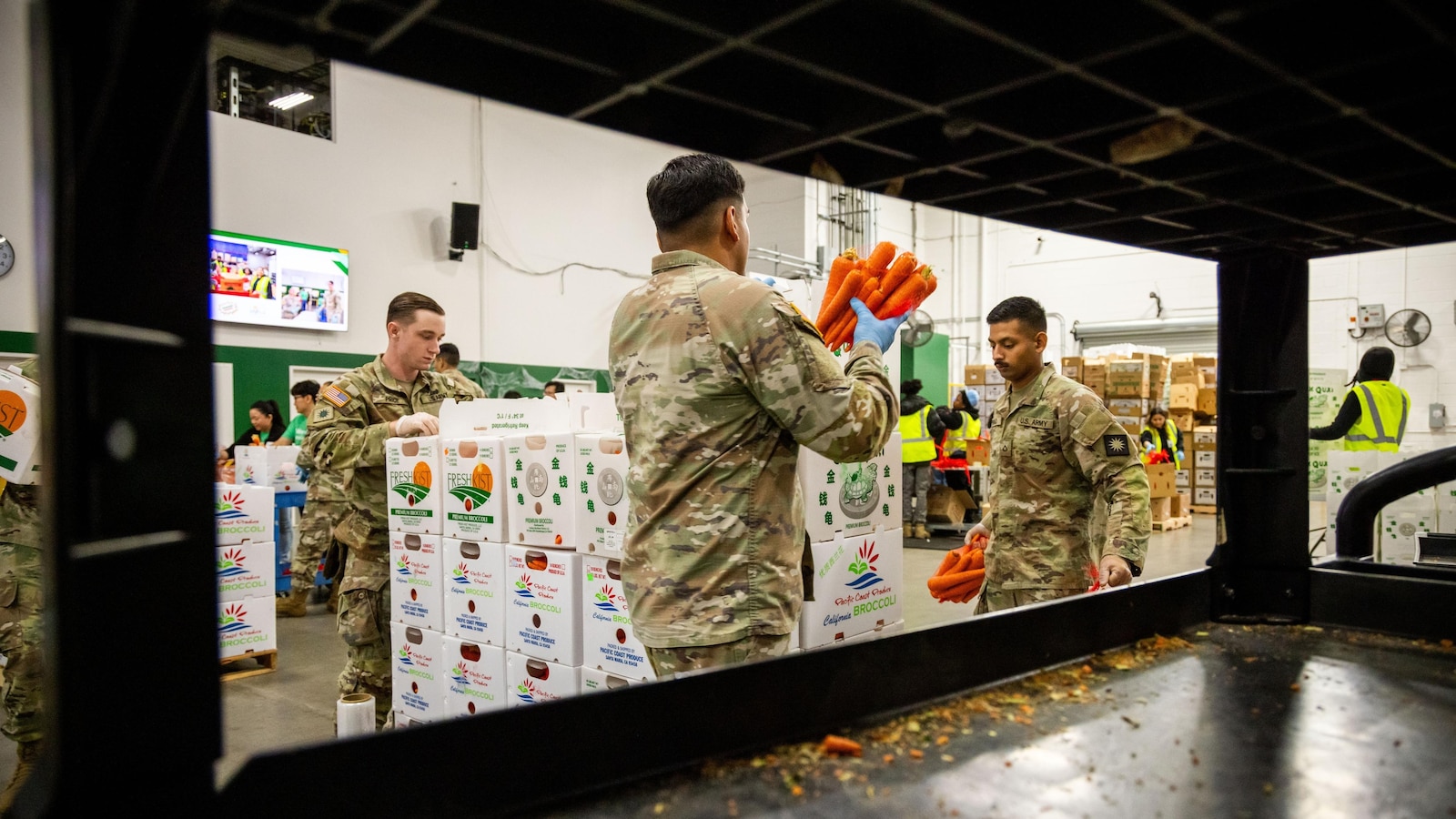
As the current government shutdown continues into its second month, concerns are mounting over the serious and lasting impacts it is having on the U.S. military, particularly the National Guard and active duty service members. Advocates and military leaders warn that the shutdown is not only disrupting paychecks but also hindering critical training, maintenance, and administrative processes, potentially jeopardizing the readiness and morale of troops nationwide.
The National Guard, comprising approximately 433,000 Army and Air Guard members, has been hit especially hard by the funding lapse. Francis McGinn, president of the National Guard Association, highlighted the unique challenges facing these troops during a press briefing. While the Trump administration has managed to mitigate some effects of the shutdown on active duty military personnel by reallocating funds to ensure they receive paychecks, this relief has not extended fully to National Guard technicians. These technicians are full-time civilian government employees who also serve in uniform, responsible for vital tasks such as training coordination and equipment maintenance. Since the end of September, over 30,000 of these technicians have gone unpaid, creating operational challenges for the Guard.
McGinn emphasized that these technicians are indispensable to the National Guard’s day-to-day functioning and overall readiness. Without their support, unit preparedness suffers, as these individuals oversee essential training activities and keep vehicles and aircraft in working order. The shutdown has thus created a backlog of maintenance and training tasks that will be difficult to clear once funding is restored. McGinn estimated that thousands of hours of necessary vehicle and aircraft upkeep have already been missed, further compounding readiness issues.
Compounding these operational difficulties, the National Guard has been called upon to perform added duties during the shutdown, including patrolling the streets of several major cities. Notably, more than 2,300 Guard troops have been deployed to Washington, D.C., to support law enforcement and public safety efforts. This deployment comes at a time when their resources and morale are already strained, creating an additional layer of stress for Guard members who are simultaneously facing financial uncertainty.
The shutdown’s effects extend beyond pay and immediate operational concerns. John Hashem, executive director of the Reserve Organization of America, an advocacy group supporting Guard and Reserve members, warned that the disruption to training and professional development will have a ripple effect on troop readiness. Many scheduled schools, training exercises, and maintenance opportunities have been canceled or postponed, and Hashem stressed that these cannot simply be “picked up” once the shutdown ends. The timing and structure of future training events may have changed, making it difficult for troops to catch up and maintain proficiency.
Both Hashem and McGinn expressed deep concern about the morale impact of the shutdown, particularly among the technicians who have gone unpaid. McGinn described them as feeling “completely demoralized” and “betrayed by the government,” sentiments that could have long-term consequences for retention and recruitment within the National Guard. Sustaining a motivated and ready force requires consistent support, and prolonged financial uncertainty undermines these efforts.
The active duty military is also confronting significant challenges due to the shutdown. A growing number of service members who are scheduled to separate or retire from the military cannot complete the formal administrative process required to end their service. This process involves generating and finalizing critical paperwork that certifies a service member’s period of service, job specialties, awards, and discharge status. Without these documents, troops cannot receive their final pay and may face delays or denials in accessing benefits such as the GI Bill for education or disability pay through the Department of Veterans Affairs.
Officials from the Air Force and Navy confirmed that they are unable to process certain voluntary and administrative separations because of the funding lapse. The Air Force spokesperson noted a legal prohibition on incurring costs related to separations in November, while a Navy official explained that the necessary service record forms cannot be finalized, delaying final payments. To prevent service members from experiencing gaps in pay or losing benefits, both branches have offered impacted personnel the option to voluntarily extend their active duty status temporarily until the shutdown is resolved.
The Army also acknowledged that soldiers within 45 days of their separation window are affected by the funding lapse, though a spokesperson declined to confirm whether the service was mandating extensions or offering them voluntarily. These extensions, while providing financial continuity, also mean that troops remain on active duty longer than planned, which can create additional personal and professional disruptions.
The Marine Corps has not publicly commented on the shutdown’s effects, citing the government closure and lack of authorization to speak on the