
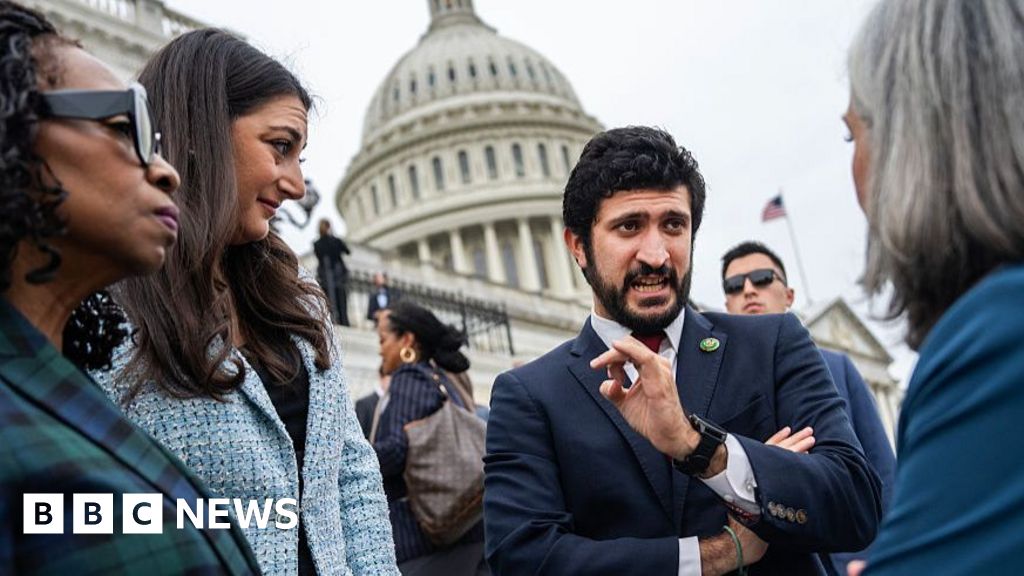
Following the US Senate’s passage of a spending bill aimed at ending the longest government shutdown in American history, the focus now shifts to the House of Representatives, where the budget fight continues. The House is expected to vote on the funding measure this week, but despite Republicans holding a majority in the lower chamber, the margin for passing the bill is incredibly narrow. If House Republicans maintain unity, they can pass the budget without any Democratic support. However, several potential obstacles remain that could delay or derail the legislation before it reaches President Biden’s desk for signing into law.
One of the most contentious issues throughout the shutdown has been the Democrats’ push to include a renewal of tax credits in the spending bill. These subsidies help make health insurance more affordable for approximately 24 million Americans. Senate Republicans, however, resisted including these tax credit extensions in the current bill. Instead, they agreed only to allow a vote in December on whether to extend the subsidies—essentially postponing the decision. This was seen as a compromise that Democrats had been offered weeks earlier but had yet to accept.
In the House, Speaker Mike Johnson has not committed to allowing a vote on the tax credits. This reluctance reflects the political risks Republicans face. Should they block the renewal of these subsidies, health insurance premiums could rise sharply, providing Democrats with a potent campaign issue heading into next year’s midterm elections. The issue has even caused some fractures within the Republican Party. Marjorie Taylor Greene, a conservative congresswoman from Georgia known for her outspoken positions, broke ranks with former President Donald Trump by warning her party to prevent a spike in health insurance premiums.
As the expiration date for the subsidies looms at the end of December, Republicans are actively working on a plan to address the issue. Their proposal includes imposing income caps to limit who qualifies for the tax credits and directing the funds directly to individuals rather than through insurance companies. However, the details of this plan remain unclear, and it is uncertain whether Democrats will accept these conditions.
Amid this budget standoff, Democrats have found some political momentum following recent election wins in Virginia, New Jersey, and New York City. These victories have energized the party, but they have also exposed deeper divisions between the pragmatic centrists and the more progressive or left-wing factions. The left wing of the party is particularly upset with Democrats who voted alongside Senate Republicans to pass the budget, viewing it as a capitulation to Trump and a betrayal of their principles.
Prominent progressive voices have been vocal in their criticism. Senator Bernie Sanders of Vermont described the decision to pass the Senate budget as a “horrific mistake,” while California Governor Gavin Newsom called it “surrender.” Congressman Greg Casar, chair of the House Progressive Caucus, warned that any deal failing to reduce healthcare costs would betray millions of Americans who depend on Democrats to fight for them.
Despite this internal dissent, some moderate Democrats appear willing to support the spending package. Jared Golden of Maine, who represents one of the most conservative districts held by a Democrat, recently announced he would not seek re-election and is likely to vote for the bill. Henry Cuellar of Texas, another centrist Democrat, has also signaled his support, emphasizing that it is time to “put country over party” and restore government operations.
In the House, Republicans hold a slim majority with 219 seats compared to 213 for the Democrats. This narrow margin means they can only afford to lose two votes if they want to pass the spending plan without Democratic support. Although most House Republicans are expected to back the measure—especially given Trump’s endorsement—there are fiscal conservatives within the party who oppose the deal. Thomas Massie of Kentucky, known for his consistent opposition to stopgap funding bills, is expected to vote against it.
One major criticism from the conservative wing concerns the federal government’s growing debt. The proposed deal would continue adding roughly $1.8 trillion annually to the national debt, which currently stands at about $38 trillion. Senator Rand Paul of Kentucky was the sole Republican in the Senate to vote against the budget, citing concerns over excessive spending. Meanwhile, the House Freedom Caucus demands a longer-term budget that does more to curb government spending, rather than a short-term extension until January as proposed by the Senate.
House Speaker Mike Johnson has faced criticism for keeping the House out of session for seven weeks to pressure Senate Democrats into ending the shutdown. Now, with the Senate’s vote behind them, Johnson is calling on lawmakers to return to