
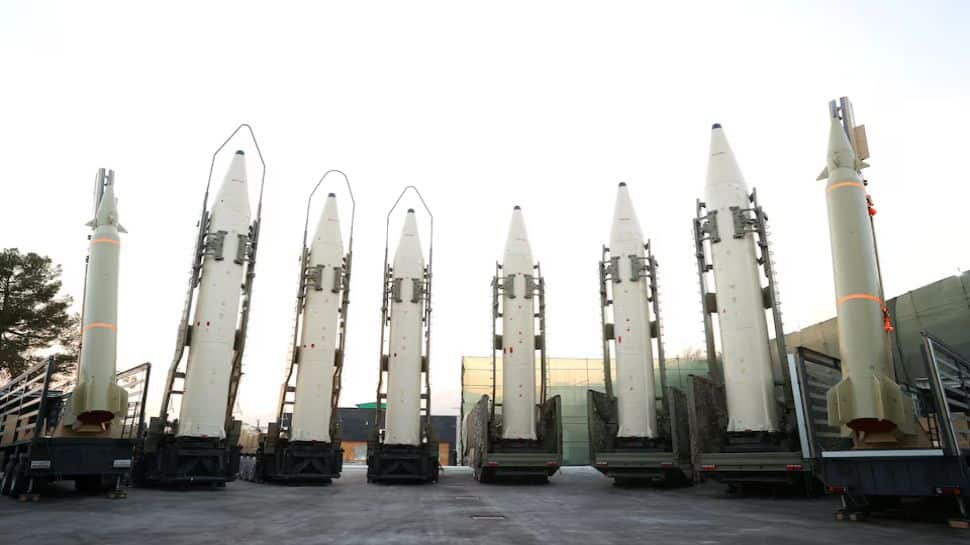
The United States has intensified its efforts to curb Iran’s advancing ballistic missile and drone programs by imposing comprehensive sanctions on 32 individuals and entities across multiple countries. These countries include India, Iran, China, Hong Kong, the United Arab Emirates, Turkey, and two others. The U.S. government accuses these designated parties of operating intricate procurement networks that supply critical components and technologies fueling Iran’s military capabilities, particularly those linked to the Islamic Revolutionary Guard Corps (IRGC) and its weapons production lines.
In an official statement, Thomas Tommy Pigott, Principal Deputy Spokesperson for the U.S. State Department, emphasized that the sanctions target systems directly supporting Iran’s efforts to develop advanced weaponry. These include unmanned aerial vehicles (UAVs), commonly known as drones, and long-range ballistic missiles. According to Pigott, these networks act as conduits, moving restricted materials through commercial fronts and intermediaries to help Iran circumvent international controls and sanctions.
This recent action aligns with Washington’s broader strategy to enforce United Nations sanctions that were reimposed on September 27, following Tehran’s ongoing “significant non-performance” of its nuclear obligations. These UN sanctions, initially established under Security Council Resolutions 1737, 1747, 1803, and 1929, prohibit the transfer of weapons technologies, components, and dual-use items that could enhance Iran’s missile or nuclear programs. The U.S. government has called upon all UN member states to uphold these restrictions and actively prevent the passage of sensitive materials into Iran.
Pigott underscored the importance of global cooperation, urging every nation to take decisive steps to halt Iran’s proliferation activities. He highlighted that the networks sanctioned are part of a worldwide effort to move restricted technologies covertly, thereby enabling Iran to continue expanding its missile and drone capabilities despite international opposition. This call for action reflects Washington’s commitment to a sustained campaign designed to contain Tehran’s weapons development.
The sanctions announced also reinforce measures outlined in former President Donald Trump’s National Security Presidential Memorandum-2. This directive instructs U.S. agencies to block Iran’s access to financial resources, equipment, and foreign suppliers connected to its asymmetric warfare capabilities. The memorandum aims to disrupt the IRGC’s ability to destabilize the region by cutting off its essential assets and support networks.
The U.S. Treasury Department confirmed that the new designations fall under Executive Orders 13382 and 13224. Executive Order 13382 targets the proliferation of weapons of mass destruction by freezing the assets of entities involved in such activities, while Executive Order 13224 focuses on disrupting terrorist financing networks. Together, these legal tools enable the U.S. to impose targeted sanctions on individuals and companies that contribute to Iran’s military expansion.
Furthermore, the State Department affirmed Washington’s resolve to use every available mechanism, including sanctions against companies and individuals in third countries, to dismantle Iran’s illicit procurement networks. These efforts are part of a comprehensive approach to identify and disrupt the global supply chains that enable Iran to acquire sensitive technologies and components for its missile and UAV programs.
The U.S. government views Iran’s missile and drone programs as significant threats to regional security and international stability. The expansion of these programs poses risks not only to countries in the Middle East but also to global peace and security. In his concluding remarks, Pigott stated unequivocally that the United States will not allow these programs to grow unchecked.
This latest round of sanctions represents a continuation of Washington’s long-standing policy of applying pressure on Tehran to curb its military ambitions, particularly those that violate UN resolutions and destabilize the Middle East. By targeting the networks that facilitate Iran’s acquisition of prohibited technologies, the U.S. aims to hinder the IRGC’s operational capabilities and limit Tehran’s ability to threaten its neighbors and global partners.
The international community’s role remains critical in enforcing these sanctions and preventing Iran from accessing sensitive materials through covert means. The U.S. administration’s call for global action highlights the interconnected nature of Iran’s procurement networks, which span multiple countries and exploit commercial channels to evade restrictions.
In summary, the United States’ expanded sanctions against 32 individuals and entities across several nations underscore its determination to disrupt Iran’s ballistic missile and drone development programs. By leveraging UN sanctions, executive orders, and diplomatic pressure, Washington seeks to dismantle the procurement networks that sustain the IRGC’s military production. The move reinforces the message that Iran’s continued missile and UAV advancements pose unacceptable threats to regional and international security, and