
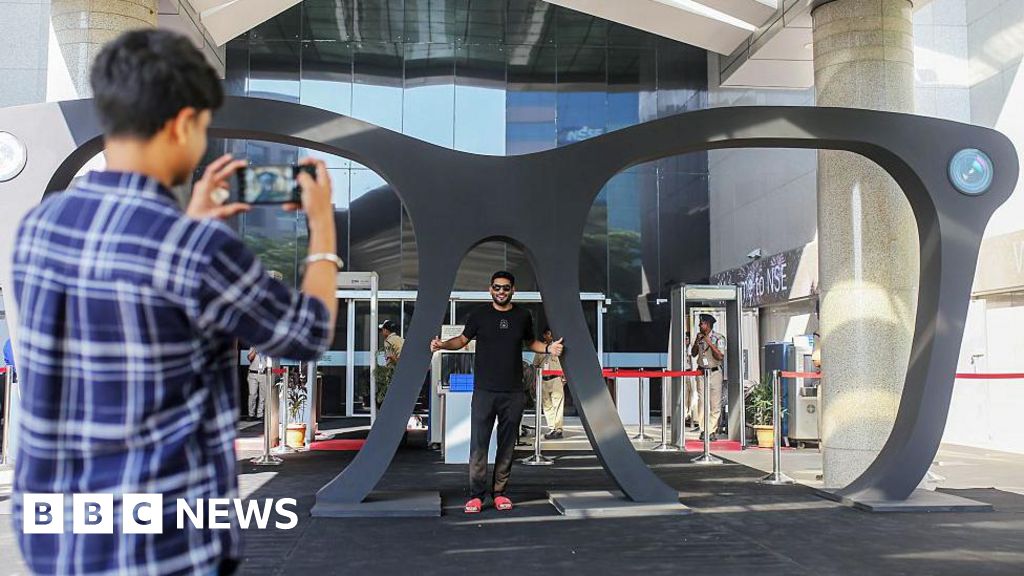
India's start-up ecosystem continues to display remarkable momentum, with a surge in initial public offerings (IPOs) that shows no signs of abating. This recent trend in the Indian markets highlights the growing maturity of the country's start-up landscape, even as it raises important questions about valuation and investor returns.
This week, the spotlight was on Lenskart, a unicorn tech start-up specializing in eyewear solutions, which raised $821 million (£623 million) through its share offering. Founded by a charismatic judge from the popular show Shark Tank India, Lenskart’s IPO was oversubscribed and sold out within hours. Despite the rapid subscription, its debut on the stock market was somewhat shaky, reflecting the challenges that high-valuation start-ups sometimes face when transitioning to public ownership.
Alongside Lenskart, another heavyweight made its market debut: Groww, India’s largest retail brokerage platform. Backed by Microsoft CEO Satya Nadella, Groww’s IPO attracted investor demand 17 times greater than the number of shares on offer, signaling strong confidence in its business model and growth potential. Additionally, fintech unicorn Pine Labs is set to go public later this week, adding to the growing list of start-ups tapping India’s equity markets.
These recent listings come amid a particularly busy IPO season that has seen a diverse array of tech companies, once fledgling start-ups, turn to public markets for capital. From Urban Company, a home services platform, to Physics Wallah, an ed-tech unicorn that evolved from a YouTube channel, the variety of companies going public underscores the broad reach of India’s start-up ecosystem.
However, this fundraising frenzy has sparked debate. Many of the companies coming to market command sky-high valuations despite often lacking profitability, leading to concerns about whether these prices are sustainable and beneficial for new investors. Experts caution that while early investors and venture capitalists are profiting by cashing out their stakes, ordinary retail investors may not see similar gains.
Yet, many analysts view the IPO surge as a positive evolution. Anil Joshi of Unicorn Ventures, which has backed about 100 early-stage start-ups, described the current period as “encouraging times” after years of a “funding winter” when capital was scarce and exit opportunities limited. For early-stage investors, these IPOs represent a crucial opportunity to realize returns on their initial bets, validating the risks they took years ago.
Shailendra Singh, managing director of PeakXV Partners, which manages around $9 billion in investments across Indian start-ups including Groww and Pine Labs, attributes the strong IPO demand to improved market regulation and a broader investor base. The participation of small retail investors, mutual funds, and insurance companies has diversified equity markets, creating more appetite for high-growth companies than ever before.
“Historically, there was no appetite for these high-growth companies. This has now changed,” Singh said, emphasizing how a wider array of market participants has enabled a more diverse set of companies to access public funding.
Data from market intelligence firm Tracxn supports this narrative, showing that 43 start-up IPOs have been launched in India through early November 2025. This is five times the number that went public in 2020 and double the volume from 2023, highlighting the rapid acceleration of start-up listings.
Despite these positive trends, concerns linger. Many IPOs, while lucrative for early investors, may not translate into profitable outcomes for new shareholders. Valuations remain “structurally high” according to Singh, reflecting a global trend in which tech companies with large operating margins tend to trade at rich multiples. He cautions founders to price their shares responsibly to protect small investors, but also notes that not all start-up IPOs are overpriced. Companies like Zomato and Ixigo have delivered strong returns post-listing, providing evidence that well-priced IPOs can benefit all stakeholders.
A notable shift in the Indian start-up scene is the growing focus on profitability and governance. Anand Daniel, a partner at venture capital firm Accel, told the BBC that today’s public listings are more grounded in solid business fundamentals than in the past. “Strong businesses with clear fundamentals are going public, while some start-ups are going back to the drawing board and reassessing their future,” he said. This suggests a maturing ecosystem where quality and sustainability are taking precedence over rapid, unchecked growth.
Supporting this view, Neha Singh, co-founder of Tracxn, highlighted a marked decline in start-up