
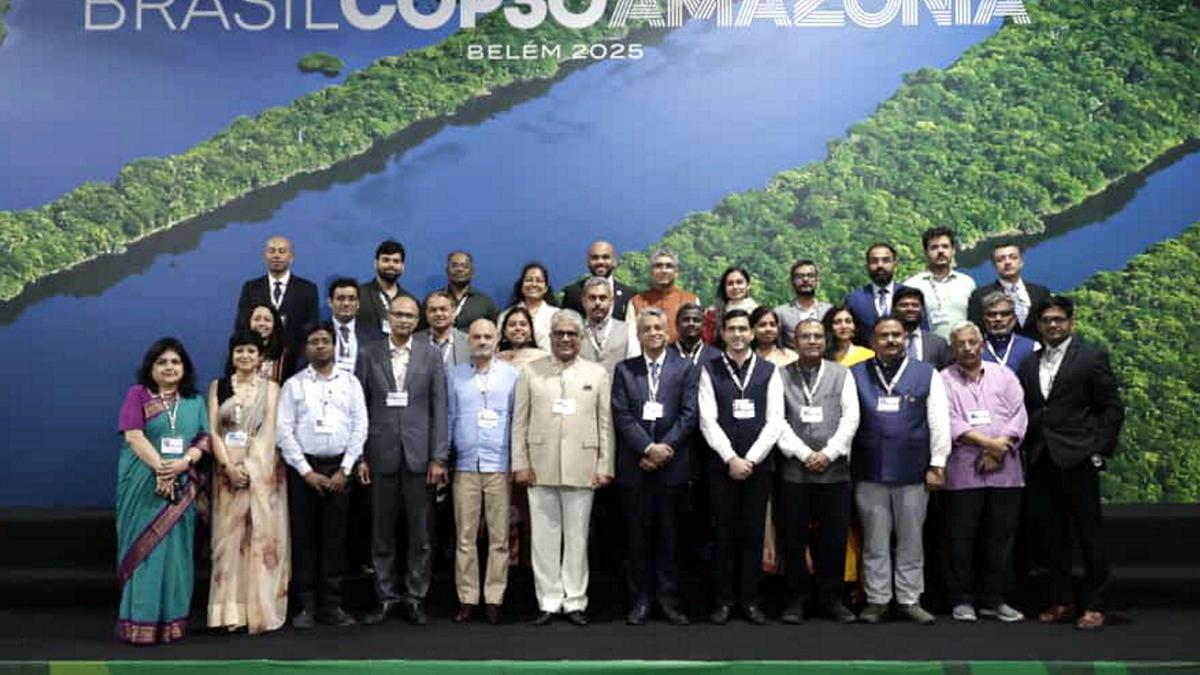
At the ongoing COP30 Climate Summit held in Belem, Brazil, India, along with a coalition of developing nations, has renewed calls for the establishment of a ‘just transition mechanism’ to address the socio-economic challenges posed by the global shift away from fossil fuels. This appeal came just a day before the summit’s conclusion, underscoring India’s firm stance on climate finance and adaptation as indispensable elements in the global fight against climate change.
The concept of a ‘just transition’ is central to India’s position at COP30. It refers to a structured and equitable approach to shifting economies and workforces away from fossil fuel dependence toward sustainable and renewable energy sectors. This transition aims not only at environmental sustainability but also at social justice—ensuring that workers and communities dependent on fossil fuel industries are not left behind. India, along with other developing countries, stressed that this process must be supported by adequate financial resources and international cooperation.
India’s Environment Minister, Bhupender Yadav, emphasized that climate finance dedicated to adaptation efforts is not a discretionary expense but rather a crucial investment necessary to build resilience against the impacts of climate change already being felt worldwide. He pointed out the current inadequacy of funds allocated for adaptation, highlighting the urgent need to scale up financial support to vulnerable nations.
The ‘Just Transition Work Programme,’ initially established at COP27 in 2022 and made operational at COP28 in 2023, serves as a platform for countries to collaborate on creating jobs and sustainable livelihoods for workers transitioning from fossil fuel industries to greener alternatives. Minister Yadav elaborated that a just transition encompasses several key components: strengthening resilience, enhancing adaptive capacity, protecting livelihoods, eradicating poverty, ensuring food security, and providing social protection. He insisted that countries must retain the autonomy to design and implement their own sustainable development pathways tailored to their national priorities and circumstances.
In addition to the focus on just transition, India underscored the importance of a future ‘Global Goal on Adaptation.’ This goal is envisioned as a framework comprising clear metrics to assess how well countries can withstand and respond to climate-related disruptions. Minister Yadav advocated that this goal should be country-driven and nationally determined, giving nations the flexibility to define and measure progress using their own systems, capacities, and data realities. This approach respects the diverse contexts and capabilities of countries, particularly between developing and developed nations.
The summit, however, continues to grapple with contentious issues that threaten to stall consensus. One of the main sticking points involves the language around fossil fuels. Developing countries remain hesitant to endorse any formal roadmap or pathway that explicitly signals the end of fossil fuel use, citing their developmental needs and energy security concerns. Conversely, developed countries resist language that would obligate them to provide low-cost finance to developing nations for facilitating the transition. This divide reflects the enduring tensions around equity, responsibility, and the pace of climate action.
Minister Yadav highlighted these differences, noting that parties to the summit have varied starting points and development needs. He argued that this diversity necessitates “nationally determined, demand-driven transition pathways” rather than a “uniform or prescriptive approach.” He stressed that global equity must remain central to climate negotiations. Developing countries require sufficient policy space to bridge development gaps, address systemic vulnerabilities, and ensure the well-being of their populations in accordance with their specific stage of development and national conditions.
The presidency of COP30, led by Brazilian senior diplomat Andrei Lago, faces the challenging task of drafting a broad political statement known as the cover text, which is intended to encapsulate the main consensus points agreed upon during the summit. However, ongoing disagreements on critical issues such as fossil fuel phase-out and climate finance raise questions about whether a unified cover text can be finalized.
India’s participation in COP30 highlights its commitment to balancing climate action with sustainable development and social equity. The country’s insistence on adequate climate finance, a just transition, and respect for national circumstances reflects its broader strategy to ensure that climate policies do not undermine economic growth or exacerbate poverty. This approach aligns with India’s long-standing position at international climate negotiations, which calls for differentiated responsibilities and support mechanisms that recognize the realities faced by developing nations.
As the summit approaches its conclusion, the world watches closely to see whether the COP30 presidency can bridge the divides between developed and developing countries. The outcome will significantly influence global climate governance and the collective ability to meet the goals set under the Paris Agreement. India’s advocacy for a just transition mechanism and flexible, country-driven adaptation goals underscores the