
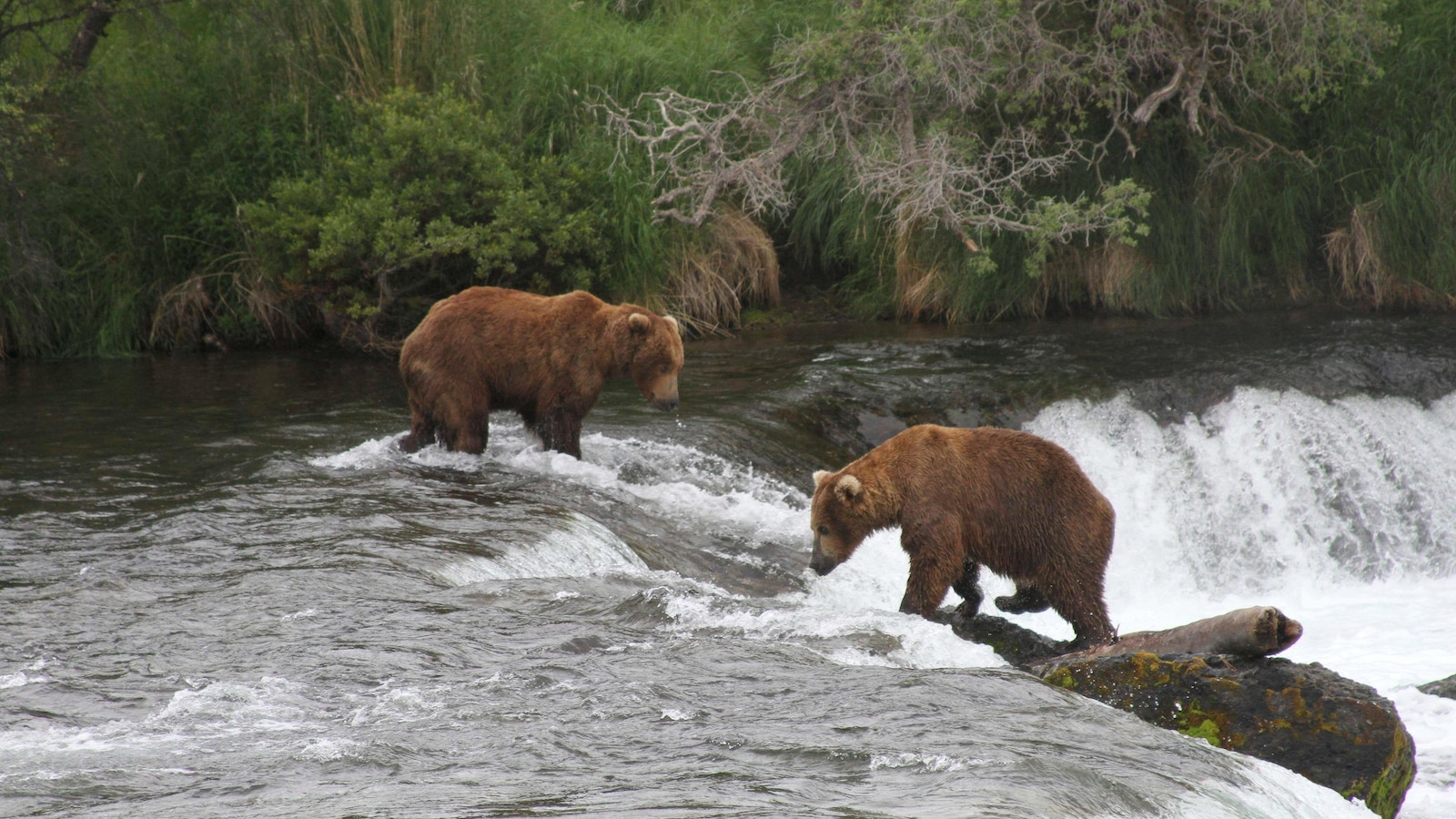
Conservation organizations have initiated a lawsuit challenging an Alaska state program that permits the killing of brown and black bears in an effort to boost the population of a declining caribou herd in southwest Alaska. The lawsuit, filed on Monday, contends that the program lacks scientific support and violates constitutional principles.
The program in question was approved by the Alaska Board of Game in July and authorizes the Department of Fish and Game to kill bears, including via helicopter shootings, over a vast area roughly the size of the state of Indiana. Conservation groups argue that the program does not require the department to monitor bear populations to ensure they remain sustainable, nor does it set limits on the number of bears that can be killed. This lack of oversight, they claim, threatens the long-term viability of bear populations in the region.
The legal action was filed by Trustees for Alaska on behalf of the Alaska Wildlife Alliance and the Center for Biological Diversity. The defendants named include the state, the Alaska Board of Game, the Department of Fish and Game, and the department’s commissioner. Attempts to obtain a statement from the Alaska Department of Law, which usually represents state agencies in legal matters, were made but no immediate comment was provided.
This lawsuit is the latest chapter in a continuing dispute over the Alaska Department of Fish and Game’s efforts to restore the Mulchatna caribou herd. The herd, named after its traditional calving grounds, once numbered around 190,000 animals in the late 1990s and was a crucial source of subsistence food for numerous communities in southwest Alaska. However, the herd’s population sharply declined over the years, dropping to approximately 13,000 by 2019. Due to this steep decline, hunting of the herd has been prohibited since 2021.
The department has identified multiple factors that may influence caribou survival, including disease, hunting pressures, food availability and quality, and predation by predators such as bears and wolves. In response, the Board of Game determined that controlling predation was a manageable approach to aid in the herd’s recovery. The program authorizing bear and wolf culling is designed to reduce calf predation on the caribou’s calving grounds, thereby helping the population to rebound.
In a recent newsletter, the Department of Fish and Game stated that bears and wolves had been identified as significant predators of caribou calves. An aerial survey conducted last fall showed the western subgroup of the Mulchatna herd had the highest calf-to-cow ratio recorded since 1999. This was interpreted as a positive response to the department’s predator control efforts implemented in 2023 and 2024, suggesting that reducing bear and wolf numbers might be contributing to improved calf survival rates.
However, the lawsuit challenges the program’s methods and results. It alleges that in May 2023, the department killed every brown and black bear it encountered within a 1,200-square-mile focus area encompassing the herd’s western calving grounds. In total, the lawsuit reports that approximately 180 bears, mostly brown bears, were killed during 2023 and 2024. The plaintiff groups argue that such extensive culling is unjustified and could have severe ecological consequences.
The Alaska Wildlife Alliance had previously filed a lawsuit seeking to halt the program. In March, a judge ruled that the state had failed to provide sufficient data regarding the sustainability of bear populations before implementing the predator control measures. Despite this judicial setback, the Board of Game and the Department of Fish and Game proceeded to implement emergency regulations allowing the program to continue briefly, during which time 11 bears were killed before those regulations were also struck down by another judge.
Following these legal developments, the department initiated a public comment process to consider reauthorizing the program. The lawsuit filed on Monday asserts that the reauthorization plan, adopted by the Board of Game in July, reinstates elements previously invalidated by the courts and permits the program to continue through 2028.
In response to the controversy, Department of Fish and Game Commissioner Doug Vincent-Lang emphasized the department’s commitment to rebuilding the caribou herd without compromising bear populations’ long-term sustainability. He stated, “We were trying to rebuild the caribou herd, but we’re not going to jeopardize long-term sustainability of bears in so doing.” Vincent-Lang further explained that there was strong evidence indicating that disease and nutrition were not the primary factors preventing the herd’s recovery, and that predation had been identified as the key limiting factor.