
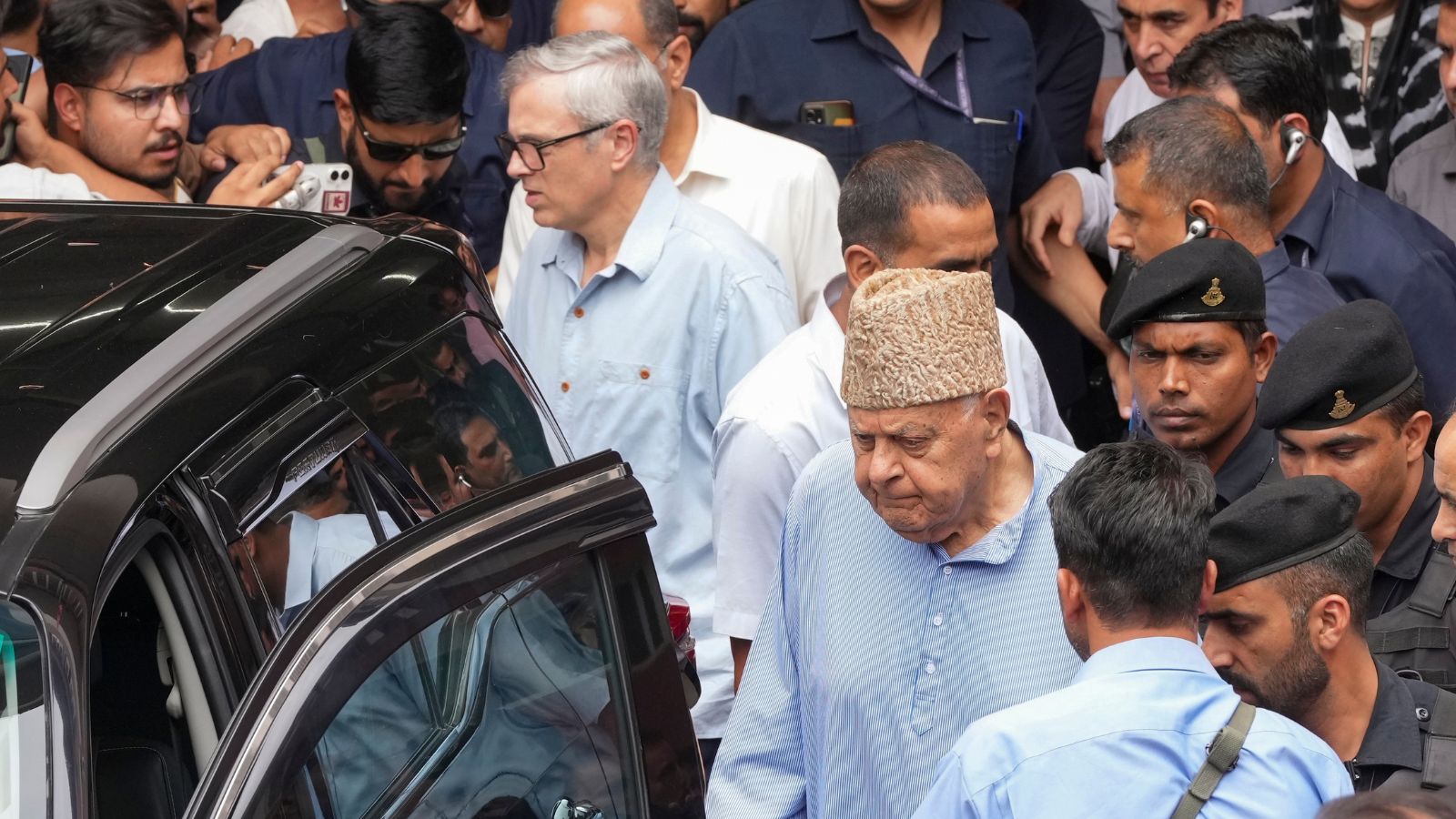
On Monday, the Kashmir Valley observed Martyr's Day under tight security restrictions, particularly in the downtown area of Old Srinagar. The day marks the remembrance of 22 Kashmiri Muslims who were killed in 1931 outside Srinagar's central jail during a protest against the then Maharaja's rule. Despite it being a significant day in the region's history, political leaders in Jammu and Kashmir (J&K) were once again barred from visiting the Martyrs' Graveyard in the Old City-a prohibition that has been in place since 2019.
J&K Education Minister Sakina Itoo made an early morning attempt to visit the graveyard at around 4:30 am but was stopped by security personnel before she could enter the area. This incident highlights the continuing restrictions imposed by the current administration on political leaders commemorating Martyr's Day at the historical site.
The political leadership voiced strong criticism of these restrictions. Jammu and Kashmir Chief Minister Omar Abdullah directly criticized the Lieutenant Governor-led administration, which manages law and order in the Union Territory, describing the situation as "extremely unfortunate." Abdullah lamented that those responsible for shutting down access to the Martyrs' Graveyard seem to overlook the history of Jammu and Kashmir. He emphasized that Kashmir was once a princely state under British paramountcy, and the sacrifices of those who died in 1931 are being viewed through a religious lens. He pointed out that the martyrs' sacrifice is often ignored because they were Muslims, contrasting this with the position of the Maharaja at that time.
The restrictions this year differed somewhat from previous years. While political leaders were not confined to their residences, police imposed controls on movement throughout downtown Srinagar, effectively limiting public gatherings and activities in the area.
### Historical Context of Martyr's Day
July 13 is commemorated annually as Martyr's Day in Kashmir to honor the memory of 22 Kashmiri Muslims who were killed by the Dogra state forces in 1931. These individuals had gathered outside Srinagar's central jail to witness the trial of Abdul Qadeer Khan, a cook employed by a British military officer. Khan had been charged with sedition after delivering a passionate speech urging the people of Kashmir to rise against the Maharaja's autocratic regime. The killing of these protesters became a significant moment in Kashmir's political history and is remembered as a symbol of resistance.
### Political Parties Pay Tribute Under Restrictions
Both the ruling National Conference (NC) and the opposition People's Democratic Party (PDP) marked the day by paying homage to the martyrs, albeit within the confines of their party headquarters due to the restrictions on public movement.
At the National Conference headquarters in Nawa-i-Subh, Omar Abdullah reiterated his commitment to honoring the martyrs despite the current restrictions. He stated, "The people who have restricted us from visiting the Martyrs' Graveyard are not here to stay, but the graves of these martyrs will be here. We will visit them sooner or later." His remarks reflect the ongoing political contention surrounding access to the graveyard and the symbolic importance of Martyr's Day in Kashmir's political discourse.
Meanwhile, PDP president Mehbooba Mufti paid floral tributes at the PDP office in Srinagar. She condemned the restrictions imposed by the Bharatiya Janata Party (BJP), asserting that the party cannot suppress the collective memory and sentiments of the people of Jammu and Kashmir. Mufti drew parallels between the martyrs of 1931 and celebrated Indian freedom fighters such as Bhagat Singh, Sukhdev, and Ashfaqullah Khan, emphasizing their foundational role in establishing democracy in the region.
### Religious Leadership and Public Sentiment
Mirwaiz Umar Farooq, Kashmir's chief cleric, also participated in the day's commemorations, although he was confined to his residence due to restrictions. He expressed sorrow over the fact that people were "prevented by force" from offering prayers at the Martyrs' Graveyard. The Mirwaiz highlighted that while physical barriers such as sealed graveyards, blocked roads, and confinement orders can be imposed, the spirit of the martyrs continues to live in the hearts and collective memory of the Kashmiri people.
### BJP's Contrasting Perspective
The Bharatiya Janata Party (BJP) offered a sharply contrasting view of Martyr's Day. Sunil Sharma, the Leader of the Opposition in the J&K Assembly and a BJP representative, dismissed the day as one of "betrayal against Maharaja Hari Singh and the Dogra State." He urged people to reject what he called "decades of distorted narratives" and instead honor what BJP perceives as the "truth" of Jammu and Kashmir's history. This stance reflects the BJP's broader narrative, which often challenges the historical interpretations and commemorations upheld by Kashmir's mainstream political parties.
### Reporting and Regional Expertise
The reporting on these events was provided by Naveed Iqbal, a Senior Assistant Editor at The Indian Express with over 15 years of experience covering Jammu and Kashmir. Based out of the Srinagar and New Delhi bureaus, Iqbal specializes in the region's political transitions, governance challenges, and the socio-political impacts of national policies. Her extensive coverage includes the dynamics between major political parties such as the National Conference, PDP, and BJP, as well as internal security issues and minority affairs. Her authoritative reporting offers valuable insight into the complex realities faced by Jammu and Kashmir in the post-Article 370 era, including its ongoing statehood debates and electoral politics.
### Summary
In summary, Martyr's Day in Kashmir remains a deeply symbolic and politically charged occasion, marked this year by significant restrictions on public movement and political access, especially in Old Srinagar's downtown area. Political leaders from the National Conference and PDP expressed their frustration and resolve to honor the martyrs despite the constraints, while religious leaders echoed the enduring significance of the day in collective memory. The BJP, in contrast, presented a divergent narrative, urging a reevaluation of the historical context. These differing perspectives underscore the continuing contestation over Jammu and Kashmir's history, identity, and political future. The day's events and the responses from various stakeholders reflect the ongoing tensions and complexities that define the region's socio-political landscape.