
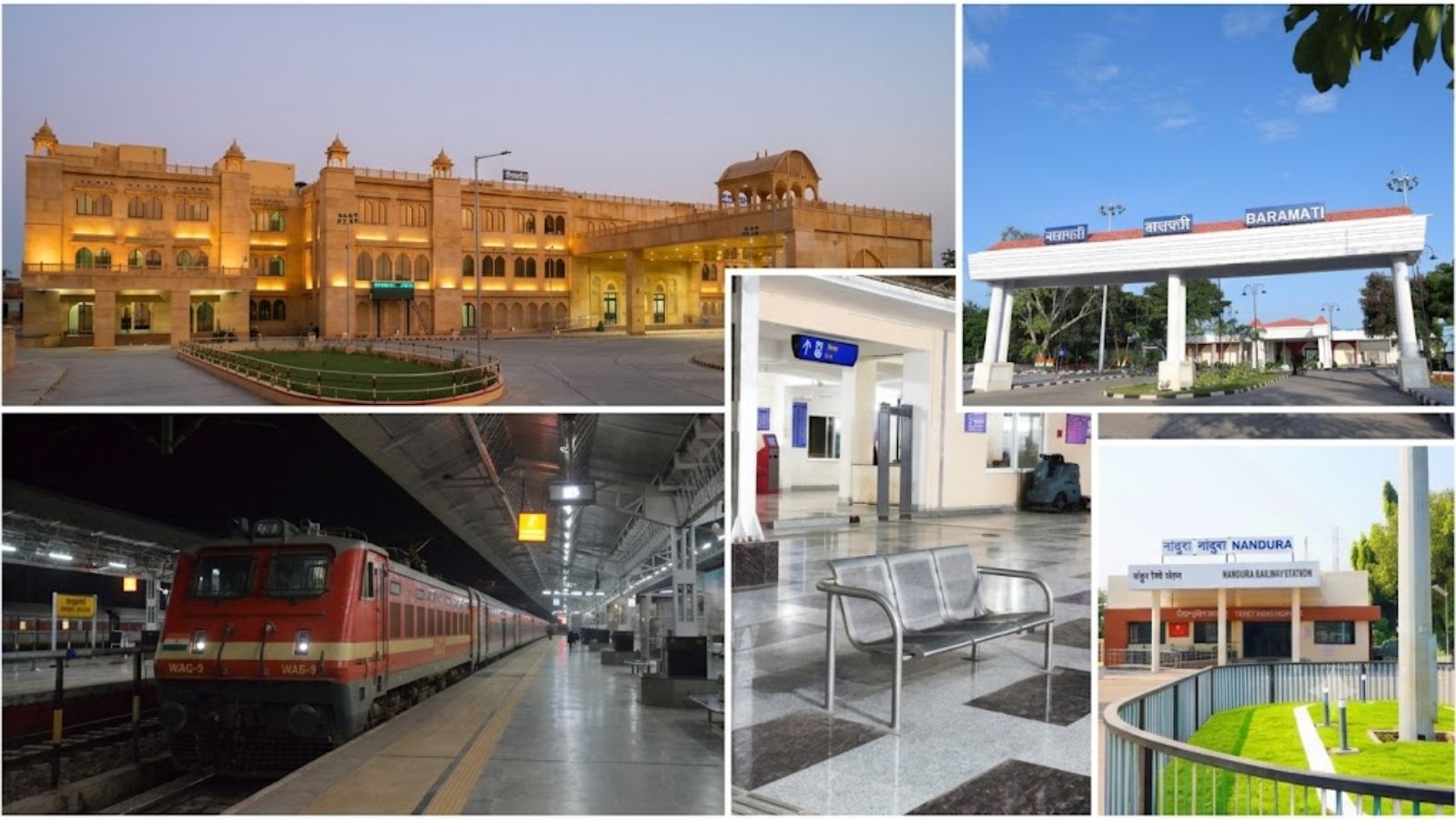
Indian Railways (IR) has successfully completed the redevelopment of ten railway stations across six states under the ambitious Amrit Bharat Station Scheme (ABSS). This extensive project, involving an investment of Rs 424.02 crore, aims at modernizing and upgrading railway stations to improve passenger experience, promote multimodal connectivity, and enhance overall station accessibility. The stations revamped under this scheme are located in Delhi, Uttar Pradesh, Odisha, Punjab, Telangana, Maharashtra, and Rajasthan.
**Background of the Amrit Bharat Station Scheme**
Launched in 2022, the Amrit Bharat Station Scheme reflects Indian Railways' long-term vision to transform stations into modern, passenger-friendly hubs. The scheme focuses on comprehensive master planning, facilitating seamless connectivity with other modes of transport, improving amenities, and making stations universally accessible, including for differently-abled passengers (Divyangjan). This initiative is part of broader efforts to upgrade the railway infrastructure and meet increasing passenger demands with modern facilities.
**Key Redeveloped Stations and Their Features**
1. **Jalandhar Cantt Railway Station, Punjab** One of the oldest stations, Jalandhar Cantt, which is over 110 years old, underwent a massive transformation costing Rs 125 crore. The station now features a double-height air concourse, heavy steel roofing over platforms, and slip-resistant flooring. Energy-efficient LED lighting has been installed to reduce power consumption. The station's connectivity has improved with new entry points from both sides of the city and two spacious Foot Over Bridges (FOBs) measuring 6 and 9 meters wide. A large trough roof covering 200 meters of platform length and a 36-meter-wide air concourse enhance passenger comfort. A new second entry station building of 300 sq. meters and a 4,855 sq. meter parking area further boost convenience for travelers.
2. **Baramati Railway Station, Maharashtra** Located in Pune district and serving around 1,800 passengers daily, Baramati station was redeveloped at Rs 11.40 crore. Originally opened in 1914 as a narrow-gauge station, it now features an upgraded main building with aesthetic improvements, a new entrance gate, enhanced circulating area, and improved parking. New toilet blocks, modernized VIP lounge and waiting halls, platform covers, better platform surfaces, upgraded station signage, drinking water facilities, and Divyangjan-friendly amenities have all been added. The compound wall and station entrance infrastructure were also improved.
3. **Nandura Railway Station, Maharashtra** Nandura station, located on the busy Howrah-Nagpur-Mumbai main line and handling about 4,545 passengers daily, was modernized at a cost of Rs 10.63 crore. Upgrades include a new booking office with four counters, a passenger waiting hall, and separate toilets for men, women, and differently-abled passengers. The entrance porch is now covered, and the circulating area was enhanced by demolishing the old booking office, constructing a new 9-meter-wide entrance and exit gate, and developing a 1,307 sq. meter parking area for two- and four-wheelers. Platform facilities have improved with new shelters on platforms one and two, covering 160 meters and 224 meters respectively.
4. **Hi-tech City Railway Station, Telangana** As the closest railhead to Hyderabad's Cyber City, an IT hub in the twin cities, Hi-tech City station underwent redevelopment costing Rs 26 crore. It falls under the Secunderabad Division and serves around 3,000 passengers daily across 62 trains connecting Secunderabad, Hyderabad, Umdanagar, Falaknuma, Medchal, and Ghatkesar. The station's modernization is designed to handle high commuter volumes and improve connectivity to this important economic zone.
5. **Modi Nagar Railway Station, Delhi** Redeveloped at Rs 25.75 crore under Northern Railway's jurisdiction, Modi Nagar station's building was renovated comprehensively. New facilities include a 12-meter-wide FOB, a new parking area, and an improved circulating area. The station also features a new waiting room and toilet block. Passenger convenience was enhanced with upgraded platform shelters and surfaces. Accessibility improvements for differently-abled passengers include entry ramps, tactile pathways, toilets, water booths, parking, and two lifts catering to senior citizens and Divyangjan passengers.
6. **Kesinga Railway Station, Odisha** Established in 1931, Kesinga station on the Raipur-Vizianagaram line of the East Coast Railway zone was redeveloped at Rs 22 crore. The modernization includes a new station building, a second entry point to facilitate smoother passenger movement, and a 12-meter-wide FOB equipped with three lifts for barrier-free access. Platform surfaces and shelters have been improved, approach roads widened, pedestrian pathways developed, and a modern drainage system installed. Passenger amenities upgraded include improved toilets, a retiring room, and a dormitory, making the station more welcoming.
7. **Jaisalmer Railway Station, Rajasthan** One of the most expensive redevelopment projects under ABSS, Jaisalmer station was modernized at Rs 140 crore. The new G+2 station building covers 8,327 sq. meters and features the region's iconic golden-yellow stone exterior. Facilities include 10 lifts, 10 escalators, two 6-meter-wide FOBs, an air-conditioned concourse, modern waiting halls, a parking area, and amenities for differently-abled passengers. A 480 sq. meter commercial zone has been developed. Recognizing Jaisalmer's significance as a tourist destination, commercial assets such as kiosks, retiring rooms, dormitories, a waiting lounge, and a multi-purpose hall adjacent to the concourse have been outsourced. Catering facilities, including a rail coach restaurant and stalls, have also been established to serve travelers during peak tourism seasons.
8. **Dausa Railway Station, Rajasthan** Situated about 60 km from Jaipur on the Delhi-Ahmedabad rail route, Dausa station was redeveloped at Rs 15 crore. Serving 15,000 passengers daily with 74 trains halting, the station building was fully renovated. Separate parking for two- and four-wheelers was created. A new FOB with ramps and covered roofing was constructed. Toilet blocks were upgraded with modern fittings. Electronic train information and coach indication boards were installed, and CCTV systems were introduced to enhance security.
9. **Panki Dham Railway Station, Uttar Pradesh** Established in 1981 to ease congestion at Kanpur Central and improve rail connectivity in western Kanpur, Panki Dham station's redevelopment cost Rs 25 crore. The station now has a 12-meter-wide FOB plus an additional 6-meter-wide FOB. Approximately 4,500 sq. meters of station premises have been converted into a circulating area featuring separate entry and exit points, parking facilities, green spaces, and barrier-free access designed for all passengers, including those with disabilities.
10. **Vindhyachal Railway Station, Uttar Pradesh** Located on the busy Delhi-Howrah rail route and under North Central Railway, Vindhyachal station's redevelopment was completed at Rs 23.24 crore. The station now features a G+1 building, entrance plaza, concourse, executive lounge, waiting halls, retiring rooms, and upgraded ticket booking counters. These improvements aim to provide enhanced passenger comfort and better facilities.
**Significance of the Redevelopment**
These redevelopments reflect Indian Railways' commitment to transforming passenger experiences by providing safe, accessible, and comfortable railway infrastructure. The projects also emphasize inclusivity, ensuring that differently-abled passengers have barrier-free access through ramps, lifts, tactile pathways, and dedicated toilets. The addition of modern amenities like air-conditioned waiting halls, improved lighting, better signage, and commercial facilities contribute to making stations vibrant hubs that cater to diverse passenger needs.
The focus on better connectivity with multiple entry and exit points, expanded parking, and improved circulating areas demonstrates an understanding of urban mobility challenges and the importance of integrating railways with other transport modes. Moreover, the use of energy-efficient technologies and sustainable materials aligns with Indian Railways' environmental goals.
**About the Author**
The article was compiled by Anish Mondal, a seasoned journalist with over nine years of experience covering transportation sectors, including Indian Railways and national highways. Anish currently contributes to Indianexpress.com, specializing in high-impact infrastructure developments. His background spans public broadcasting and financial journalism, supported by advanced degrees in Journalism and Mass Communication from Apeejay Stya University and the University of Calcutta.
**Conclusion**
The completion of these ten station redevelopments under the Amrit Bharat Station Scheme marks a significant milestone for Indian Railways. By investing over Rs 424 crore in upgrading facilities across strategically important stations in multiple states, IR is enhancing passenger comfort, promoting inclusivity, and preparing its infrastructure for future demands. As the scheme continues to unfold, travelers can expect more stations to be transformed into modern, accessible, and connected transport hubs, supporting India's growing mobility needs and economic growth.