
On the tranquil banks of Mumbai’s Powai Lake, amidst the frenetic pace of one of the world’s largest cities, a new chapter in international higher education is quietly unfolding. The University of York, a prestigious UK institution, is putting the finishing touches on its brand-new campus here, signaling the start of a significant expansion of British universities into India. This campus is set to welcome its first cohort of students for the 2026-27 academic year, with initial enrolment projected at around 270 students, eventually scaling up to between 3,000 and 4,000 annually in the coming years, according to Lindsay Oades, the provost of the University of York’s Mumbai campus.
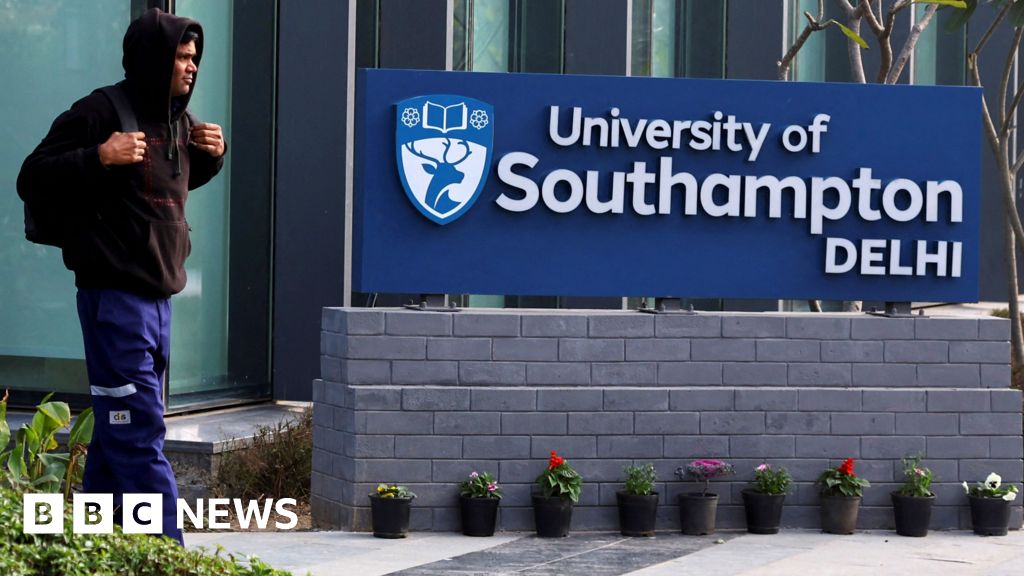
York is not alone in this venture. Following diplomatic engagements during Sir Keir Starmer’s visit to India last year, nine UK universities announced plans to establish physical campuses in the country. Among these are the University of Aberdeen, University of Bristol, University of Liverpool, Queen’s University Belfast, Coventry University, and the University of Southampton, which has already launched a campus in Delhi. These institutions primarily focus on programs in business, management, and engineering—fields that align closely with India’s burgeoning economic sectors and workforce needs.
This wave of foreign university entries into India is made possible by landmark educational reforms initiated by the Indian government. The 2020 National Education Policy (NEP) included a provision allowing foreign universities to operate on Indian soil, and the government formalized the regulatory framework for such initiatives in 2023. This policy shift aims to bridge India’s substantial gap in high-quality tertiary education and provides a legal mechanism for overseas institutions to establish campuses, offering an alternative to Indian students who have traditionally sought education abroad.
The potential market is enormous. India currently has about 40 million university students, and forecasts suggest demand will increase to at least 70 million seats by 2035. This surge opens an incremental opportunity of 25 to 30 million university places over the next decade—an attractive prospect for UK universities looking to expand their global footprint. However, this opportunity is tempered by the challenge of delivering quality education that meets both local expectations and international standards.
A critical factor that illustrates the gap in India’s higher education is the competition for seats at top-tier institutions. Annually, approximately 11 million students complete their Grade 12 exams, but only around 200,000 gain admission to India’s elite universities. Of these students, an estimated 1.5 to 1.7 million fall into the highest academic bracket, demonstrating a significant unmet demand for quality education. From an affordability perspective, around four to five million students from India’s aspirational upper-middle class can realistically consider degree programs priced above £10,000 per year, indicating a sizable market segment that could benefit from these new campuses.
The University of York plans to price tuition for its Mumbai campus at roughly half the cost of studying at its home base in the UK. While this remains higher than many local private universities, the institution justifies the premium by emphasizing global academic standards, industry-relevant curricula, and strong employability outcomes. York and its counterparts also plan to offer hybrid learning models, allowing students to split their time between campuses in India and the UK—a feature that adds flexibility and international exposure.
Yet, questions remain about whether these campuses can replicate the full appeal of studying abroad. Historically, millions of Indian students have traveled overseas, often incurring significant debt, primarily motivated by the prospect of gaining international work experience and global career opportunities. As Mumbai-based parent Ankita Kejriwal explains, many students see foreign education as a pathway not just for learning but for migrating and working in countries like the US or UK before possibly returning to India. An Indian campus offering a UK degree may not fully substitute for that internationally immersive experience.
However, evolving immigration policies and tighter visa regulations in traditional destination countries could make local campuses of foreign universities more attractive. They offer brand recognition and quality education with lower financial risk and fewer immigration hurdles. As Aritra Ghosal from OneStep Global, a consultancy assisting foreign universities in India, notes, these domestic foreign campuses might serve as a practical alternative for students seeking international credentials without the complexities of studying abroad.
The success of these campuses will depend on several critical factors. Maintaining rigorous UK academic standards while operating within Indian price sensitivities demands careful cost management and selective program offerings. Universities will need to prioritize disciplines with strong employment prospects and forge robust partnerships with Indian industries to enhance the