
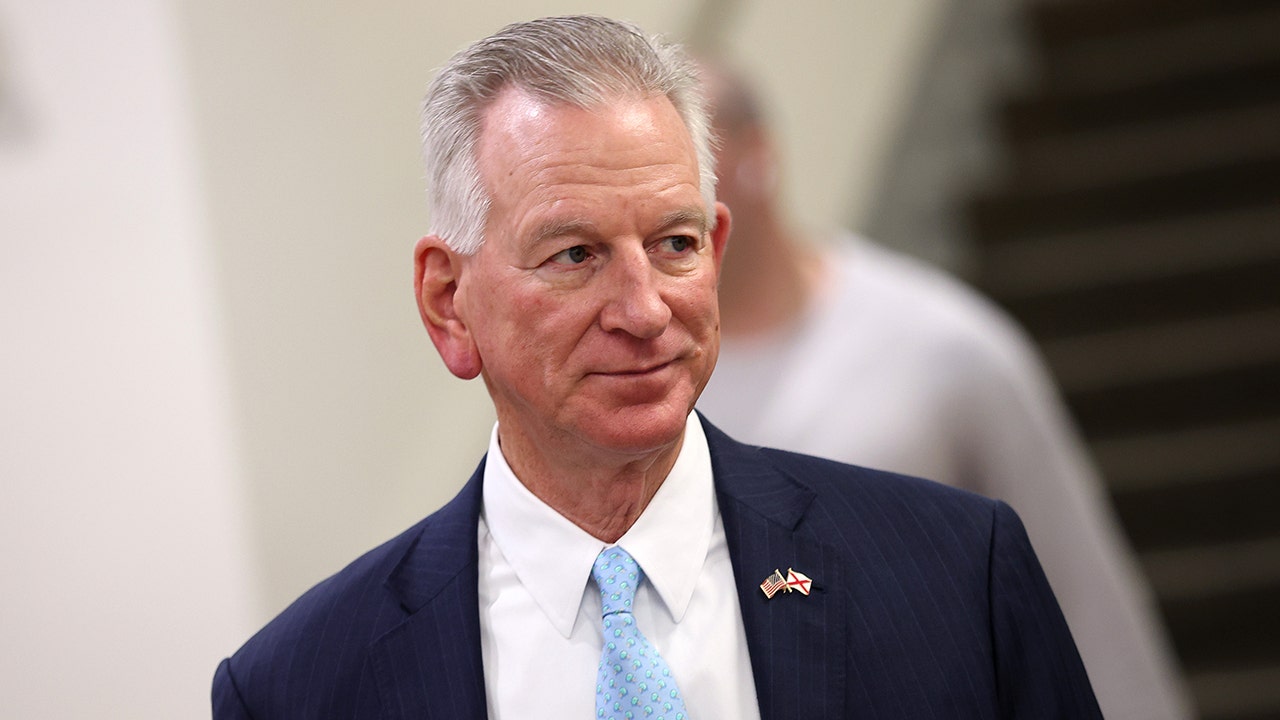
Senator Tommy Tuberville, R-Alabama, recently shared his views on the future of media rights deals in college sports during an appearance on OutKick’s “Hot Mic.” His comments come amid ongoing discussions about the evolving landscape of sports broadcasting, particularly the contrast between the National Football League’s (NFL) unified media rights model and the fragmented approach currently seen in college football.
At present, the NFL operates under a consolidated media rights system that pools revenues from television contracts and distributes them evenly across all 32 teams. This structure, enabled by an antitrust exemption granted by Congress during the 1960s AFL-NFL merger, has allowed the league to create a highly lucrative and balanced business model. Each team benefits from shared revenues, regardless of market size or individual popularity, which helps maintain competitive balance and financial stability across the league.
In stark contrast, college football’s media rights deals are negotiated individually by conferences, leading to vast disparities in revenue. Powerhouse conferences like the Southeastern Conference (SEC) and Big Ten command much larger television contracts because of their teams’ popularity and extensive fan bases. Meanwhile, smaller conferences and programs struggle to secure comparable deals, resulting in significant financial inequalities that impact competitiveness and resources.
The idea of unifying college football conferences under a single media rights agreement has been debated for years. Advocates argue that a collective bargaining approach would help redistribute wealth, allowing less prominent programs to better compete with elite schools. Critics, however, view this as an overly complex problem without a straightforward solution, given the differing priorities and interests of various conferences and universities.
During his interview, Senator Tuberville reflected on the NFL’s historical use of antitrust exemptions to facilitate a single TV contract, which was instrumental in the league’s financial success. He indicated a preference for college sports to adopt a similar model rather than allowing the increasing influence of wealthy private investors and boosters to dictate the future of college athletics.
“Antitrust stepped in for the NFL back in the early ‘60s,” Tuberville explained. “The AFL and NFL got together with the federal government, which essentially said, ‘You’re a monopoly. We’ll give you that opportunity to get one TV contract with one or two providers, and you can do it all together.’ That’s why they make hundreds of millions before even starting the season.”
Tuberville expressed concern about a potential future where billionaire investors and private equity firms gain control over college sports programs by purchasing media rights and running athletic departments like professional franchises. He warned that this shift could undermine the amateur status of college sports, which many believe should remain focused on education and student-athlete development rather than profit maximization.
“There are talks now about some schools being worth $200-$250 million, and billionaires coming in to buy them and run everything,” Tuberville said. “We don’t need to get into that. This is amateur sports, and let’s keep it that way as much as possible.”
The senator’s cautionary stance highlights a growing debate over the commercialization and professionalization of college athletics. High-profile programs like Notre Dame have already taken a somewhat independent route by negotiating their own media rights deals outside of conference structures. Notre Dame’s exclusive contract with NBC, which runs through the 2029 season, exemplifies how individual programs can leverage their brand to secure lucrative television deals independently. However, Notre Dame remains the exception rather than the rule, maintaining independence while also scheduling several games against Atlantic Coast Conference (ACC) opponents.
If wealthy boosters or investment groups acquire media rights to major college programs, the risk exists that these schools could start inflating their asking prices for broadcast contracts, further widening the financial gap between elite and smaller programs. Tuberville believes that adopting the NFL’s centralized media rights model could prevent this fragmentation and promote a healthier competitive environment across college football.
Supporting this viewpoint, Cody Campbell, a billionaire booster and head of the board of regents at Texas Tech University, has actively lobbied Congress to amend the Sports Broadcasting Act of 1961—also known as the SAFE Act. Campbell advocates for allowing college sports to negotiate television deals collectively, similar to the NFL model. He argues that a unified media rights deal could be worth approximately $7 billion, based on research commissioned by his group. This influx of revenue could help schools like Texas Tech reduce their reliance on wealthy boosters and better compete financially with top-tier programs that offer substantial Name, Image, and Likeness (NIL) payouts to attract high school and transfer athletes.
However, this