
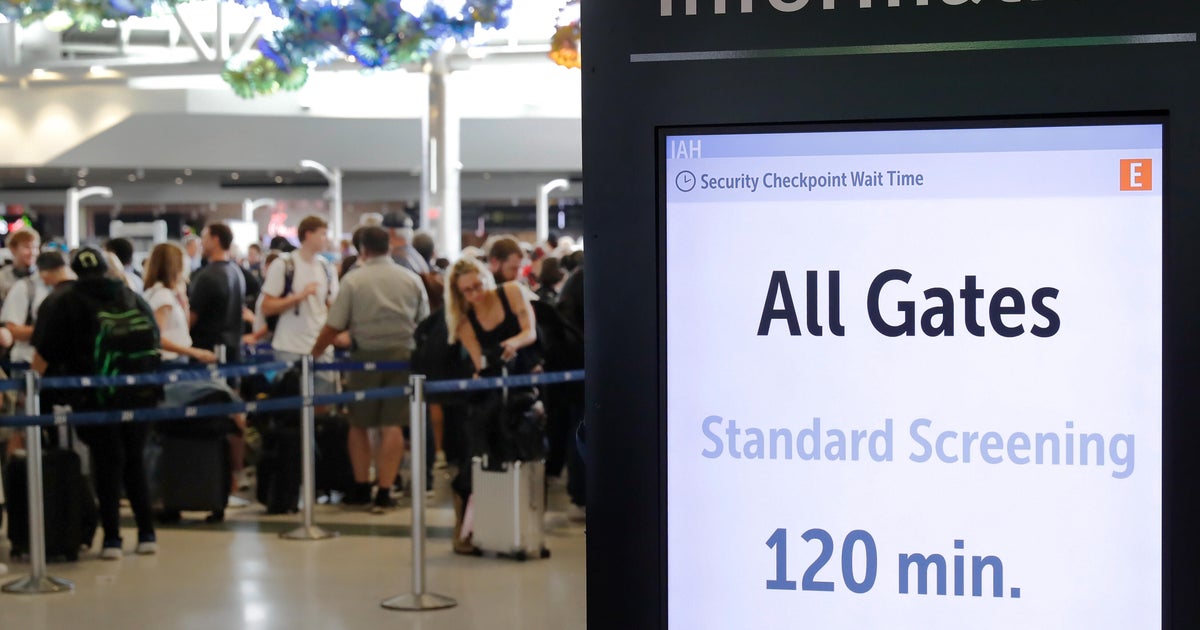
As the Department of Homeland Security (DHS) remains unfunded and staffing shortages at airports worsen, former President Donald Trump has issued a forceful warning about deploying Immigration and Customs Enforcement (ICE) agents to airports to address security concerns. The situation unfolded after a critical Senate bill designed to fund DHS and provide pay for Transportation Security Administration (TSA) agents failed to advance, leaving thousands of TSA officers without pay and airport security stretched thin.
On Friday, the Senate did not move forward on the bill that sought to restore funding for DHS and ensure TSA agents received their paychecks. The failure to pass this legislation has exacerbated an already critical staffing crisis, with TSA officers missing work in large numbers due to unpaid wages. This has led to long lines and delays at airports nationwide, with some passengers waiting hours to pass through security checkpoints. Cities such as Houston, Atlanta, and New Orleans have seen particularly severe delays, resulting in travelers missing flights and widespread frustration.
In response to this ongoing crisis, Trump took to social media on Saturday night, declaring that ICE agents would be ready to step in as early as Monday to provide airport security. He emphasized that these agents would conduct security operations "like no one has ever seen before," promising the immediate arrest of illegal immigrants entering the country, with a particular focus on Somali immigrants. Trump’s posts conveyed a sense of urgency and frustration with the congressional impasse, blaming Democrats and the “radical left” for the failure to pass DHS funding and calling for an end to what he described as “waiting” and “games.”
The administration’s threat to deploy ICE agents to airports comes amid growing concern over the operational capacity of the TSA. Many TSA employees are considered essential workers and continue to report to their posts despite not receiving paychecks. However, absenteeism has surged dramatically. For example, more than half of scheduled TSA staff were absent at Houston’s George Bush Intercontinental Airport on a recent Sunday, while Atlanta’s Hartsfield-Jackson International Airport saw absentee rates of 38% and 32% on consecutive days. These absences have contributed to wait times reaching up to two hours at some checkpoints, creating chaos and uncertainty for air travelers.
The financial strain on TSA workers is severe. Acting TSA Deputy Administrator Adam Stahl highlighted the human toll, revealing that some employees are resorting to extreme measures such as sleeping in their cars and even drawing blood to afford gas money for commuting. In response to these hardships, community efforts have emerged to support affected federal workers. For instance, Pittsburgh International Airport cooperated with a local food bank to assist TSA employees, while in South Florida, a pop-up food bank provided meals to nearly 200 TSA workers and their families.
Amid these challenges, billionaire entrepreneur Elon Musk offered to pay the salaries of TSA personnel during the funding stalemate, posting his offer on social media Saturday morning. Musk’s proposal underscores the widespread recognition of the crisis and the urgent need to address the financial and operational difficulties faced by TSA workers.
On the political front, the impasse has deepened divisions in Congress. Senate Democratic leader Chuck Schumer announced plans to introduce an alternative measure during a rare weekend session that would fund only the TSA, excluding other DHS components and ICE. However, this move is expected to face an uphill battle and may not succeed in breaking the deadlock. Democrats are demanding significant policy changes related to immigration enforcement as a condition for approving broader DHS funding. Their proposals include requiring ICE agents to obtain judicial warrants before forcibly entering homes, mandating that agents wear identifying information on their uniforms, and banning the use of masks during operations.
The Trump administration asserts that it has already made several concessions addressing these concerns, such as expanding the use of body-worn cameras for ICE agents—except in undercover cases—and limiting enforcement activities at sensitive locations like hospitals, schools, and places of worship. Additionally, Trump has taken administrative actions, including firing Homeland Security Secretary Kristi Noem and appointing Tom Homan as the new border czar overseeing operations in Minneapolis, signaling an intent to reform ICE practices.
Behind the scenes, negotiations continued over the weekend. Tom Homan met with a bipartisan group of senators for a second day to seek a resolution. While Senate Majority Leader John Thune, a Republican from South Dakota, expressed cautious optimism about “deal space” emerging from these talks, he also questioned the Democrats’ seriousness in reaching an agreement that would fund ICE. Thune lamented the ongoing crisis, describing it as “a pox