
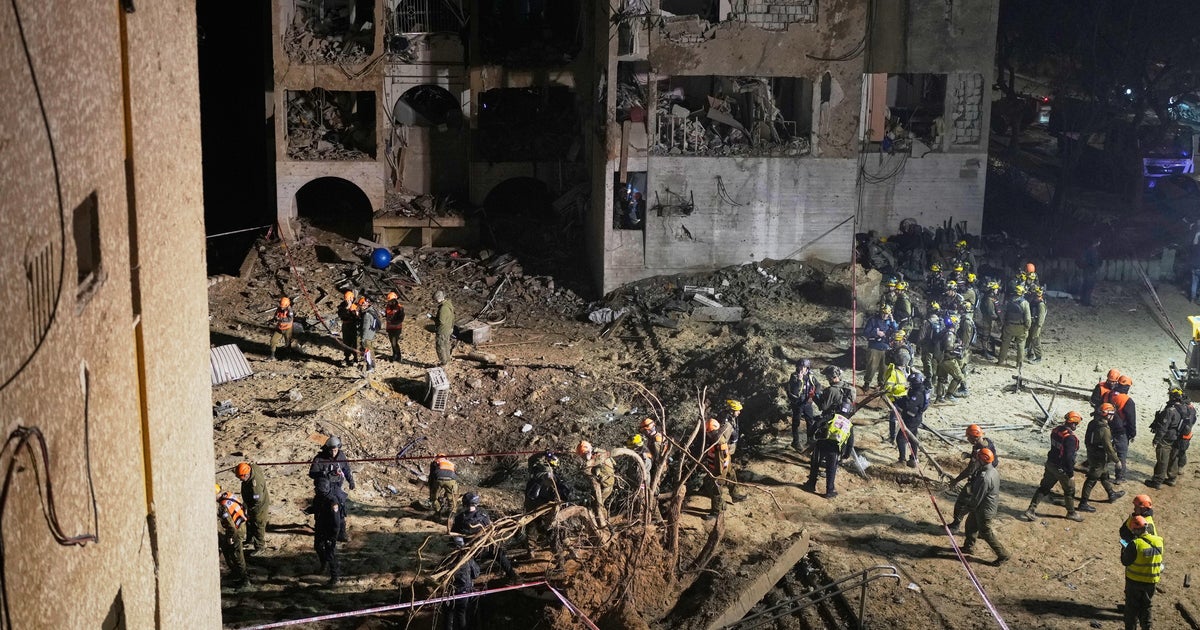
On March 21, 2026, Iran launched missile strikes targeting two Israeli communities near the country’s primary nuclear research center, resulting in injuries to more than 100 people. This marked the first time since the outbreak of the war three weeks earlier that Israel’s nuclear research facility had been directly targeted. The strikes came shortly after an airstrike hit Iran’s Natanz nuclear enrichment facility, an attack for which Israel’s military denied responsibility.
The Iranian missiles struck the southern Israeli cities of Dimona and Arad, both located in the Negev desert, an area known for its sparse population. These cities are significant due to their proximity to Israel’s nuclear research center, making the attacks particularly alarming. Israel’s military reported that they were unable to intercept the incoming missiles, highlighting a potential vulnerability in the country’s missile defense capabilities in this heavily protected region.
Emergency response teams from Magen David Adom, Israel’s national emergency medical service, provided updates early Sunday morning regarding the casualties. In Arad, at least 64 people were reported injured, with seven individuals in serious condition, 15 in moderate condition, and 42 experiencing mild injuries. Rescue teams were actively searching through debris to identify and assist any additional victims. Earlier in the day, a separate Iranian strike on Dimona had injured at least 40 people, according to the same agency.
The missile strikes caused significant destruction, particularly in Arad. Video footage released by Israeli emergency services showed a large crater near apartment buildings, some of which sustained severe damage. Several buildings—around ten in total—were affected, with three deemed so badly damaged that they were at risk of collapsing. The attacks not only inflicted physical damage but also heightened the sense of insecurity in these communities.
In response to the strikes, Israeli Prime Minister Benjamin Netanyahu issued a statement reaffirming Israel’s commitment to continuing its military operations in the ongoing conflict. He described the evening as “very difficult” but emphasized determination to persist in striking Israel’s enemies on all fronts. Netanyahu also communicated directly with the mayor of Arad, expressing condolences and prayers for those injured in the attacks. His remarks underscored Israel’s resolve amid escalating hostilities.
Israel Defense Forces spokesperson Lt. Col. Nadav Shosh condemned the Iranian missile attacks, criticizing them as reckless actions that reveal the Iranian regime’s instability and disregard for human life. He highlighted that the missiles were strategically aimed at civilian areas, further escalating tensions in the region.
The attack on Israel’s nuclear research center is particularly significant given the sensitive nature of the facility. Israel is widely believed to be the only Middle Eastern country possessing nuclear weapons, though its government maintains a policy of ambiguity, neither confirming nor denying their existence. The International Atomic Energy Agency (IAEA), the United Nations’ nuclear watchdog, reported no evidence of damage to the Israeli nuclear center or any abnormal radiation levels following the missile strikes, providing some reassurance about the facility’s safety post-attack.
Meanwhile, Iran’s Natanz nuclear enrichment facility, located approximately 135 miles southeast of Tehran, suffered damage from an airstrike hours before the missile attacks on Israel. Iran’s judiciary news agency, Mizan, reported that there was no leakage or radiation release from the incident. The IAEA is investigating the strike but has not detected any increase in off-site radiation levels. Israel denied any involvement in the Natanz airstrike.
The Natanz facility has been a recurrent target in the ongoing conflict. It was previously hit during the 12-day Iran-Israel war in June 2025 and later bombed by the United States the same month. The IAEA noted that much of Iran’s enriched uranium stockpile is stored elsewhere, particularly beneath rubble at the Isfahan facility, which also experienced a U.S. airstrike last June. These repeated strikes reflect the international focus on Iran’s nuclear program and the efforts to curb its progress.
The Pentagon declined to comment on the recent Natanz strike, maintaining a policy of non-disclosure regarding specific military operations or intelligence. The U.S. role in the conflict remains a subject of scrutiny, especially given its history of direct involvement in targeting Iranian nuclear sites.
Iranian Parliament Speaker Mohammad Bagher Ghalibaf made a pointed statement on social media, interpreting the failure of Israel’s missile defenses in the Dimona area as an indication that the conflict had entered a new and more intense phase. His remarks suggest that Iran views the recent strikes as a strategic escalation and a demonstration of its growing capabilities.
Amid these