
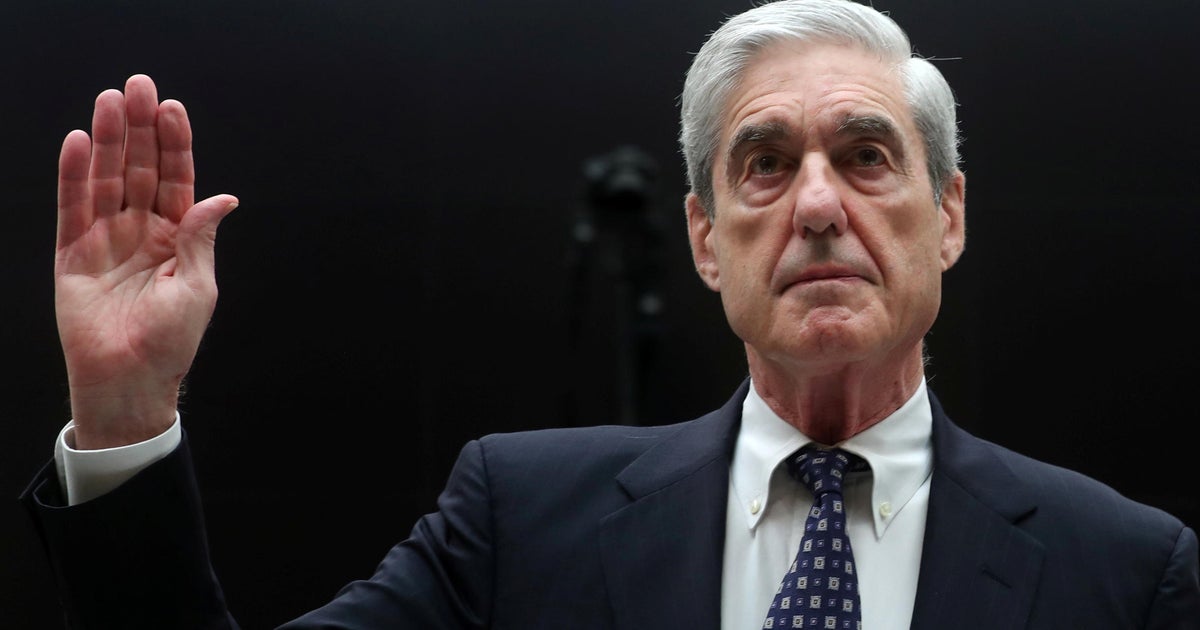
Robert Mueller, the former FBI director renowned for his leadership of the investigation into Russian interference in the 2016 U.S. presidential election, has died at the age of 81. His family confirmed his passing on Friday, March 20, 2026, and requested privacy during their time of mourning. While the cause of death was not disclosed, Mueller is survived by his wife of nearly six decades, Ann Cabell Standish, their two daughters, and three grandchildren.
Mueller’s career in public service spanned several decades, marked by a steadfast commitment to the rule of law and national security. Born in New York City and raised near Philadelphia, he was a graduate of Princeton University before serving as a U.S. Marine Corps officer during the Vietnam War. His military service was distinguished by leadership of a rifle platoon and recognition with a Bronze Star, Purple Heart, and two Navy Commendation Medals. After his military tenure, Mueller earned a law degree from the University of Virginia School of Law in 1973, setting the stage for a long and impactful legal career.
In the late 1970s and throughout the 1980s, Mueller rose quickly through the ranks of the Justice Department. He served as a U.S. Attorney and later as the Assistant Attorney General for the Justice Department’s Criminal Division beginning in 1990. During this period, he oversaw several high-profile prosecutions, including cases against notorious figures such as Panamanian dictator Manuel Noriega and New York mob boss John Gotti. These early successes established his reputation as a tough and effective prosecutor.
Mueller’s most prominent role came in 2001, when he was appointed director of the Federal Bureau of Investigation (FBI). His appointment came just days before the September 11 terrorist attacks, making his tenure a pivotal period for the bureau. Over the next 12 years, Mueller led a sweeping transformation of the FBI, enhancing its intelligence capabilities and strengthening partnerships domestically and internationally to better confront national security threats. Known for his hands-on leadership style, he often involved himself personally in investigations, even those considered minor, surprising agents who would receive direct calls from him.
Reflecting on his leadership approach, Mueller once remarked that while management theory suggests focusing on vision, he believed in personally engaging with critical areas of the organization. He recognized that the post-9/11 world required a strategic shift, moving from traditional criminal cases to an emphasis on intelligence and counterterrorism. His stewardship is credited with helping to prevent further terrorist attacks on U.S. soil during a time of heightened vulnerability.
Mueller served as FBI director until 2013, when James Comey succeeded him. Former Director Comey praised Mueller upon his death, calling him “a truly good and honest person and an extraordinary American patriot,” whose example should inspire integrity in public service.
Perhaps most notably in recent years, Mueller was appointed as special counsel by the Justice Department in 2017 to lead the investigation into allegations of Russian interference during the 2016 presidential election and potential coordination with the Trump campaign. This nearly two-year investigation resulted in multiple indictments and guilty pleas from 34 individuals and three companies, including prominent Trump associates such as Paul Manafort and Roger Stone. However, the investigation did not establish that the Trump campaign conspired or coordinated with Russia in its efforts to influence the election.
The Mueller report also detailed ten instances in which President Donald Trump may have obstructed justice, though it did not reach a conclusion on whether obstruction had occurred. Throughout the investigation, President Trump frequently denounced it as a “witch hunt,” a characterization that polarized public opinion on Mueller’s work.
Following Mueller’s death, reactions from across the political spectrum emerged. President Trump, who had long criticized Mueller, addressed his passing on his social media platform Truth Social with a stark message: “Robert Mueller just died. Good, I’m glad he’s dead. He can no longer hurt innocent people!”
In contrast, former presidents Barack Obama and George W. Bush offered condolences recognizing Mueller’s decades of dedicated public service. Obama described Mueller as “one of the finest directors in the history of the FBI,” praising his transformative leadership after 9/11 and his unwavering commitment to the rule of law and American values. Michelle Obama joined him in sending sympathies to Mueller’s family and all who admired him.
George W. Bush also acknowledged Mueller’s effective leadership in preventing further terrorist attacks, expressing heartfelt sympathy to Mueller’s wife, Ann