
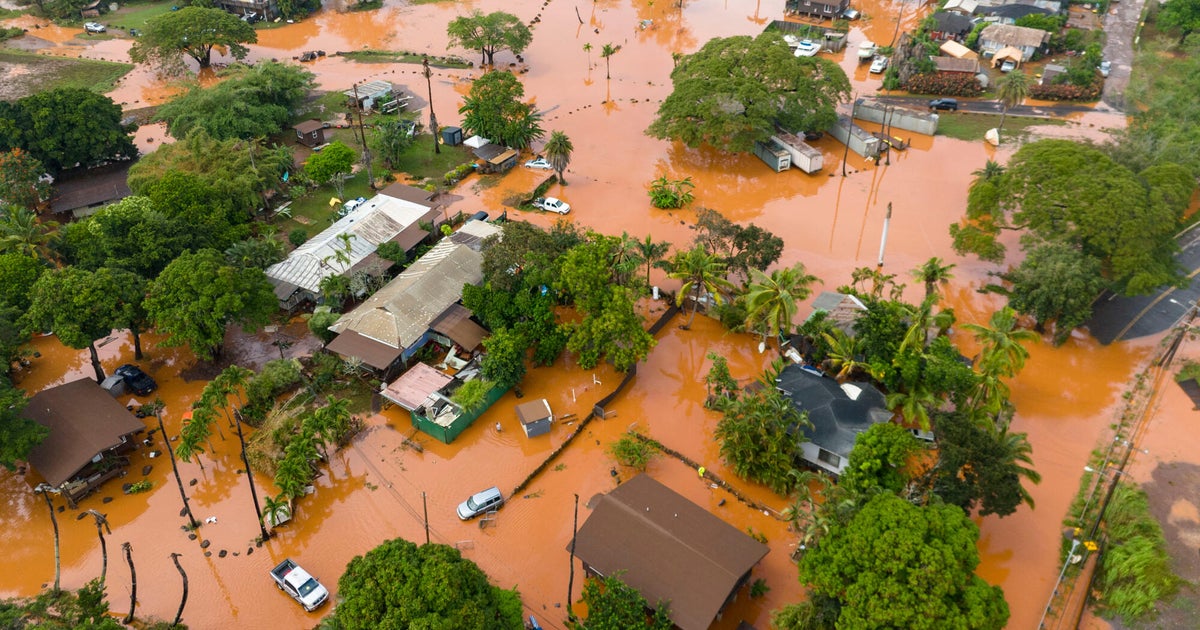
Hawaii is grappling with its worst flooding in over two decades, as relentless heavy rains have inundated large parts of the islands, particularly Oahu’s North Shore. Officials issued urgent evacuation orders early on Saturday, imploring residents in the hardest-hit areas to “LEAVE NOW” amid fears of rising floodwaters and the potential failure of an aging dam. This flooding crisis comes shortly after a winter storm last week left the already saturated ground unable to absorb the new deluge, and more rain was forecast to continue through the weekend.
The North Shore of Oahu, famous worldwide for its big-wave surfing, has been severely impacted by muddy floodwaters that have engulfed vast areas. The rising waters have swept away homes and vehicles, prompting authorities to order the evacuation of approximately 5,500 people living north of Honolulu. The National Weather Service issued a flash flood warning early Saturday, warning that light to moderate showers could intensify into heavy downpours across some regions.
Governor Josh Green highlighted the severity of the disaster at a press conference, estimating that damages could exceed $1 billion. This figure includes critical infrastructure such as airports, schools, roads, homes, and a hospital on the island of Maui in Kula. He described the situation as “very serious” for the state, comparing the flooding to the catastrophic 2004 floods in Manoa, which submerged homes and damaged the University of Hawaii library. In some parts of the state, rainfall totals have reached between 40 and 50 inches, an extraordinary amount that has overwhelmed the island’s drainage systems and caused widespread destruction.
Honolulu Mayor Rick Blangiardi confirmed that dozens, if not hundreds, of homes suffered damage on Friday, though officials have yet to complete a full assessment of the devastation. So far, more than 233 rescue operations have been conducted, with emergency teams working tirelessly to reach stranded residents. Mayor Blangiardi described the damage as “catastrophic” and warned that the situation remained precarious, with much of the state still under flood watch. Areas such as Haleiwa and Waialua on northern Oahu were under flash flood warnings, with emergency alerts urging residents in Waialua to evacuate immediately due to the risk of road failures isolating the community.
One of the most pressing concerns has been the condition of the Wahiawa Dam, located about 17 miles northwest of Honolulu. This dam, which is over a century old, has been labeled as having “high hazard potential” by state officials. The dam’s failure could result in significant loss of life, officials warned. Water levels at the dam rose rapidly overnight on Friday, reaching 84 feet—just six feet below its maximum safe capacity of 90 feet. By Saturday morning, the water level had receded slightly to about 81.79 feet, but officials remained vigilant, as any additional heavy rainfall could push the dam beyond its limit. Governor Green called the 85-foot mark “the threshold of great concern.”
The Wahiawa Dam was originally constructed in 1906 to support sugar production for the Waialua Agricultural Company, which later became part of the Dole Food Company. The dam underwent reconstruction after a collapse in 1921. Over the years, safety concerns have persisted. Since 2009, the state has issued multiple notices of deficiency to Dole regarding the dam’s condition and has even fined the company $20,000 five years ago for failing to address safety issues promptly. In recent years, Dole offered to donate the dam, reservoir, and ditch system to the state in exchange for the state’s commitment to repair the spillway to meet modern safety standards.
In 2023, the state legislature authorized the acquisition of the dam and allocated $5 million to purchase the spillway, along with $21 million designated for repairs and expansion to ensure compliance with dam safety requirements. However, the transfer of ownership has yet to be finalized, with a state board scheduled to vote on the acquisition in the coming week. Despite the concerns, Dole stated in an official email that the dam “continues to operate as designed with no indications of damage” at present.
The Wahiawa Dam is just one of 132 dams regulated by the state of Hawaii, many of which were originally built as part of irrigation systems for the sugar cane industry. A 2019 infrastructure report by the American Society of Civil Engineers highlighted the widespread challenges related to maintaining these aging structures, many of which require significant upgrades