
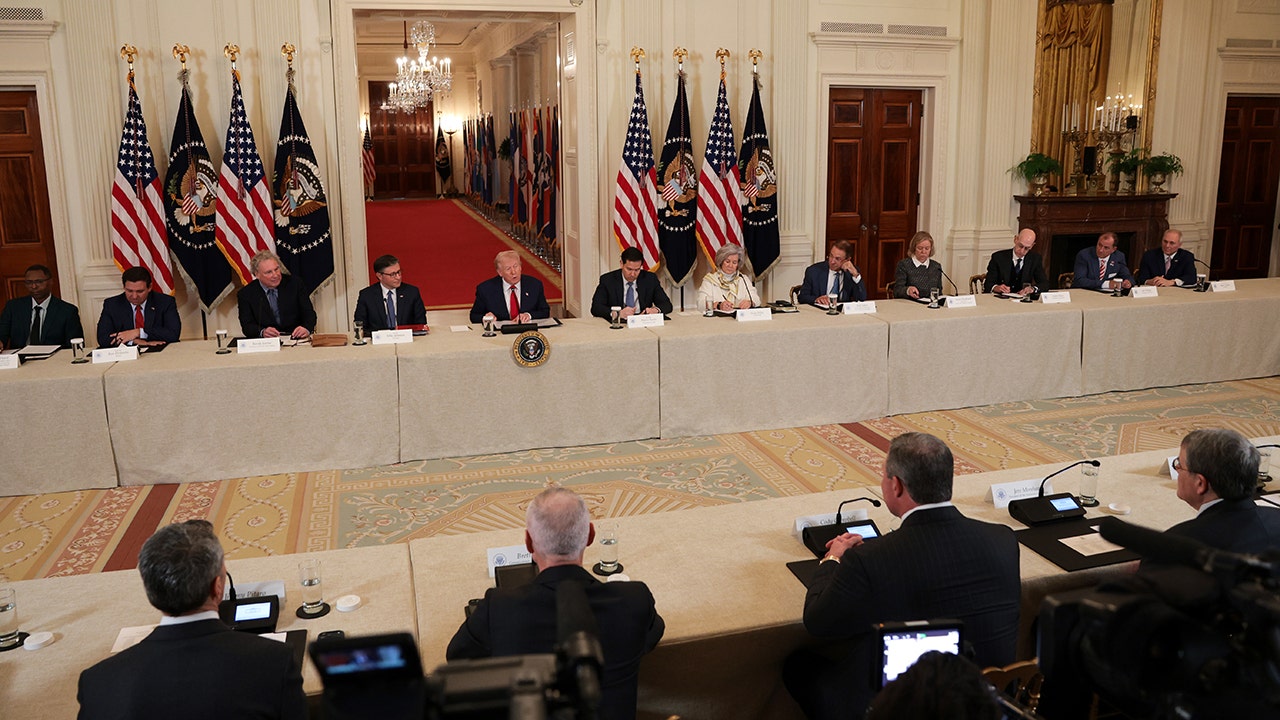
On March 6, 2026, President Donald Trump convened a high-profile roundtable at the White House focused on the future of college sports, centering discussions on critical challenges such as NCAA authority, name, image, and likeness (NIL) regulations, collective bargaining rights, and governance issues. The event brought together prominent figures from the world of collegiate and professional athletics, including NCAA President Charlie Baker, legendary former Alabama football coach Nick Saban, OutKick founder Clay Travis, New York Yankees President Randy Levine, and commissioners from the Power Four conferences. The gathering aimed to address the growing complexities facing college sports today and to explore potential legislative and regulatory solutions to preserve the integrity and sustainability of college athletics.
President Trump opened the roundtable by emphasizing the urgent need to address the escalating financial and regulatory turmoil engulfing college sports. He remarked on the staggering amounts of money involved, noting how many colleges are experiencing significant financial losses despite their otherwise successful programs. “This is the future, I think, beyond college sports. This is the future of colleges,” Trump said, highlighting his belief that the issues plaguing college athletics could have broader implications for higher education institutions as a whole.
The President expressed concern over what he described as “crazy things” happening in college sports, citing examples such as athletes extending their eligibility to an unprecedented seven years and college players opting to remain in school because they can earn more money than they would as professionals. Trump pointed to the inconsistent patchwork of NIL laws across various states as a major stumbling block, creating an environment where rules vary widely and complicate governance. He warned that without swift congressional action, college sports could face irreparable damage.
Trump also criticized the judiciary’s role in the evolving landscape of college athletics, likely referencing a 2019 ruling by Judge Claudia Wilken. Wilken had found the NCAA’s restrictions on education-related benefits to be in violation of antitrust laws, a decision that many in the college sports community viewed as a turning point. Trump accused the judge of lacking understanding of sports and suggested that only Congress could provide a lasting solution to the challenges at hand. “Only Congress can deliver a permanent fix,” he asserted.
Despite his criticism of current arrangements, Trump made it clear that he was not advocating for a return to the days when college athletes were prohibited from receiving any form of payment, though he noted with some humor that such an idea might not be entirely without merit. Instead, he expressed a desire to restore a system where rules were clear and enforceable, allowing appeals and legal challenges to resolve disputes effectively. He nostalgically referred to the previous system as “what a great system” where “everybody was happy.”
Nick Saban, a key voice at the roundtable, echoed many of these concerns. He highlighted the difficulty in helping student-athletes succeed personally in an era where financial incentives and transfer opportunities often overshadow educational goals. “People, instead of making decisions about creating value for their future, they were making decisions about how much money could they make at whichever school they can go to or transfer to,” Saban explained. He advocated for a balanced approach that would allow athletes to improve their quality of life while still prioritizing their education and long-term development beyond sports. Saban emphasized that addressing these challenges would require cooperation from the President and Congress to craft a sustainable framework.
President Trump’s commitment to “saving college sports” has been evident in recent months, including his signing of an executive order in July 2025. That order introduced new restrictions on payments to college athletes, specifically banning pay-to-play arrangements with third-party sources. However, it stopped short of restricting NIL payments themselves, allowing athletes to continue benefiting from endorsements and related opportunities. The order also emphasized the importance of preserving resources for non-revenue sports, which often struggle financially compared to major revenue-generating programs like football and basketball.
A central piece of legislation discussed during the roundtable was the Strengthening College Athletics through Regulation and Enforcement (SCORE) Act. Although the bill was scheduled for a House vote in December 2025, the vote was unexpectedly canceled. The White House has expressed support for the SCORE Act, but the bill has faced opposition from both Republicans and Democrats. Three Republican House members—Byron Donalds of Florida, Scott Perry of Pennsylvania, and Chip Roy of Texas—joined Democrats in opposing a floor vote. Democrats have largely criticized the bill, arguing it fails to adequately protect athletes and undermines women's sports.
The SCORE