
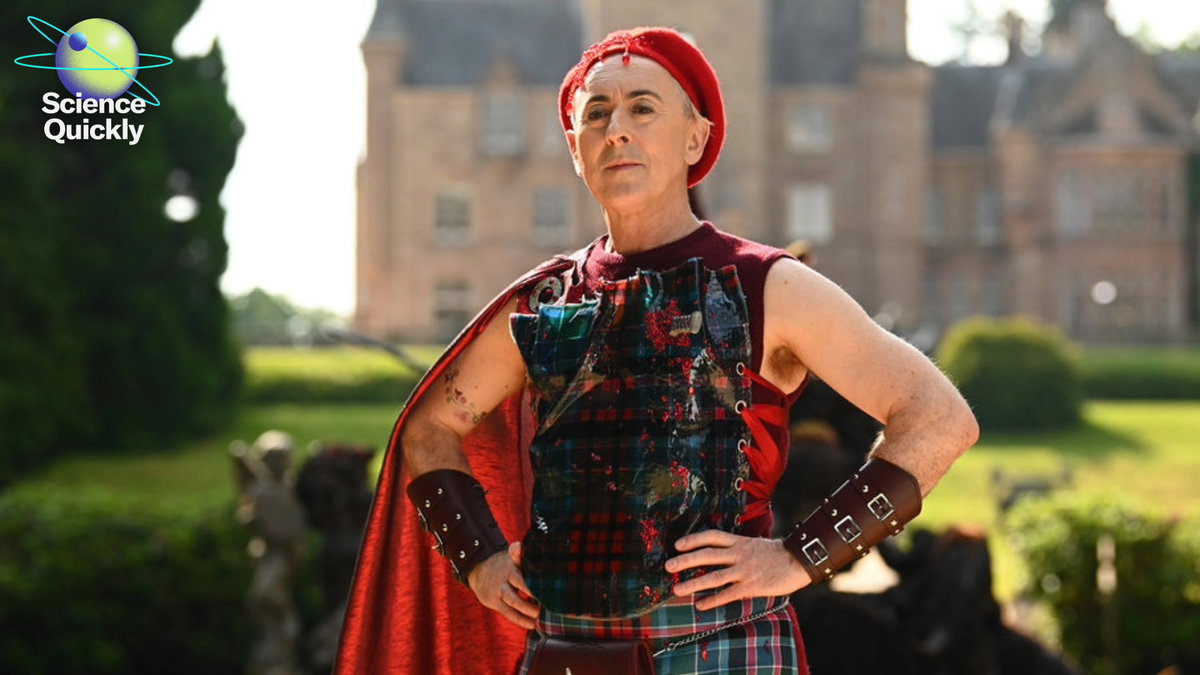
The popular reality TV show franchise The Traitors offers a fascinating window into the psychology of lying and deception. Premiering in various countries and recently broadcast in the United States, The Traitors features a group of contestants—often celebrities, athletes, and reality TV personalities—who are divided into two camps: the majority are “faithfuls,” and a small number are “traitors.” The traitors’ challenge is to lie convincingly and avoid detection, while the faithfuls must try to identify and vote out the traitors before the game ends. With a prize pot of $250,000 at stake, the show blends strategy, social dynamics, and psychological warfare.
Journalist Jackie Flynn Mogensen, a breaking news reporter for Scientific American and an avid fan of the show, recently explored the science behind lying and lie detection inspired by The Traitors. In an interview with Scientific American reporter Kendra Pierre-Louis, Mogensen discussed how the show reveals key insights into what makes lies believable, why humans are generally poor lie detectors, and how one might become a more effective liar. Their conversation uncovers the cognitive challenges of deception and the social biases that influence our judgments.
One of the most striking findings from scientific research on lie detection is how bad humans are at spotting lies. A meta-analysis of multiple studies shows that, on average, people detect lies no better than chance—about 50 percent accuracy. This poor performance stems largely from our own biases and misconceptions about how liars behave. For example, many people believe that liars avoid eye contact, but research shows the opposite. Skilled liars deliberately maintain eye contact because they know that’s what people expect when someone is truthful. Conversely, people often look away or to the side when they are thinking or formulating their next statement, which has nothing to do with lying.
Because of these entrenched biases, relying on stereotypical physical cues to detect lies—like avoiding eye contact, fidgeting, or nervous gestures—is unreliable. Sharon Leal, a senior research fellow at the University of Portsmouth who studies lie detection, advises focusing less on physical behavior and more on what people say. Listening carefully for inconsistencies in stories or contradictions across different accounts is a more effective strategy. This emphasis on verbal cues over body language is counterintuitive but backed by research.
That said, some physical behaviors do sometimes correlate with deception. Since lying requires cognitive effort—constructing a false narrative and keeping track of details—people who lie may move less or be slower in their speech as they concentrate. They might also use fewer hand gestures. Another subtle cue is the nature of a smile: genuine smiles tend to fade gradually, while insincere ones end abruptly. These signs are not foolproof but can provide additional context.
One particularly interesting technique from law enforcement research is called “cognitive interviewing.” This involves asking someone to recall an event in reverse order. A 2008 study found that people telling the truth can more easily do this because their memories are authentic and well-formed, whereas liars struggle to maintain a consistent false narrative when recalling backward. This technique could be useful on shows like The Traitors or in real-life lie detection.
While much research focuses on detecting lies—often for criminal justice applications—there is less formal study on how to become a better liar. However, some strategies emerge from what we understand about human psychology and social dynamics. For example, lying is easier and more believable when the falsehood closely resembles the truth. Small distortions or slight twists of reality are often more successful than completely fabricated stories, because they align with others’ expectations and are easier to maintain consistently.
Another key to effective lying is managing social perception. Appearing open, friendly, and approachable encourages others to trust you, making them less likely to suspect deception. On The Traitors, this is a common tactic: traitors work hard to be likable and relatable, blurring the line between trust and affection. Research supports this phenomenon, showing that people often confuse liking someone with trusting them, which can be exploited by skilled deceivers.
Interestingly, “pretty privilege” also plays a role in deception and trustworthiness. In The Traitors’ recent U.S. season, contestant Rob Rausch, a reality TV star from Love Island, was hailed as a master liar. His calm demeanor, consistent behavior, and physical attractiveness distracted other players and helped him avoid suspicion. Studies in legal contexts suggest that more attractive defendants sometimes receive lighter sentences, highlighting