
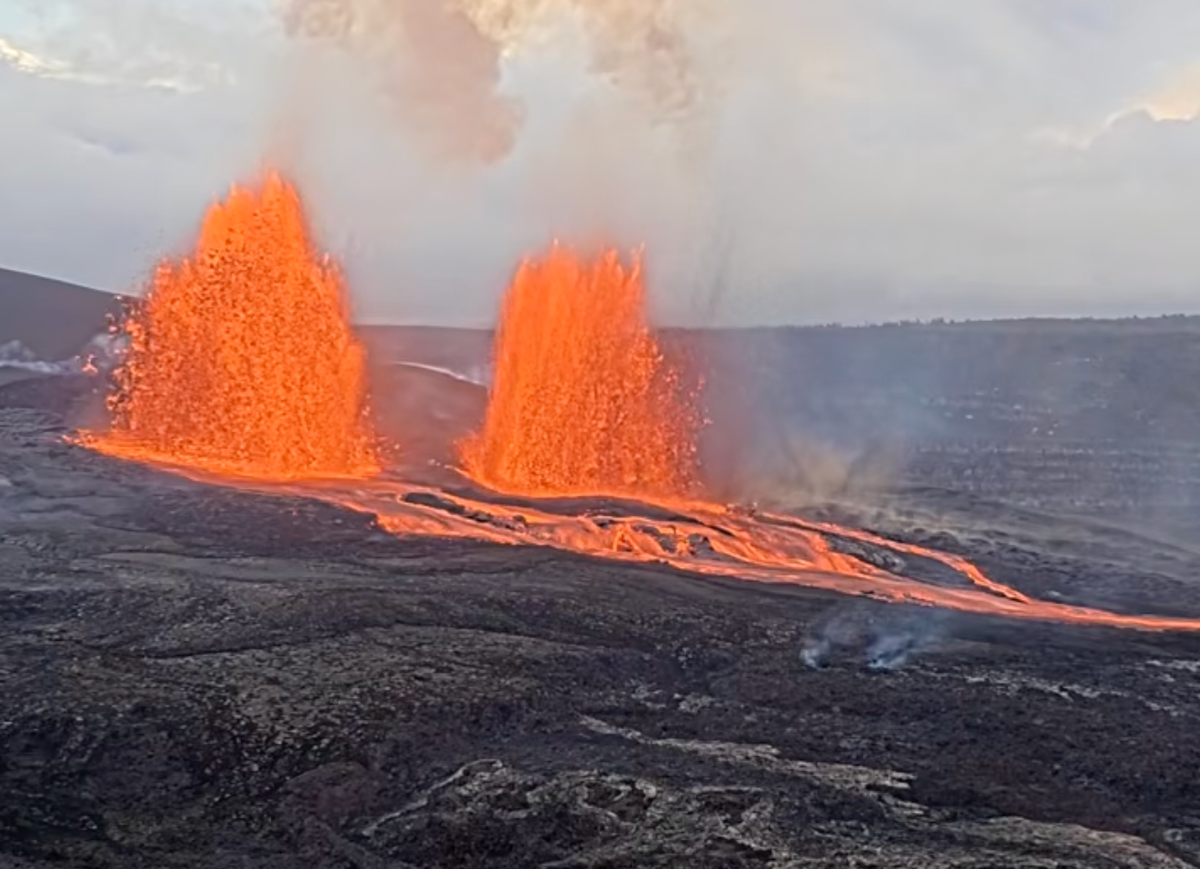
On March 10, 2026, Hawaii’s Kīlauea volcano on the Big Island staged a dramatic eruption that captivated scientists and residents alike. Over the course of nine hours, the volcano unleashed a spectacular display of volcanic activity, including fountains of lava shooting up to 1,300 feet into the air and a massive release of volcanic material. According to the U.S. Geological Survey (USGS), this fiery outburst produced approximately 16 million cubic yards of lava and sent a towering ash plume soaring beyond 30,000 feet in altitude, creating both awe and concern among observers.
Kīlauea’s eruption on this day was marked by intense heat and a significant volume of ash and tephra — the term for fragmented volcanic material such as ash, glassy particles, and rocks ejected during an eruption. Notably, around six inches of tephra accumulated on a nearby golf course, illustrating the considerable fallout from the volcano’s activity. Additionally, delicate strands of volcanic glass known as “Pele’s hair” were carried by the wind and deposited as far as the city of Hilo, located roughly 30 miles away by road. This spread of volcanic debris underscores the wide-reaching impact of Kīlauea’s eruptions on the surrounding environment.
This recent episode is part of a longer series of volcanic activity at Kīlauea. Since December 2024, the volcano has been erupting regularly, with the March 10 event marking the 43rd eruptive episode during this ongoing period. Kīlauea is one of the most active volcanoes on Earth and has been erupting intermittently for centuries, making it a prominent subject of scientific study and public interest.
Kīlauea is classified as a shield volcano, a type known for its broad, gently sloping profile that contrasts sharply with the steep, conical shape of composite volcanoes. While shield volcanoes may not reach the towering heights of their composite counterparts, they are among the largest volcanoes on the planet in terms of overall size and volume. Their eruptions typically produce slow-moving lava flows that can cover extensive areas, reshaping landscapes over time. Kīlauea’s persistent activity and frequent lava flows have made it a defining geological feature of Hawaii’s Big Island.
The March 10 eruption was monitored closely by the USGS, which provided detailed observations and thermal imaging to document the event. The agency’s reports highlight the scale of the volcanic activity and the hazards posed by the ash and lava flows to nearby communities and the environment. The presence of ash clouds reaching stratospheric heights can affect air traffic and air quality, while lava flows have the power to alter ecosystems and infrastructure.
The eruption also served as a reminder of the dynamic forces shaping Hawaii’s volcanic landscapes and the ongoing need for vigilance and preparedness in the face of natural hazards. Residents and visitors to the Big Island are accustomed to living with the realities of volcanic activity, but each eruption brings new challenges and opportunities for scientific discovery.
Jackie Flynn Mogensen, the reporter who covered the eruption for Scientific American, brings a strong background in science communication and earth sciences to her work. With a master’s degree in environmental communication and a bachelor’s degree in earth sciences from Stanford University, she has reported extensively on scientific topics and earned recognition for excellence in science journalism. Her coverage of the Kīlauea eruption helps to bring complex geological phenomena to a wider audience, fostering greater understanding and appreciation of the natural world.
The broader context of this reporting highlights the importance of scientific journalism in informing the public about critical environmental events. Scientific American, the publication for which Mogensen writes, has a long history of advocating for science and providing in-depth coverage of research and discoveries that shape our understanding of the world. In an era when science communication is more essential than ever, such reporting plays a vital role in promoting informed dialogue and decision-making.
The Kīlauea eruption of March 10 stands as a vivid example of the planet’s ongoing geological activity and the power of natural forces. It underscores the significance of continuous monitoring by institutions like the USGS, which help to mitigate risks and enhance public safety through timely information. As this eruption cycle continues, scientists will keep studying Kīlauea’s behavior to gain insights into volcanic processes and improve forecasting methods.
For residents of Hawaii and observers around the globe, the dramatic lava fountains and ash plumes are a reminder of Earth’s dynamic