
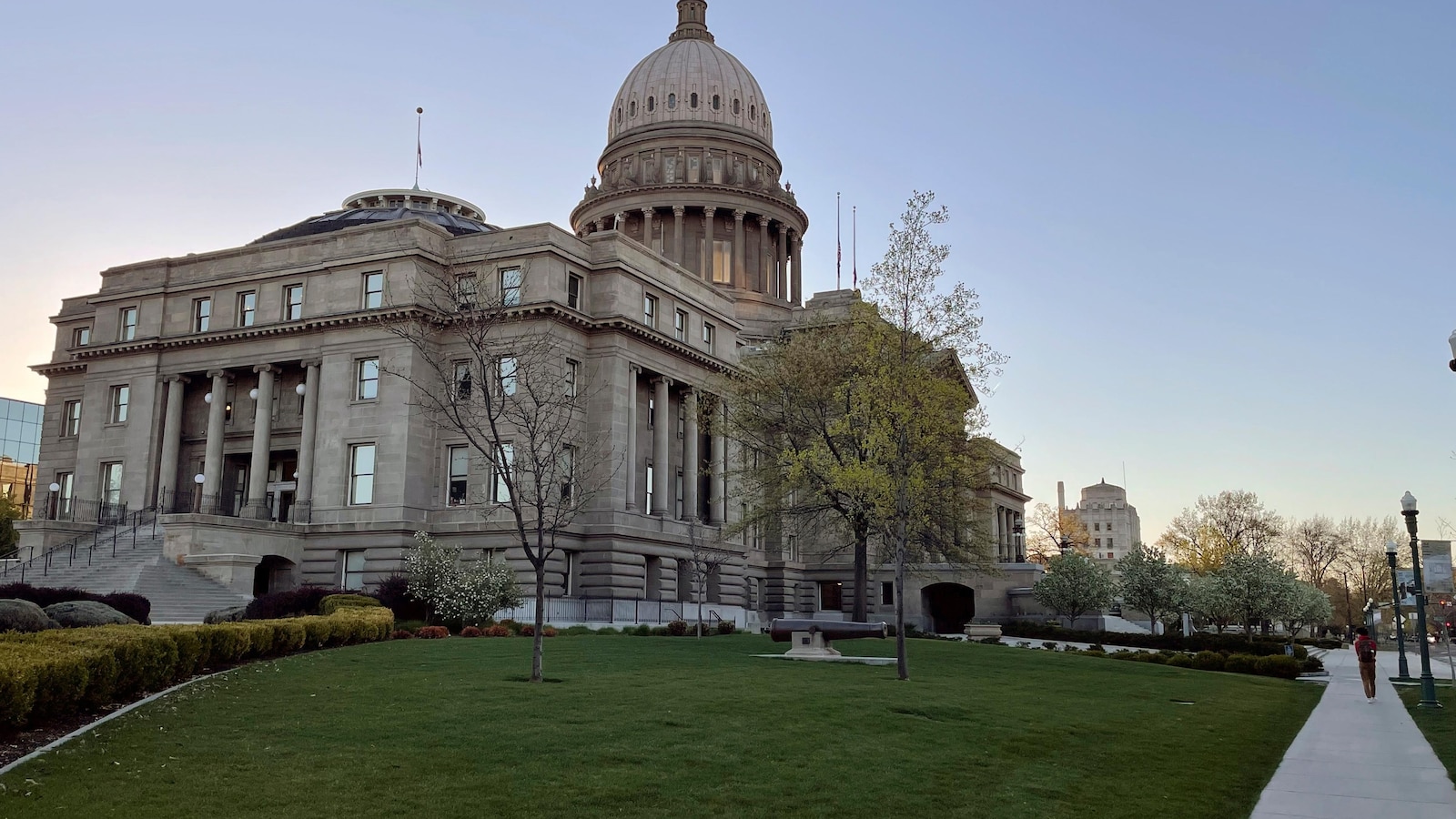
Idaho lawmakers are currently considering a controversial bill that would criminalize transgender individuals' use of bathrooms and changing rooms corresponding to their gender identity, extending even to privately owned businesses. This legislation marks a significant expansion of existing bathroom restrictions in the state and has sparked considerable debate over issues of privacy, safety, and discrimination.
At least 19 states, including Idaho, already have laws that restrict transgender people from using restrooms and locker rooms that align with their gender identity, primarily in schools and certain public settings. According to the LGBTQ+ advocacy group Movement Advancement Project, three states-Florida, Kansas, and Utah-have criminalized violations of these bathroom restrictions under specific circumstances. However, Idaho's proposed bill stands out because it would apply broadly to any "place of public accommodation," a legal term encompassing any business or facility open to the public, thereby extending the restrictions to private businesses as well.
The bill is moving quickly through Idaho's Republican-controlled Senate, which holds a supermajority, and a vote is expected soon. If passed, the law would impose criminal penalties on anyone who uses a bathroom or locker room designated for the opposite sex. A first offense would be classified as a misdemeanor punishable by up to one year in jail, while a second offense would be a felony, carrying a prison sentence of up to five years. Notably, these penalties are harsher than those for some other offenses in Idaho, such as a first-time DUI or public display of offensive sexual material.
Supporters of the bill argue that it is necessary to protect safety and decency in sex-segregated spaces. Republican Senator Ben Toews, who spoke in favor of the bill during a recent Senate committee hearing, emphasized that restrooms, changing areas, and showers are designated by sex for valid reasons. He said that individuals using these vulnerable spaces have a reasonable expectation of privacy and security, and that the legislation aims to uphold those standards.
The bill does include several exceptions for certain circumstances. For instance, athletic coaches, emergency responders, custodians, people supervising inmates, and individuals assisting children who need help in the bathroom would not be subject to the restrictions. Another exception is for people in "dire need" of a restroom when no other suitable facilities are reasonably available at the time. Despite these carve-outs, critics argue that the bill's language leaves enforcement vague and potentially harmful.
Several law enforcement organizations in Idaho, including the Idaho Fraternal Order of Police and the Idaho Chiefs of Police Association, have voiced opposition to the bill. They contend that it would place officers in untenable situations, forcing them to visually assess a person's biological sex or judge whether an individual is experiencing a "dire need" to use the restroom. The Idaho Sheriff's Association requested that the bill require officers to first ask suspected violators to leave the bathroom before initiating any legal action, but lawmakers rejected this proposal.
Critics from the transgender community and their advocates highlight the practical and emotional challenges the bill would create. Heron Greenesmith, deputy policy director at the Transgender Law Center, described the "dire need" exception as particularly difficult to prove, calling the notion that transgender people should only be allowed to use restrooms in emergencies "dehumanizing." They questioned how one could even demonstrate an urgent need to use a bathroom under such restrictive terms.
University of Idaho student John Bueno, a transgender individual and member of the student group Queer Inclusion Society, noted that the university's availability of single-use restrooms somewhat mitigates the issue. Nonetheless, Bueno warned the bill would likely lead to increased "profiling" of transgender people and others, fostering a culture of surveillance and suspicion. Bueno described the legislation as part of a broader effort to disenfranchise transgender individuals, predicting it would deter queer students from attending Idaho universities and living in the state.
Nikson Matthews, a transgender man who testified before lawmakers, shared his personal experience with the bill's implications. Because of his masculine appearance, Matthews said he would be forced to use women's restrooms under the law, exposing him to potential aggression from people who might view him as an intruder. He criticized the bill for criminalizing presence alone, without any harmful conduct, suggesting it unfairly paints transgender people as inherently threatening.
The bill could also create difficulties for transgender people in everyday activities such as employment. Boise resident Laura Volgert told lawmakers during a committee hearing that transgender workers might be expected to endure uncomfortable and unrealistic conditions, like holding their bladder for an entire work shift because they cannot safely use restrooms aligning with their identity. This, she argued, is an unreasonable expectation that would negatively impact the lives of transgender individuals.
Advocates against the bill argue that the overall intent behind such legislation is to make public life difficult for transgender people, discouraging them from participating fully in society. Greenesmith expressed concern that these types of laws are designed to make simple activities-going to the movies, visiting the doctor, or going to the bank-untenable for transgender individuals.
Supporters of the bill, however, insist it is about maintaining clear and enforceable boundaries to protect women and children. Suzanne Tabert, a resident of Sandpoint, argued that protecting sex-separated spaces is essential to preventing harassment, voyeurism, and other sex crimes. She emphasized that the legislation is not intended to target or malign the transgender community, but rather to uphold a universal standard of privacy based on biological sex.
Idaho's bathroom bill is part of a broader national trend of legislation targeting transgender people. At least 25 states have enacted laws barring transgender women and girls from participating in women's and girls' sports, while at least 27 states restrict or ban gender-affirming medical care for minors. These policies are often justified by their proponents as measures to protect women and children, but critics see them as forms of discrimination and marginalization.
These legislative priorities also align with those of former President Donald Trump, who has supported expanding laws restricting transgender rights.
Despite the widespread passage of bathroom restriction laws in various states, arrests for violating such laws have been rare. The only widely reported arrest related to transgender bathroom restrictions occurred during a protest in Florida last year.
As Idaho's Senate prepares to vote on this bill, the debate continues over balancing privacy and safety concerns with the rights and dignity of transgender people. The outcome will have significant implications for transgender residents and the broader community in Idaho, highlighting ongoing national tensions surrounding transgender rights and public accommodations.