
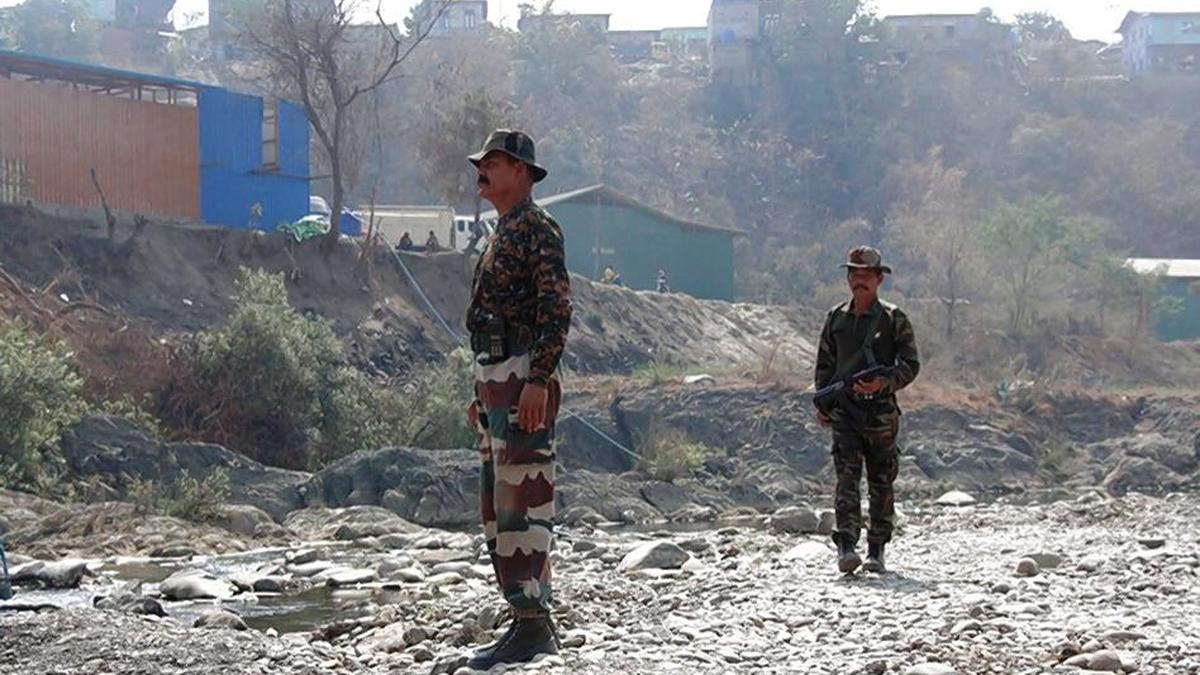
On March 24, 2026, a 58-year-old Slovak citizen was detained by the Assam Rifles along the Mizoram-Myanmar border while allegedly attempting to cross over into Myanmar. The man, who resides in Thailand, had traveled from Bangkok to Kolkata and then onward to Aizawl, the capital of Mizoram, following the advice of a friend who is a Myanmarese national. This friend had met the Slovak man several years ago at a resort in Thailand where the latter had worked. The detained individual was subsequently handed over to the Mizoram police for further investigation.
According to a government official, the Slovak man's journey into India was his first visit to the country. After arriving in Aizawl by flight from Kolkata, he took a taxi to Lungpuk village in southern Mizoram. His plan was to cross the international border at this location, where his friend was expected to meet him. The friend lives on Ramree Island, located in the Rakhine State of Myanmar.
The detainee told officials that his purpose for crossing into Myanmar was to visit his friend and participate in the Thingyan Festival, which marks the Burmese New Year. Thingyan is celebrated starting April 13 each year and is a significant cultural event in Myanmar.
The Mizoram Director General of Police, Sharad Agarwal, confirmed to The Hindu that the verification of the Slovak man's background and antecedents was underway. He also clarified that the man had not been formally arrested at this stage. Another government source indicated that the foreign national was likely to be deported, primarily because he did not possess a Protected Area Permit (PAP) which is mandatory for foreigners traveling to certain sensitive border areas, including Mizoram. The official also noted that no suspicious items or evidence were found on the individual during the detention.
The requirement for a Protected Area Permit in Mizoram and other northeastern states of India has recently become stricter. On December 17, 2024, the Ministry of Home Affairs (MHA) withdrew the earlier liberal Protected Area Regime (PAR) that had allowed foreigners to visit Manipur, Nagaland, and Mizoram without prior permission or a PAP for tourism or other purposes. This exemption had been in place since 1958, with a relaxation period of 14 years before the withdrawal. The MHA cited growing security concerns in the border areas of these states as the reason for the policy change.
It is important to note that India shares an unfenced border with Myanmar, and the Assam Rifles is the designated border guarding force responsible for patrolling and securing this frontier. The detention of the Slovak citizen comes at a time of heightened vigilance along this border.
This incident follows closely on the heels of a high-profile case involving the arrest of a U.S. citizen and six Ukrainian nationals, who were accused of illegally crossing into Myanmar through Mizoram. These individuals are alleged to have been involved in training armed ethnic groups in Myanmar in the handling of weapons and drones. The National Investigation Agency (NIA) currently holds these accused persons in custody. Investigations have revealed that drones were imported from Europe into Myanmar through India for use by ethnically armed groups, raising serious security concerns.
The recent developments highlight the sensitive security situation along the India-Myanmar border and the challenges faced by Indian authorities in managing cross-border movements and preventing illegal activities. The stricter enforcement of travel permits and tighter border controls reflect India's efforts to address these challenges amid ongoing geopolitical complexities in the region.
In summary, the detention of the Slovak national underscores the importance of adhering to the Protected Area Permit requirements in India's northeastern border states. While the man's intent appears to be personal and cultural-to celebrate the Burmese New Year with a friend-the legal regulations and security considerations in this sensitive border zone are strictly enforced. The case also serves as a reminder of the broader security environment in the India-Myanmar border region, where illegal crossings and the movement of potentially hostile actors remain a significant concern for Indian authorities.