
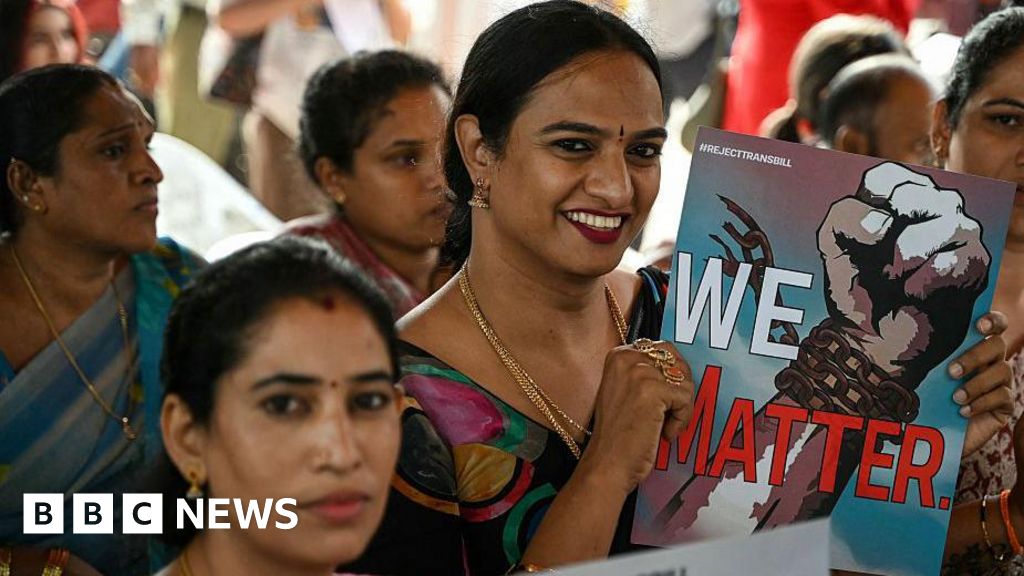
India's parliament has recently passed a highly controversial bill that proposes significant changes to the legal recognition of transgender individuals and their right to self-identify. This legislative move has sparked widespread protests from opposition political parties as well as from members of the LGBTQ community, who argue that the bill threatens to undermine the rights and dignity of transgender people.
The government, however, maintains that the bill is designed to improve welfare access and strengthen protections against exploitation and trafficking, especially for the most marginalized within the transgender community. Critics, on the other hand, warn that the bill's new definitions and requirements could exclude many transgender, non-binary, and gender-fluid individuals from legal recognition and the benefits that come with it.
India is estimated to have around two million transgender people, although activists believe the real figure is higher, given the difficulties in enumeration and social stigma. Despite several legal measures aimed at protecting their rights, transgender people in India continue to face widespread discrimination that restricts their access to education, healthcare, and formal employment opportunities. Many are forced to rely on traditional or informal means of livelihood.
The new bill is essentially an amendment to the 2019 Transgender Persons (Protection of Rights) Act, which was India's first comprehensive law aimed at addressing the vulnerabilities faced by transgender individuals. The 2019 law had been hailed as a step forward but also received criticism for certain shortcomings, including the lack of clarity in defining who qualifies as transgender under the law.
The recent legislation focuses primarily on revising the definition of a transgender person. The government argues that the current broad and vague definition makes it difficult to identify those who are most marginalized and in need of welfare support. By narrowing the definition, the government claims it will be easier to ensure that welfare benefits such as job reservations and healthcare support reach the intended beneficiaries, particularly those facing extreme discrimination and vulnerability to exploitation or trafficking.
One of the most contentious aspects of the bill is the removal of the right to self-identify. Instead, legal recognition would be limited to individuals who meet certain biological or physical criteria. This includes people with intersex variations-those born with sex characteristics that do not conform to typical male or female categories-as well as individuals who identify with traditional gender identities long recognized within Indian transgender communities.
Moreover, the bill mandates certification from medical boards and district authorities for individuals undergoing gender-affirming surgeries. This requirement is seen as a regression by activists, who argue that it infringes on personal autonomy and privacy.
Transgender rights activists have strongly condemned the bill, stating that it contradicts the landmark 2014 Supreme Court ruling that recognized transgender people as a "third gender" and affirmed their right to self-identify. The new bill's emphasis on physical or biological criteria, along with mandatory medical certification, is viewed as a significant step backward that could exclude many transgender individuals from legal recognition.
Critics emphasize that the bill's restrictive definition might marginalize not only transgender men and women who rely on self-identification but also non-binary and gender-fluid people who do not fit into binary categories. They argue that the medical certification requirement undermines the dignity and autonomy of transgender persons.
Laxmi Narayan Tripathi, a prominent transgender rights activist, described the bill as something that "has shattered our identity." Another activist, Grace Banu, speaking at a press conference in Delhi, said the community was demanding "recognition without invasion" and "rights without humiliation," characterizing the bill as "not protection, but violation."
Legal experts have echoed these concerns. Lawyer N Kavitha Rameshwar wrote in The Times of India that the removal of "the factor of self-determination" constitutes "an attack on the privacy and dignity of the individual."
In response to the bill, a Supreme Court-appointed advisory panel recommended that the government withdraw the legislation. The panel warned that eliminating the right to self-identify contradicts the 2014 Supreme Court decision and urged the government to engage in wider consultations with stakeholders. It cautioned that the proposed changes might undermine ongoing efforts to protect and promote transgender rights in India.
The controversy surrounding the bill has galvanized the LGBTQ community, leading to protests across the country over the past two weeks. Demonstrators have expressed deep disappointment and anger over what they see as a regressive and exclusionary law.
Opposition politicians have also voiced strong objections. The Indian National Congress party leader Rahul Gandhi described the bill as a "brazen attack" on transgender rights. Supriya Sule, a member of the Nationalist Congress Party led by Sharadchandra Pawar, criticized the manner in which the bill was introduced, calling it "hasty" and questioning the government's intentions.
The bill has now passed both houses of India's parliament and awaits the president's assent before it can become law. Its passage marks a pivotal moment in the ongoing struggle over transgender rights in India, highlighting the tensions between government policy, judicial rulings, and the demands of the transgender community itself.
Despite legal recognition granted by the 2014 Supreme Court decision and the 2019 law, the reality for many transgender people in India remains difficult, with persistent discrimination and social exclusion. As the country grapples with how best to protect and affirm transgender rights, the debate over this bill underscores the complexities involved in balancing welfare provision, legal recognition, and respect for individual autonomy.
The coming weeks and months will be critical in determining how these issues evolve, with activists, legal experts, and political leaders all closely watching the bill's progress and its potential impact on the lives of millions of transgender, non-binary, and gender-diverse individuals across India.