
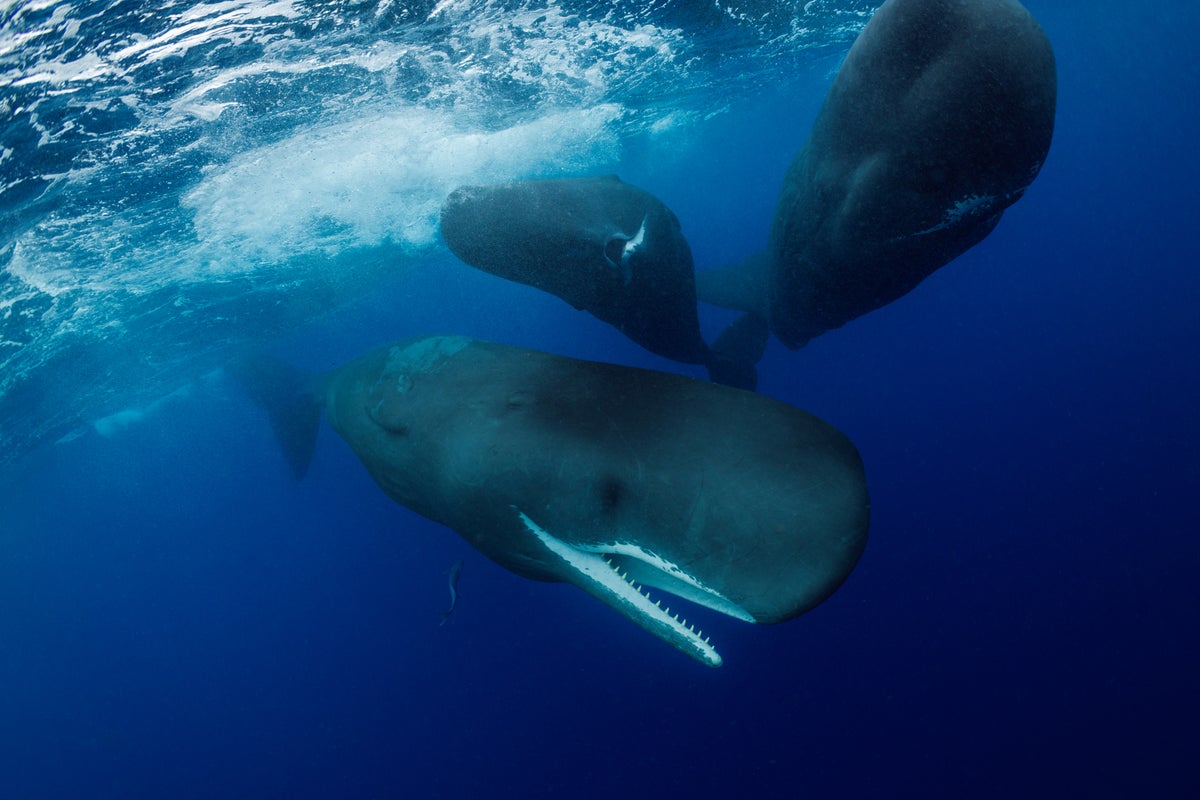
On July 8, 2023, whale biologist Shane Gero and his team had a remarkable encounter while conducting research off the coast of Dominica in the Caribbean Sea. They were observing a group of sperm whales known as "Unit A," a culturally distinct clan that they had been tracking closely. What initially appeared to be unusual behavior soon revealed itself as an extraordinary natural event: the birth of a sperm whale calf, witnessed in unprecedented detail.
Sperm whales are known to be social creatures, but the scene that Gero observed was different from their typical interactions. The whales were floating calmly near the surface, not engaging in their usual socializing, nor were they asleep-a state that sperm whales enter underwater. This unusual calmness piqued Gero's curiosity. Suddenly, the whales began diving and rolling in the water, and a "big gush of blood" appeared, indicating that something significant was happening beneath the surface.
Initially, Gero feared that an attack might be underway, especially since pilot whales-known to sometimes act aggressively toward sperm whales-had been spotted in the area earlier that day. However, the sight that followed quickly dispelled that concern. A small head emerged from the water, followed by a fluke, signaling the birth of a newborn sperm whale. Rather than a scene of conflict, it was a moment of life and cooperation.
The birth was not only surprising but also deeply moving for Gero and his team. They quickly mobilized to document the event, capturing photographs and drone footage, even resorting to cooling their drone batteries in a freezer on their boat to keep up with the demands of recording such a rare occurrence. This serendipitous documentation allowed the researchers to study the birth in detail, something that had never been done before with sperm whales.
In a new scientific study published in the journal Science, Gero and his colleagues analyzed the footage with the help of machine learning tools. Their findings revealed an astonishing behavior: two matrilines-female-led family groups within Unit A-worked together to assist the calf's birth. Eleven whales participated in supporting the newborn, particularly the mother, Rounder, her half-sister Aurora, and Ariel, a young female unrelated to the mother but still part of the group. These whales helped lift and hold the calf near the surface, ensuring it could breathe and remain safe in the critical moments after birth.
This cooperative assistance during birth is a behavior well-known among humans and some primates, such as bonobos and snub-nosed monkeys, but it had never before been documented in such detail among sperm whales. The observations challenge previous assumptions that such complex birthing social support was exclusive to humans and their close relatives. The findings open new avenues for understanding the social dynamics and communication of sperm whales, particularly during vulnerable life stages.
The motivation behind this collective behavior remains a subject of investigation. Gero suggests that the cooperation might serve as a protective strategy against potential threats, such as the pilot whales seen nearby. It could also be a practical response to the newborn's needs, as young sperm whales tend to sink and require help to stay afloat and reach the surface for air. The exact mechanisms and reasons will be further explored as researchers analyze the accompanying audio recordings of the whales' clicks during the birth, hoping to decode their communication and coordination.
Project CETI (Cetacean Translation Initiative), led by Gero, aims to deepen our understanding of whale communication and cognition. This birth event provides a rare glimpse into the complex social behaviors of sperm whales and highlights the importance of long-term, detailed observation in uncovering the nuances of their lives. The calf, born into this supportive environment, continues to thrive and swim through the Caribbean, a testament to the care and cooperation of its family group.
This discovery not only enriches our knowledge of sperm whales but also underscores the broader importance of studying animal behavior in natural settings. It reminds us that many species possess intricate social bonds and cooperative behaviors that we are only beginning to comprehend. As scientists continue to unravel the mysteries of whale communication and social life, such encounters bring us closer to appreciating the depth and diversity of intelligence in the animal kingdom.
In sum, the witnessing of a sperm whale birth by Shane Gero and his team off Dominica marked a historic moment in marine biology. The cooperative assistance by multiple female whales during the birth challenges previous assumptions about social behaviors in marine mammals and opens new paths for research into how these magnificent creatures communicate and support one another. The event highlights the value of patience, observation, and technology in scientific discovery and enriches our understanding of life beneath the waves.